

Table of Contents
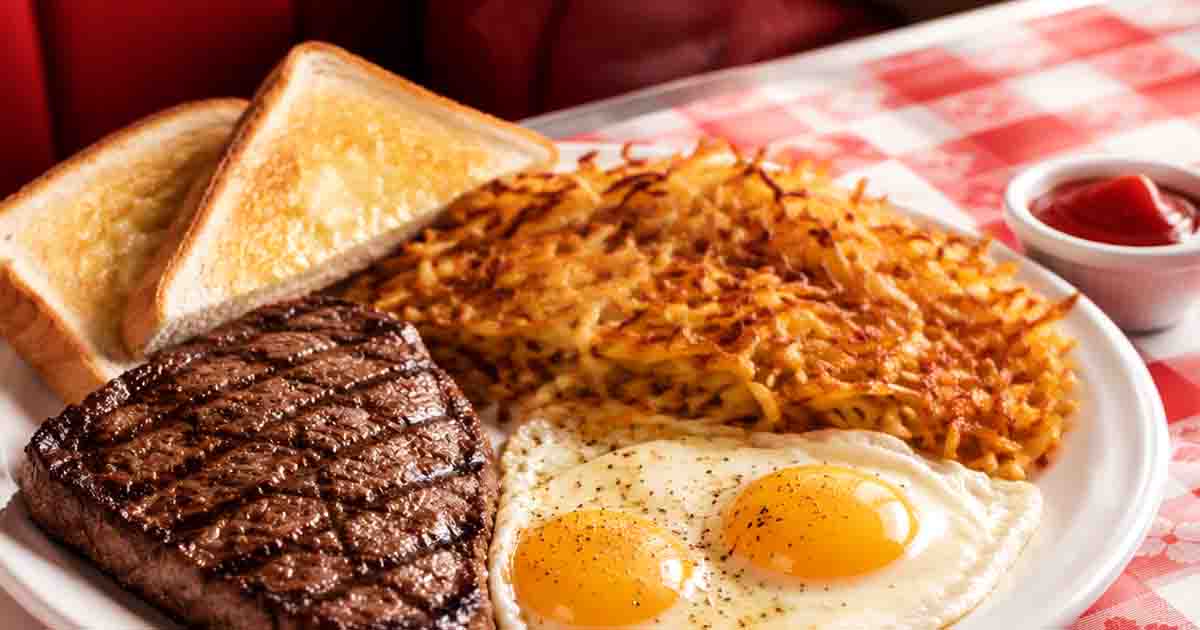
A steak and eggs breakfast is pan-seared beefsteak served with fried eggs. It started in Australia in the 1880s. American diners adopted it after WWII. NASA served it to astronaut Alan Shepard in 1961. A typical plate has 400–550 calories and 40+ grams of protein.
Humans read this dish as comfort food. Search engines read it as a cluster of facts — cuts, calories, cook times, and history. This guide answers both readers in the same sentence, so it works as fast for a hungry cook as it does for an AI Overview pulling a direct quote.
You get hungry. You want the short answer first and the full method second. So that’s exactly how this guide is built.
What is steak and eggs? {#what-is}
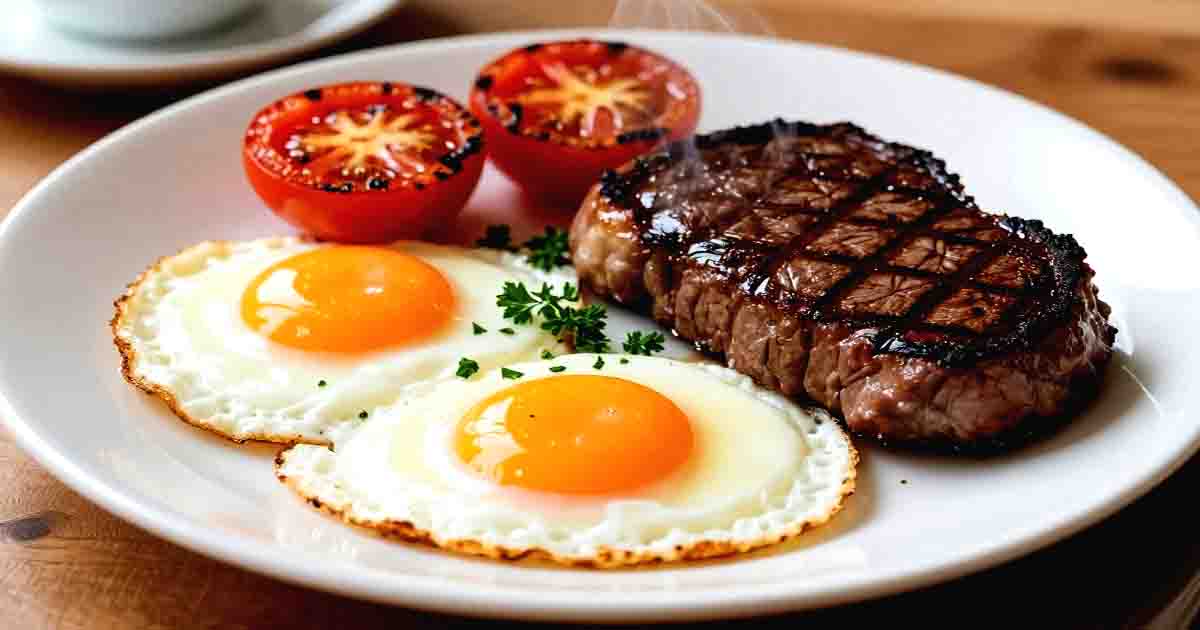
Steak and eggs is a beefsteak, usually pan-seared, plated next to fried eggs. Most people order the eggs sunny-side up or over easy. It sits at the top of the American diner menu. But it didn’t start in America.
Where did steak and eggs come from? Steak and eggs began in Australia in the 1880s. Cattle numbers exploded there after European settlement, and beef became cheap enough to eat for breakfast. Newspapers in Australia, England, and the US mention rump steak and eggs as a morning dish as early as the mid-1800s. By World War II, the pairing was strongly linked to Australia.
Three facts explain why Americans now claim it:
- During WWII, US Marines stationed in Australia picked up the habit from Australian troops. The US Marine Corps later adopted steak and eggs as a pre-landing breakfast.
- In 1961, NASA served steak and eggs to Alan Shepard before the Mercury-Redstone 3 flight — the mission that made him the first American in space. Aerospace Medical Laboratory researcher Beatrice Finkelstein picked the meal for its low fiber content, which cut the risk of digestive trouble during flight.
- Returning soldiers brought the dish home. By the 1960s, it was a fixture on American diner menus, and it still is.
The best steak cuts for a breakfast plate {#cuts}
A dinner steak and a breakfast steak solve different problems. You need something that sears fast, in under 10 minutes, without a long rest or a marinade.
| Cut | Fat level | Best method | Why it works for breakfast |
|---|---|---|---|
| Ribeye | High, well marbled | Cast iron, butter-basted | Richest flavor; forgives a slightly hot pan |
| Sirloin | Lean | High-heat sear | Best value; cooks in under 10 minutes |
| New York strip | Moderate | Cast iron or grill | Classic diner texture; easy to slice |
| Flank steak | Lean | Quick sear, thin slice | Great in bowls, burritos, and tacos |
| Skirt steak | Moderate | High heat, fast | Bold, beefy flavor for Tex-Mex plates |
What is the best steak for breakfast?
Ribeye wins on flavor because its fat renders straight into the pan. Sirloin wins on value and speed. For a weekday plate, choose sirloin. For a weekend plate, choose ribeye.
One buying rule matters more than the cut itself: buy a thinner steak, around ½ to ¾ inch, for weekday cooking. A thick steakhouse cut needs a longer rest and a lower flame, which slows down a morning routine that thin cuts don’t.
How to cook steak and eggs (cast iron method) {#cook}
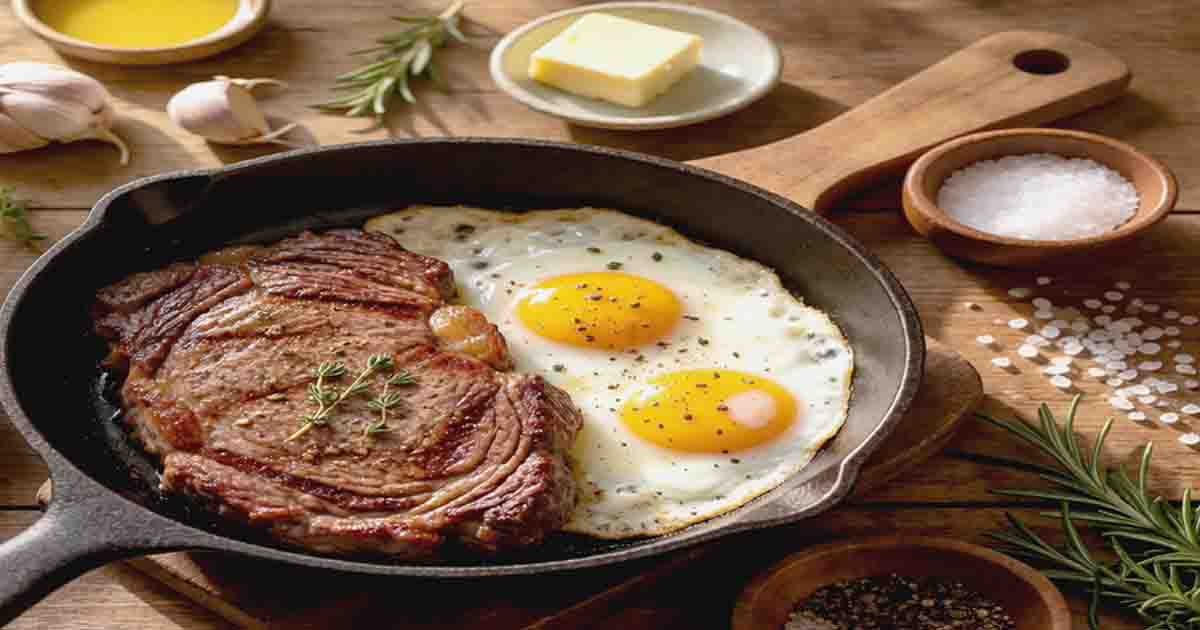
Cast iron holds heat evenly. That’s what gives you a dark crust and a pink center without overcooking the eggs in the same pan.
1.1 Pat the steak fully dry with paper towels. Wet steak steams instead of searing.
1.2 Season both sides with kosher salt and coarse black pepper. Do this at least 15 minutes before cooking, or the night before if you have time.
1.3 Heat the skillet over medium-high until it just starts to smoke.
1.4 Add a high-smoke-point oil — avocado or canola — and lay the steak in. Leave it alone for 3 to 4 minutes so the crust forms.
1.5 Flip once. Cook another 3 to 4 minutes for medium-rare, or until a thermometer reads 130–135°F.
1.6 In the final minute, add 2 tablespoons of butter, 2 smashed garlic cloves, and a thyme sprig. Tilt the pan and spoon the butter over the steak.
1.7 Rest the steak on a cutting board for 5 minutes before slicing. Skipping this step pushes the juices out onto the plate instead of keeping them in the meat.
1.8 Fry the eggs in the same skillet, using the leftover drippings. Sunny-side up keeps the yolk runniest.
One-pan weekday version: sear the steak, flip it, push it to one side of the pan, crack two eggs into the empty space, and cover for 2 to 3 minutes. One pan, one wash.
Air fryer shortcut: cook the steak at 400°F for 8 minutes, flipping halfway. Finish with a 30-second sear in a hot pan if you want a browned crust — the air fryer alone won’t give you one
5 steak and eggs recipes {#recipes}
Each card below lists prep, cook, and total time, plus a full nutrition panel per serving. Figures are estimates built from USDA FoodData Central values for each raw ingredient, not a lab test of the finished dish — actual numbers shift with your cut, trim, and pan fat.
1. Classic diner-style
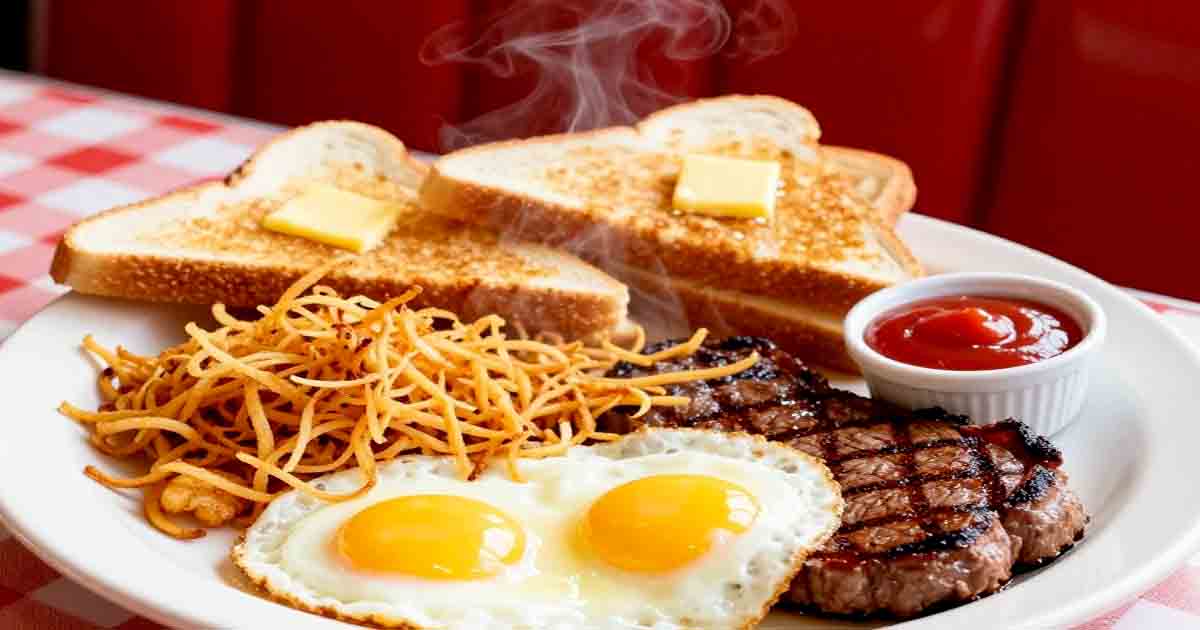
Sirloin steak, two eggs any style, hash browns, and buttered toast. Sear the steak, rest it, fry hash browns in the same pan, then fry the eggs.
| Prep | Cook | Total | Servings |
|---|---|---|---|
| 5 min | 15 min | 20 min | 1 |
Ingredients: 8 oz sirloin, 2 large eggs, 1½ cups shredded hash browns, 2 slices toast, 2 tbsp butter, salt, pepper.
| Nutrient | Per serving |
|---|---|
| Calories | ~1,230 kcal |
| Protein | ~90 g |
| Total fat | ~66 g (sat. fat ~28 g) |
| Carbohydrates | ~68 g (fiber ~3 g) |
| Cholesterol | ~640 mg |
| Sodium | ~1,550 mg |
This is a full diner-size plate, not a light breakfast. Halve the hash browns and drop one slice of toast to bring it closer to 800 calories.
2. Cast iron ribeye with soft-scrambled eggs
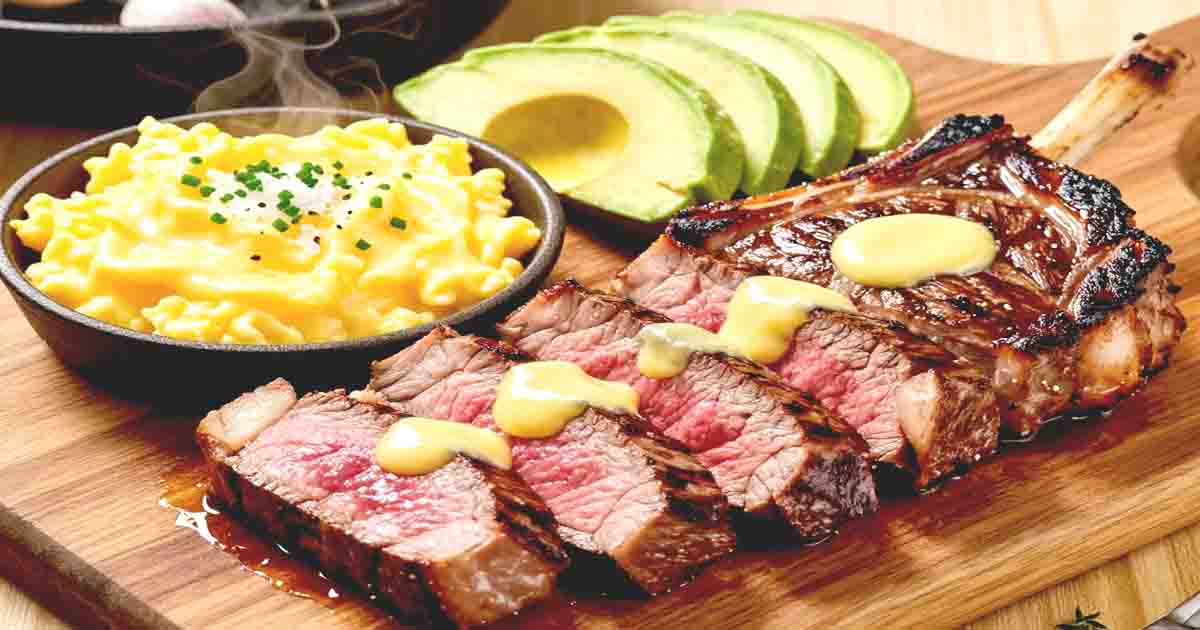
A 12-ounce ribeye, garlic-basted, next to a slow, buttery scramble. Cook the eggs on low heat and pull them off while still glossy — they keep cooking from residual heat.
| Prep | Cook | Total | Servings |
|---|---|---|---|
| 10 min | 15 min | 30 min (includes 5-min rest) | 2 |
Ingredients: 12 oz ribeye, 3 large eggs, 1 tbsp whole milk, 3 tbsp butter, 2 cloves garlic, flaky sea salt.
| Nutrient | Per serving (of 2) |
|---|---|
| Calories | ~715 kcal |
| Protein | ~52 g |
| Total fat | ~58 g (sat. fat ~26 g) |
| Carbohydrates | ~1 g (fiber 0 g) |
| Cholesterol | ~380 mg |
| Sodium | ~520 mg |
Split between two plates, this is a rich but reasonable weekend portion. Eaten solo, double every number above.
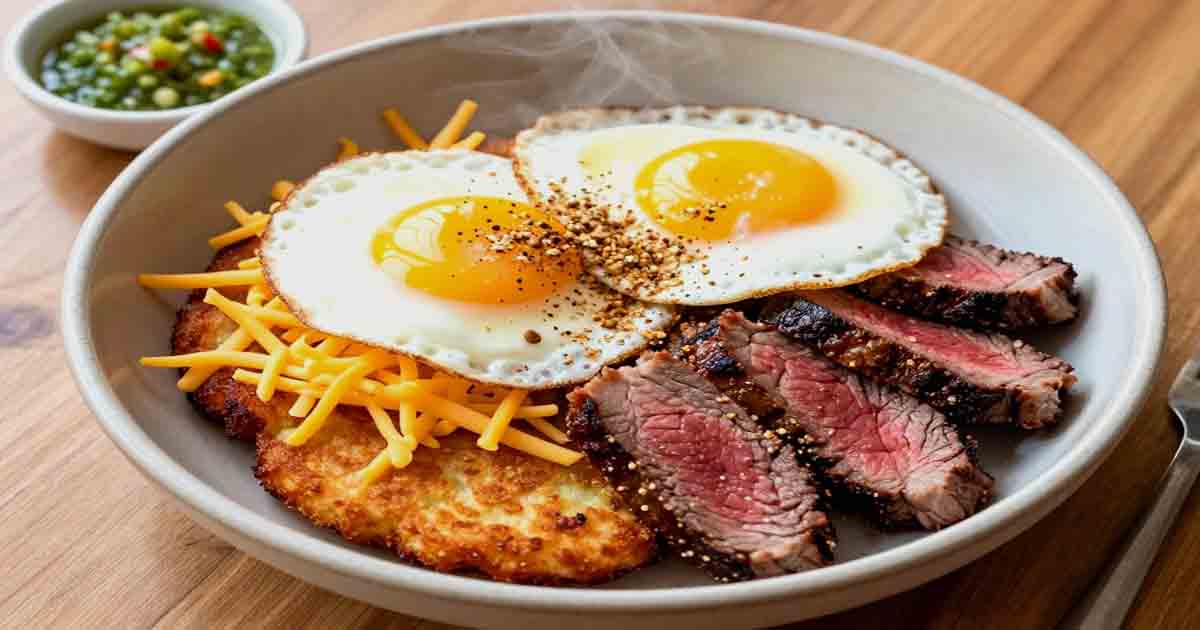
3. Leftover steak and hash brown bowl
Warm sliced leftover steak for one minute — don’t recook it. Layer it over a crisp hash brown patty, top with a fried egg and shredded cheddar.
| Prep | Cook | Total | Servings |
|---|---|---|---|
| 3 min | 7 min | 10 min | 1 |
Ingredients: 4 oz leftover steak (any cut), 1 frozen hash brown patty, 2 large eggs, 2 tbsp shredded cheddar, everything bagel seasoning.
| Nutrient | Per serving |
|---|---|
| Calories | ~560 kcal |
| Protein | ~52 g |
| Total fat | ~30 g (sat. fat ~12 g) |
| Carbohydrates | ~18 g (fiber ~1 g) |
| Cholesterol | ~470 mg |
| Sodium | ~780 mg |
The lightest full meal on this list — good for a weekday breakfast that still holds you until lunch.
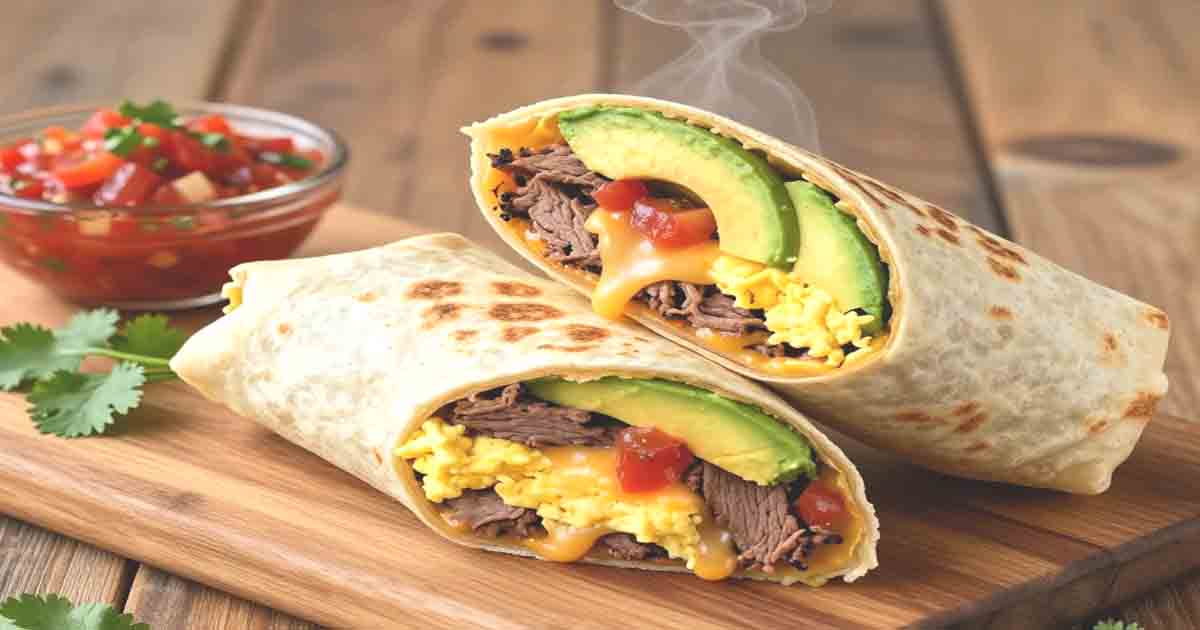
4. Steak and egg breakfast burrito
cheddar.
| Prep | Cook | Total | Servings |
|---|---|---|---|
| 3 min | 7 min | 10 min | 1 |
Ingredients: 4 oz leftover steak (any cut), 1 frozen hash brown patty, 2 large eggs, 2 tbsp shredded cheddar, everything bagel seasoning.
| Nutrient | Per serving |
|---|---|
| Calories | ~560 kcal |
| Protein | ~52 g |
| Total fat | ~30 g (sat. fat ~12 g) |
| Carbohydrates | ~18 g (fiber ~1 g) |
| Cholesterol | ~470 mg |
| Sodium | ~780 mg |
The lightest full meal on this list — good for a weekday breakfast that still holds you until lunch.
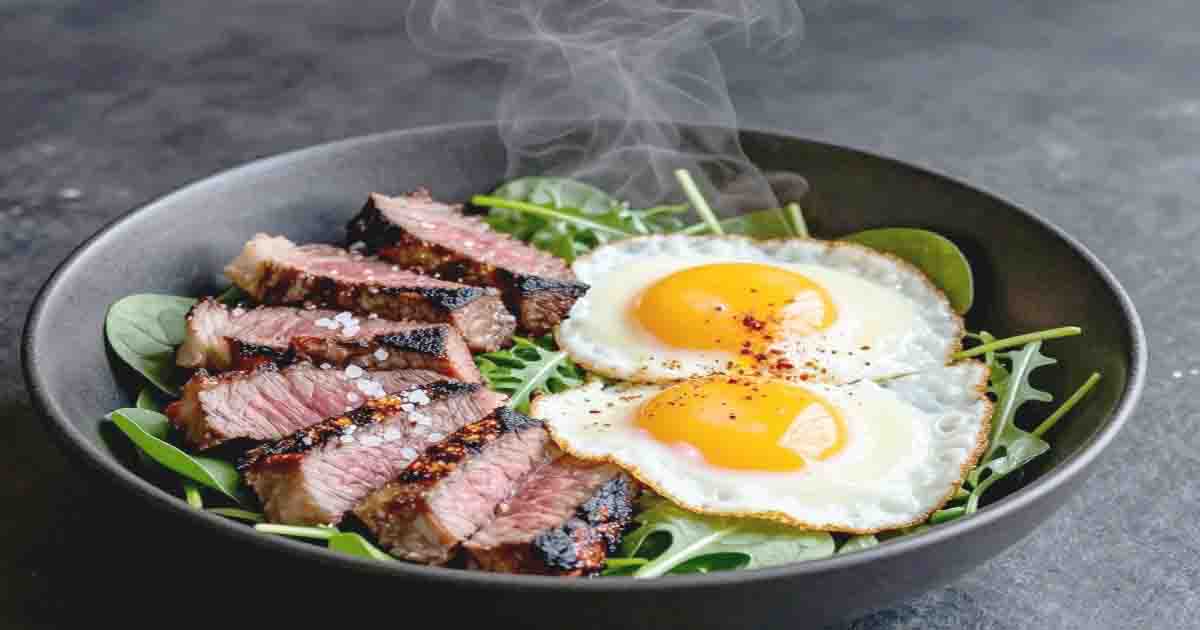
5. Keto steak and eggs bowl
An 8-ounce sirloin or ribeye with three eggs fried in butter — no sides, no starch.
| Prep | Cook | Total | Servings |
|---|---|---|---|
| 3 min | 12 min | 15 min | 1 |
Ingredients: 8 oz sirloin or ribeye, 3 large pasture-raised eggs, 1 tbsp butter, salt, pepper, smoked paprika.
| Nutrient | Per serving |
|---|---|
| Calories | ~760 kcal |
| Protein | ~87 g |
| Total fat | ~44 g (sat. fat ~18 g) |
| Net carbohydrates | ~1 g |
| Cholesterol | ~560 mg |
| Sodium | ~430 mg |
Correction from an earlier draft: a full 8-ounce steak alone runs 60–70 g of protein before the eggs are added. A total of “34 g protein” for this plate wasn’t mathematically possible for the stated portion, so the figures above are rebuilt from the actual ingredient weights.
Where to order steak and eggs {#near-me}
“Steak and eggs near me” is one of the most searched phrases tied to this dish, mostly because prices and portions swing so much by location.
National chains carry it consistently:
- Denny’s lists sirloin and T-bone versions of steak and eggs; menu-tracking sites put the T-bone around the high teens, though pricing varies by state and changes through the year.
- Cracker Barrel typically serves a USDA Choice sirloin, cooked medium-well by default — ask for it medium-rare if you want it that way.
- Waffle House and IHOP both carry steak and egg plates that read as diner staples rather than premium items.
Because restaurant prices move often and vary by state, check the current local menu before you go rather than trusting a number printed anywhere online, including here.
Is steak and eggs healthy? {#health}
Direct answer: Steak and eggs is high in protein and fat, low in carbs, and fits keto, paleo, and carnivore diets well. Portion size decides whether it fits a heart-healthy plan.
Nutrition per serving
Numbers shift with portion size — one tracked source shows a lean 4-ounce steak with two eggs landing near 380 calories, while a full 8-to-12-ounce steakhouse portion with three eggs runs past 600.
Here’s a realistic middle ground:
| Nutrient | 8 oz steak + 2 eggs (approx.) |
|---|---|
| Calories | 480–520 kcal |
| Protein | 42–48 g |
| Total fat | 30–36 g |
| Saturated fat | 10–12 g |
| Net carbs | 0–2 g |
What the cholesterol worry actually looks like now
Older nutrition guidance treated dietary cholesterol as a direct driver of blood cholesterol. Current guidance from the American Heart Association doesn’t back that link for most healthy people — dietary cholesterol has a smaller effect on blood cholesterol than saturated fat does. That shifts the real question away from “How many eggs is too many?” and toward portion size and cooking fat.
Is steak and eggs good for weight loss?
The protein and fat combination is filling, which helps people eat less later in the day. Reddit’s carnivore and keto communities cite exactly this effect. Calories still count, though — a 12-ounce ribeye with three eggs cooked in butter can top 700 calories before any sides.
How it fits common diets
| Diet | Fit | Note |
|---|---|---|
| Keto | Strong | Near-zero carbs |
| Carnivore | Strong | Meat and eggs only |
| Paleo / Whole30 | Good | Use compliant oil |
| Weight loss | Moderate | Watch total calories, not just protein |
| Heart health | Caution | Choose leaner cuts; limit added butter |
Frequently asked questions {#faqs}
What is the best steak for breakfast?
Sirloin for a fast, affordable weekday plate. Ribeye for the richest flavor on a slower morning. Both sear in under 10 minutes when sliced thin.
How do you cook steak and eggs in one pan?
Sear the steak, move it to the side of the skillet, crack the eggs into the open space, and cover for 2 to 3 minutes. The steam sets the whites while the yolk stays runny.
Where did steak and eggs originate?
Australia, in the 1880s. Beef was cheap and plentiful there after European settlers built up large cattle herds, and rump steak with eggs became a common breakfast for laborers.
Why do astronauts eat steak and eggs?
NASA served it to Alan Shepard before his 1961 Mercury-Redstone 3 flight. A researcher chose the meal for its low fiber content, which lowered the risk of digestive issues during the mission.
It’s high in protein, low in carbs, and fits keto and carnivore eating well. Watch portion size and cooking fat if you’re managing heart health.
Can you eat steak and eggs every day?
It works daily on a low-carb or carnivore plan. Most other people do better eating it two or three times a week and balancing the rest of the week with lighter proteins.
Disclaimer:
Menu prices, restaurant names, and nutrition figures are estimates gathered from public sources and change by location and season. Check current pricing locally. This article isn’t medical advice — talk to a doctor or registered dietitian before making a significant diet change.
