
Table of Contents
A Delmonico steak is often a ribeye-style steak, but the name can also describe chuck eye, New York strip, or another thick premium cut depending on the butcher or restaurant. A typical 3 oz cooked ribeye-style Delmonico provides about 211–240 calories, 20–23 g protein, 0 g carbs, and roughly 10–18 g fat, depending on trimming and grade.
“Delmonico steak” is a historic steakhouse name rather than one standardized cut. That is why nutrition apps, recipes, and restaurant menus often show different numbers. Before using any nutrition value, identify whether the steak is ribeye-style, chuck-eye-style, or strip-style.
What is a Delmonico Steak?
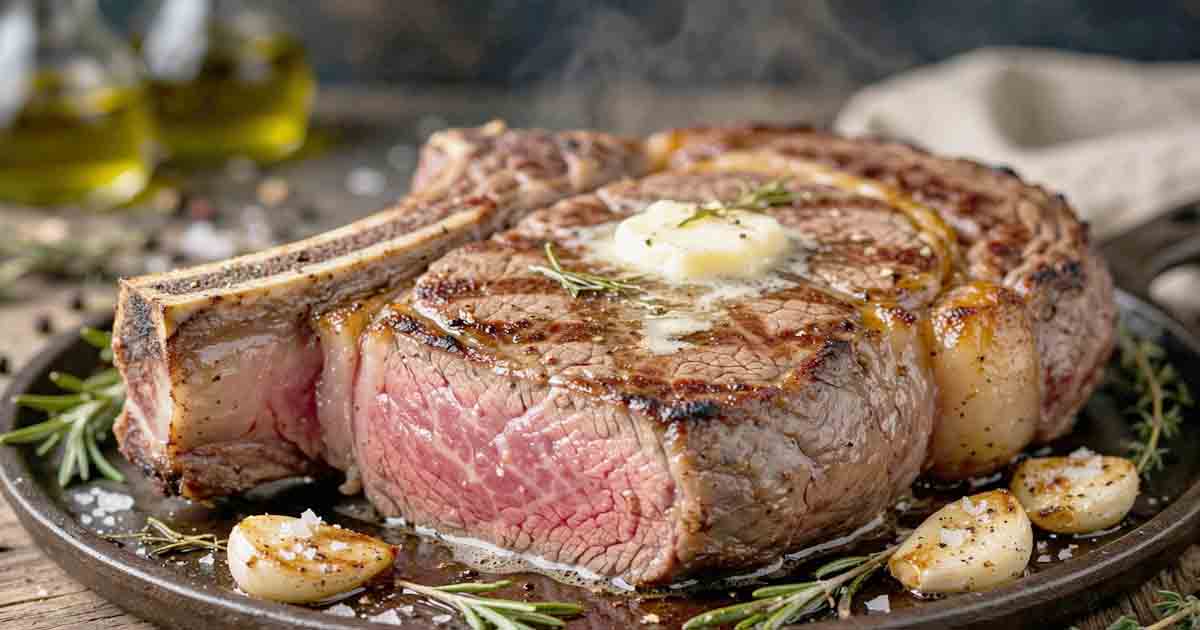
A Delmonico steak is generally a thick, premium beef steak associated with the historic Delmonico’s restaurant tradition. Today, butchers and restaurants may use the name for ribeye, chuck eye, New York strip, or another preferred thick cut.
This matters because fat content changes greatly with the cut and trimming. A ribeye-style Delmonico is usually richer and higher in fat than a leaner chuck-eye or strip-style version.
Practical rule: If the label says “ribeye” or “Delmonico ribeye,” use ribeye nutrition. If it says “chuck eye,” use chuck-eye nutrition. If the label is unclear, ask the butcher which part of the cow the steak came from.
Delmonico Steak Nutrition Per Serving
The table below uses grilled, boneless ribeye-style Delmonico as the main reference because ribeye is one of the most common modern interpretations. Values change with fat trim, beef grade, bone, and cooking method.
The 6 oz, 8 oz, and 16 oz values are calculated from the 3 oz baseline. They are useful estimates, not exact measurements of a particular steak.
Delmonico Steak Calories
A 3 oz cooked ribeye-style Delmonico provides roughly 183–240 calories. A larger 8 oz cooked portion can provide roughly 560–610 calories before butter, sauce, or side dishes.
Calories rise when the steak has more visible fat, a fat cap, higher marbling, butter basting, a sugary marinade, or a cream- or oil-based sauce.
Trimming visible fat and choosing a leaner cut can lower calories and saturated fat. For general portion guidance, 3 oz of cooked meat is a useful reference serving.
Delmonico Steak Protein
A 3 oz cooked ribeye-style Delmonico provides about 20–23 g of protein. An 8 oz cooked portion provides roughly 56–60 g, assuming a similar ribeye-style cut and trim.
Beef protein is a complete protein because it contains the essential amino acids the body needs from food. If you track protein intake, weighing the cooked portion is more reliable than estimating from a menu description.
Protein does not rise in direct proportion to fat. A fattier Delmonico may contain more calories without providing much more protein.
Delmonico Steak Carbs
Plain Delmonico steak contains 0 g carbohydrates. Carbohydrates appear when the steak is marinated, breaded, glazed, served with a sweet sauce, or paired with starchy foods.
For keto or low-carb eating, plain steak is generally compatible because it contains no digestible carbohydrate. However, marinades and sauces can change that. Some Delmonico recipes contain more than 20 g carbohydrates per serving because of their marinade and other ingredients.
Delmonico Steak Fat and Saturated Fat
Fat is the main reason Delmonico nutrition varies. A 3 oz cooked ribeye-style serving may provide about 10 g fat when lean-trimmed, or about 18 g fat with a 0-inch trim in Choice-grade beef.
Saturated fat matters for heart-health planning. Saturated fat can raise LDL cholesterol, often called “bad” cholesterol. Health guidance generally recommends limiting saturated fat as part of a heart-healthy eating pattern.
Cholesterol and Sodium
A 3 oz cooked ribeye-style Delmonico provides roughly 65–70 mg cholesterol, depending on the exact nutrition entry and trim level.
Plain steak is naturally low in sodium. Sodium becomes more significant when the steak is brined, heavily seasoned, marinated, or served with restaurant sauces and sides.
People managing blood pressure, kidney disease, or a sodium-restricted diet should check restaurant nutrition information and recipe ingredients rather than assuming plain-steak values apply.
Vitamins and Minerals
Delmonico steak can contribute several nutrients found in beef, including:
-
Vitamin B12: Beef is a source of vitamin B12, which supports healthy nerve and blood cells.
-
Iron: Beef provides heme iron, the form of iron found in animal foods.
-
Zinc: Beef contributes zinc, a mineral involved in immune function and many body processes.
-
Phosphorus and potassium: These minerals are present in beef, though amounts vary by cut and serving size.
-
B vitamins: Beef provides several B vitamins in addition to vitamin B12.
These nutrients do not make a high-fat steak automatically healthy. Consider them alongside calories, saturated fat, sodium, and the rest of your diet.
Is Delmonico Steak Healthy?
There is no single yes-or-no answer. A Delmonico steak can fit a balanced diet when the portion is moderate, the cut is leaner or trimmed, and it is prepared without large amounts of added butter, salt, or high-sugar sauce.
For people who eat meat, lean and minimally processed options are generally preferable. Red meat often contains more saturated fat than skinless poultry, fish, and plant-based proteins.
A practical way to view Delmonico steak is:
-
For protein and micronutrients: It can be a meaningful source.
-
For calorie control: Portion size and fat trimming matter most.
-
For keto or low-carb eating: Plain steak is carb-free, but sauces and marinades may not be.
-
For heart-health goals: Limit added saturated fat and consider leaner cuts or smaller portions.
-
For a medical condition: Follow individualized advice from a qualified healthcare professional or registered dietitian.
This article does not claim that Delmonico steak prevents, treats, or reverses any health condition.
Delmonico vs. Ribeye Nutrition
Ribeye is often the closest nutritional match to a modern Delmonico, but the terms are not always identical. Ribeye is a specific cut from the rib section, while “Delmonico” can refer to several cuts.
A 3 oz grilled boneless ribeye-style portion can provide about 211 calories, 22.3 g protein, and 13.5 g fat. A lean grilled ribeye portion can provide about 183 calories, 23.3 g protein, and 10 g fat. This difference shows why the label and trim level matter more than the word “Delmonico” alone.
Chuck Eye vs. Delmonico Steak
Some butchers and nutrition references use “Delmonico” to mean chuck eye. Chuck eye comes from the chuck primal, near the rib, and is often less expensive than ribeye.
A chuck-eye Delmonico may be a reasonable option for someone seeking a steakhouse-style meal with less fat than a heavily marbled ribeye. However, its nutrition still depends on trimming and cooking method. Do not assume every chuck-eye steak is lean.
Grass-Fed vs. Grain-Fed Delmonico Steak
Grass-fed and grain-fed Delmonico steaks can differ in fatty-acid profile, but both contain saturated fat. Grass-fed beef may have different fat characteristics, but it should not automatically be considered low-calorie or low in saturated fat.
The biggest nutrition factors remain portion size, visible-fat trimming, and cooking additions.
Raw vs. Cooked Weight
Steak loses water and fat during cooking, so cooked steak weighs less than raw steak. This is a common source of nutrition confusion.
As a practical estimate:
-
4 oz raw steak may cook down to roughly 3 oz cooked.
-
6 oz raw steak may cook down to roughly 4–4.5 oz cooked.
-
8 oz raw steak may cook down to roughly 6 oz cooked.
Exact weight loss depends on cooking time, temperature, doneness, and fat rendering. For macro tracking, choose one method and use it consistently: weigh the steak raw before cooking or cooked after cooking, then use a matching nutrition entry.
Restaurant Delmonico Steak Nutrition
Restaurant Delmonico portions are often much larger than a standard 3 oz cooked serving. Some restaurant versions can contain roughly 850–1,000 calories or more, depending on portion size and preparation.
Those figures reflect restaurant-specific portions and preparation. They should not be used as the default nutrition value for a homemade 6 oz or 8 oz steak.
How Butter, Marinade, and Sauce Change Nutrition
A plain Delmonico steak and a restaurant-style Delmonico meal can be very different foods nutritionally.
For the most accurate tracking, calculate the steak and every added ingredient separately. Do not use a recipe’s nutrition panel as the nutrition profile of the plain meat.
Healthy Portion Guidance
For a general nutrition reference, 3 oz of cooked steak is a useful standard portion. It is roughly the size of a deck of cards.
A practical approach:
-
Choose a leaner or trimmed steak when possible.
-
Remove visible fat after cooking if calorie or saturated-fat intake is a concern.
-
Use herbs, garlic, pepper, and citrus rather than relying mainly on butter or sugary sauces.
-
Pair the steak with vegetables, beans, whole grains, or another fiber-rich food.
-
If following a medically directed diet, use the portion and fat targets provided by your healthcare professional or registered dietitian.
FAQ
How many calories are in a Delmonico steak?
A 3 oz cooked ribeye-style Delmonico provides about 183–240 calories, depending on trim and grade. An 8 oz cooked portion provides roughly 560–610 calories before butter or sauce.
How much protein is in a Delmonico steak?
A 3 oz cooked ribeye-style Delmonico provides about 20–23 g protein. An 8 oz cooked portion provides roughly 56–60 g protein.
Does Delmonico steak have carbs?
Plain Delmonico steak has 0 g carbohydrates. Marinades, glazes, breading, and sauces can add carbohydrates.
Is Delmonico steak keto-friendly?
Plain Delmonico steak is generally keto-compatible because it contains no carbohydrates. Account for sugary marinades, BBQ sauce, and breaded preparations.
Is Delmonico steak the same as ribeye?
Sometimes. Ribeye is one common modern interpretation, but Delmonico can also refer to chuck eye, New York strip, or another premium thick cut.
Is Delmonico steak healthier than ribeye?
Not necessarily. If the Delmonico is actually ribeye, its nutrition is essentially ribeye nutrition. If it is chuck eye or a leaner strip-style cut, it may provide less fat and fewer calories, but the exact cut and trim determine the difference.
How much cholesterol is in Delmonico steak?
A 3 oz cooked ribeye-style serving provides roughly 65–70 mg cholesterol, depending on the nutrition entry and trim level.
What is a healthy serving of Delmonico steak?
A 3 oz cooked portion is a useful general reference serving. Individual needs vary, especially for people following a medically directed diet.
Disclaimer
References
-
USDA FoodData Central — Beef, rib eye steak, boneless, lip off, trimmed to 0″ fat, Choice, cooked, grilled
Nutrition reference for a 3 oz cooked ribeye-style Delmonico: 240 calories, 20 g protein, 18 g fat, 0 g carbs.
https://getfoodfacts.com/food/beef-rib-eye-steak-boneless-lip-off-separable-lean-and-fat-trimmed-to-0-fat-choi-172165 -
My Food Analysis — Ribeye steak, boneless, lip-off, lean and fat, grilled
Used for standard ribeye-style Delmonico values: 211 calories, 22.3 g protein, 13.5 g fat, and 0 g carbs per 3 oz cooked.
https://www.myfoodanalysis.com/food/ribeye-steak-boneless-lip-off-lean-and-fat-grilled-173401 -
My Food Analysis — Ribeye steak, boneless, lean, grilled
Used for lean ribeye-style values: 183 calories, 23.3 g protein, 10 g fat, and 0 g carbs per 3 oz cooked.
https://www.myfoodanalysis.com/food/ribeye-steak-boneless-lean-grilled-172144 -
My Food Analysis — Ribeye steak, boneless, grilled
Used for standard grilled ribeye-style values: 230 calories, 21.1 g protein, 16.2 g fat, and 0 g carbs per 3 oz cooked.
https://www.myfoodanalysis.com/food/ribeye-steak-boneless-grilled-172164 -
Certified Angus Beef — Ribeye / Delmonico cut guide
Supports the point that ribeye is commonly known as Delmonico and provides USDA-based nutrition context for a 3 oz serving.
https://www.certifiedangusbeef.com/en/cooking/cuts/Ribeye -
NIH Office of Dietary Supplements — Vitamin B12 Fact Sheet for Health Professionals
Source for vitamin B12’s role in nerve and blood-cell health and its presence in animal-origin foods, including beef.
https://ods.od.nih.gov/factsheets/VitaminB12-HealthProfessional/ -
NIH Office of Dietary Supplements — Vitamin B12 Fact Sheet for Consumers
Consumer-facing source for vitamin B12 functions and food sources.
https://ods.od.nih.gov/factsheets/VitaminB12-Consumer/ -
American Heart Association — Picking Healthy Proteins
Supports guidance on lean protein choices, fish and plant proteins, and limiting processed and high-saturated-fat meats.
https://www.heart.org/en/healthy-living/healthy-eating/eat-smart/nutrition-basics/picking-healthy-proteins -
American Heart Association — Making the Healthier Cut: Fish, Poultry and Lean Meats
Supports advice on selecting leaner beef cuts, trimming fat, and using a 3 oz cooked meat portion as a reference serving.
https://www.heart.org/en/healthy-living/healthy-eating/cooking-skills/preparing/making-the-healthier-cut -
American Heart Association — The Skinny on Fats
Source for the relationship between saturated fat and LDL cholesterol and AHA’s recommendation to limit saturated fat.
https://www.heart.org/en/healthy-living/healthy-eating/eat-smart/fats/fats-in-foods -
American Heart Association — Healthy Diet and Lifestyle Recommendations
Supports broader dietary guidance on saturated fat, sodium, added sugars, and heart-healthy eating patterns.
https://www.heart.org/en/healthy-living/healthy-eating/eat-smart/nutrition-basics/aha-diet-and-lifestyle-recommendations -
American Heart Association — 2021 Dietary Guidance to Improve Cardiovascular Health: A Scientific Statement
Peer-reviewed scientific statement supporting the recommendation to replace saturated and trans fats with unsaturated fats as part of a heart-healthy dietary pattern.
https://www.ahajournals.org/doi/pdf/10.1161/CIR.0000000000001031 -
Mayo Clinic — Grass-fed beef: What are the heart-health benefits?
Supports the qualified statement that grass-fed beef may differ in fat profile but still contains saturated fat.
https://www.mayoclinic.org/diseases-conditions/heart-disease/expert-answers/grass-fed-beef/faq-20058059