

Table of Contents
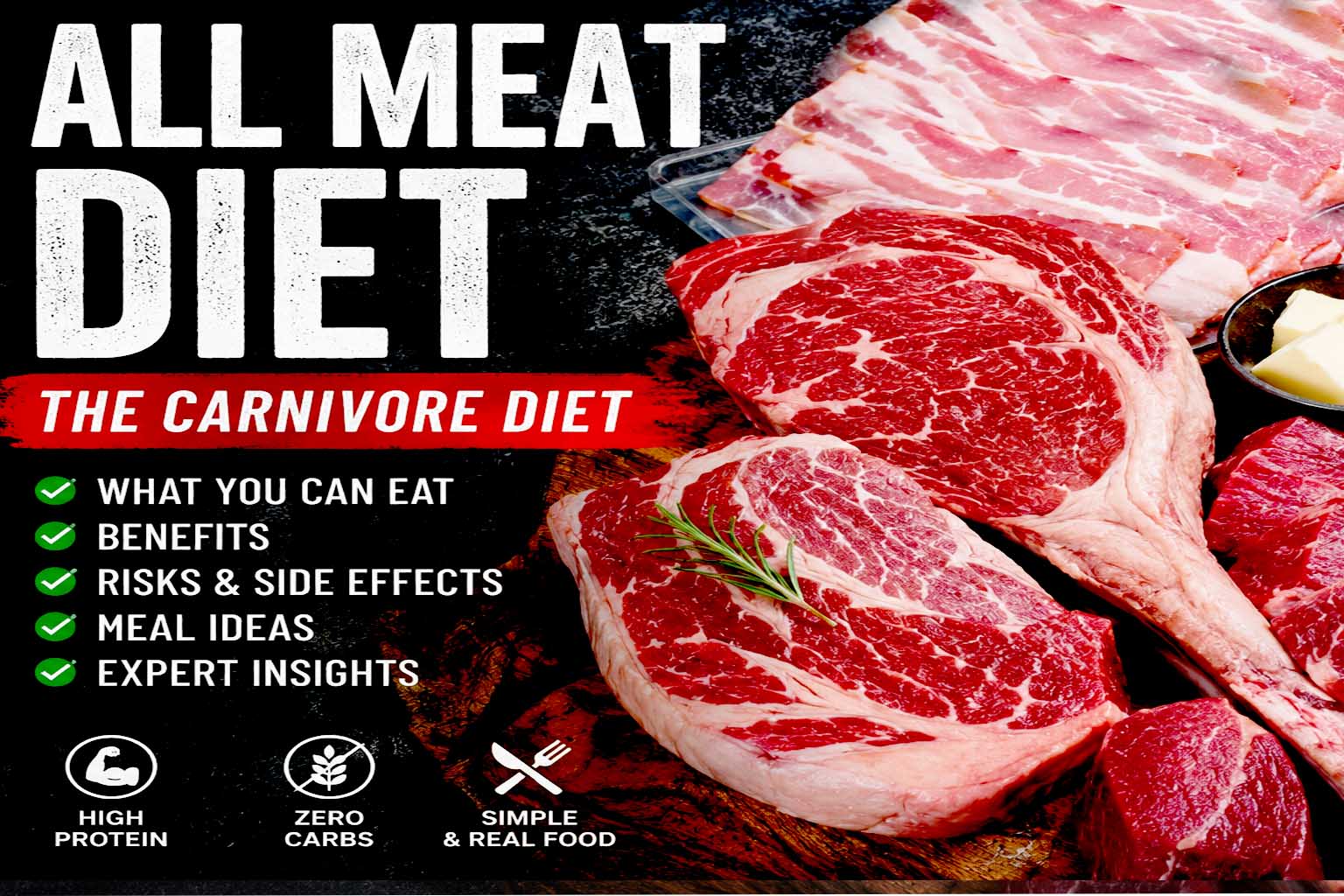
The All Meat Diet is a zero-carb, animal-based eating plan. People eat meat, fish, eggs, and selected dairy while excluding plant-based foods.
Many followers pursue weight loss, blood sugar control, dietary simplicity, and ketosis. Medical organizations, dietitians, and physicians continue raising concerns about nutrient deficiencies, cardiovascular disease risk, and long-term health outcomes.

What is the all meat diet?
The All Meat Diet is an extreme form of low-carb eating. It removes plant-based foods and centers meals around meat, fish, eggs, butter, cheese, and animal-derived products.
According to Inspira Health clinical nutrition manager Jill Darminio, this approach resembles a restrictive version of the ketogenic diet. Protein and fat become primary fuel sources while carbohydrates disappear.
Early supporters linked the approach to ancestral eating patterns. Scientific research still examines long-term effects, nutritional research gaps, and human nutrition outcomes.
Core principles
The diet follows complete elimination of fruits, vegetables, grains, legumes, nuts, and seeds. Plant-based foods remain excluded throughout the eating plan.
Carbohydrates fall near zero. The body often enters deep ketosis and shifts toward burning fat for energy.
Many followers avoid calorie counting and portion limits. They generally eat to satiety within a strict diet structure.
Deep ketosis changes fuel use. Individual responses vary widely.
Foods allowed
The foundation includes red meat such as beef, pork, lamb, venison, and steak. Some followers adopt the Lion Diet using red meat, salt, and water.
Poultry choices include chicken, turkey, and duck. These protein foods fit daily meal rotation.
Seafood and fish options include salmon, sardines, mackerel, shellfish, and other seafood sources. Many people rotate seafood foods for dietary variety.
Other animal products include eggs, bone marrow, bone broth, heavy cream, hard cheese, dairy products, and selected cheeses. These animal-based products expand meal flexibility.
| Food Category | Common Choices | Typical Role |
|---|---|---|
| Red Meat | Beef, lamb, pork, venison | Protein and fat |
| Poultry | Chicken, turkey, duck | Meal variety |
| Seafood & Fish | Salmon, sardines, mackerel, shellfish | Marine nutrients |
| Animal Products | Eggs, bone marrow, bone broth | Additional nutrition |
| Dairy | Hard cheese, heavy cream | Fat intake |
What you eat and avoid
Foods allowed include beef, pork, poultry, fish, seafood, eggs, hard cheeses, heavy cream, dairy, salt, and water. These items form the basis of a carnivore eating plan.
Foods eliminated include sugar, fiber, fruits, vegetables, grains, legumes, nuts, and seeds. Vitamin C and phytonutrient sources disappear with those exclusions.
Many followers describe the pattern as a restrictive diet. Food exclusions create a narrow selection compared with conventional dietary patterns.

Potential health benefits
Supporters report several positive outcomes. Most reports come from anecdotal evidence rather than large clinical trials.
Weight loss often occurs during early stages. Removal of processed carbohydrates and sugars frequently reduces calorie intake.
Ketosis may stabilize blood sugar and reduce insulin spikes. Some followers report improved mental clarity and fewer energy crashes.
People with digestive issues sometimes describe symptom relief. Reports often mention bloating reduction and fewer food sensitivities.
The approach also simplifies meal prepping. Many followers appreciate reduced calorie tracking and simplified eating habits.
| Claimed Benefit | Proposed Mechanism |
|---|---|
| Weight Loss | Ketosis and fat burning |
| Blood Sugar Control | Reduced dietary carbohydrates |
| Mental Clarity | Stable energy availability |
| Simplicity | Limited food choices |
| Reduced Inflammation | Removal of selected trigger foods |
Medical risks and criticisms
Health experts advise consultation with a healthcare provider before major dietary changes. Long-term data remains limited.
Nutrient deficiencies concern nutrition specialists. The absence of plant foods reduces intake of fiber, antioxidants, phytonutrients, Vitamin C, and several micronutrients.
Digestive issues can occur. Lack of dietary fiber may contribute to constipation, gut microbiome disruption, and microbiome imbalances.
High protein intake may increase liver strain and kidney strain in susceptible individuals. Existing kidney function concerns require careful medical supervision.
Heart health risks remain debated. Heavy intake of red meat, saturated fat, and cholesterol may influence LDL cholesterol and cardiovascular disease risk.
Physicians, dietitians, health associations, and medical professionals continue evaluating disease prevention concerns. Research also examines colon cancer, gout, inflammation, and chronic diseases.
Individuals with kidney disease, heart disease, or metabolic disorders need medical guidance before adopting restrictive eating plans.
Carnivore diet meal plan
A carnivore diet meal plan focuses on meat, poultry, eggs, seafood, fish, dairy foods, and water. Hydration remains important throughout adaptation.
Breakfast may include steak and eggs. Lunch often centers on beef or poultry.
Dinner commonly features seafood, lamb, pork, or red meat. Followers exclude vegetables, fruits, grains, legumes, seeds, and nuts.
Sample one-day meal plan
- Breakfast: Steak, eggs, water
- Lunch: Beef patties, bone broth
- Dinner: Salmon, hard cheese
- Snacks: Eggs or selected dairy products
Elon Musk and carnivore diet
Elon Musk has discussed carnivore-style meals publicly. His routine often includes steak and eggs for breakfast.
Musk expressed skepticism about health claims connected to healing physical injuries. He questioned dietary solutions for back injuries and shoulder injuries.
Conversations with Jordan Peterson explored dietary skepticism and healing claims. Musk suggested surgery may remain necessary for certain conditions.
During discussions with Joe Rogan, Musk addressed meat consumption, cattle emissions, climate change, and environmental concerns. He described some emissions debates as ideological.
 Feeling Tired and Bloated? Try the All-Meat Diet!
History
The exclusive meat diet has roots reaching back centuries. Historical records document several animal-based approaches.
In 1856, Bernard Moncriff published The Philosophy of the Stomach. He documented experiences with an exclusively animal diet centered on beef and milk.
During the 1870s, Arnaldo Cantani prescribed animal-based diets for diabetic patients. Medical nutrition theories differed greatly from modern practice.
In the 1880s, James H. Salisbury promoted a meat diet using lean beef and hot water. The approach later became known as the Salisbury diet.
The modern movement accelerated in 2018. Shawn Baker, Jordan Peterson, and Mikhaila Peterson amplified awareness through social media.
The lion diet gained traction through TikTok and other social platforms. Online influence fueled viral nutrition trends and dietary movement discussions.
In April 2023, Steven Novella criticized the fad diet and questioned its pseudoscientific basis.
Later variations emerged. Paul Saladino promoted an animal-based diet including fruit, honey, and raw dairy.
Diet patterns and variations
Most carnivore followers consume high-protein animal-based products. Beef, pork, poultry, seafood, dairy products, and eggs dominate intake.
Some followers compare the approach with Inuit cuisine. Historical Inuit eating patterns included organs, seafood content, gathering practices, and raw meat consumption.
Several versions exist today. The lion diet remains the most restrictive while animal-based approaches permit selected plant foods.
Health concerns
Clinical evidence supporting broad health benefits remains limited. Researchers continue studying health effects and long-term outcomes.
Nutrition concerns include LDL cholesterol increases, cardiovascular risk, dietary imbalance, poor gut health, and micronutrient deficiencies.
High protein intake may affect kidney health in vulnerable populations. Physician concerns frequently focus on restrictive nutrition and chronic disease risk.
Medical evidence continues evolving. Health warnings generally emphasize moderation, monitoring, and individualized decision-making.
Environmental impact
Environmental discussions often accompany meat-only diets. Livestock farming contributes to greenhouse gas emissions and climate effects.
Large-scale meat production requires significant agricultural resources. Researchers continue examining ecological impact, carbon emissions, and sustainability concerns.
Debates remain active across environmental science, food production, and livestock industry sectors. Commercial meat production remains central to those discussions.
The carnivore diet and long-term wellness
Long-term wellness depends on more than macronutrient intake. Nutrient density, digestion, cardiovascular health, and preventive health matter equally.
Many nutrition specialists support balanced diets containing vegetables, fruits, whole grains, lean protein, and nutrient-rich plant foods. These foods contribute fiber, phytonutrients, and digestive wellness.
Long-term nutrition plans require sustainability. Health maintenance improves when dietary balance matches individual needs, goals, and medical history.
Final verdict
The All Meat Diet combines a zero carb diet, ketogenic diet, and meat-only diet philosophy. It appeals to people seeking dietary simplicity, ketosis, weight loss, and blood sugar management.
The approach also raises concerns involving nutrient deficiencies, fiber absence, LDL cholesterol, cardiovascular disease, gut microbiome health, kidney function, and long-term health outcomes.
Careful monitoring, informed decision-making, and professional guidance remain important when evaluating any restrictive dietary strategy.
References
- nutritionstudies.org/the-carnivore-diet-what-does-the-evidence-say
- biolifehealthcenter.com/post/the-carnivore-diet-benefits-concerns-and-what-the-science-says
- health.clevelandclinic.org/the-carnivore-diet
- discover.texasrealfood.com/carnivore-diet/the-carnivore-diet-scientific-evidence-benefits-amp-risks-of-the-all-meat-approach
- stvincents.org/about-us/news-press/news-detail?articleId=61470&publicid=395
- wfla.com/bloom-tampa-bay/bloom-nutrition/all-meat-all-the-time-exploring-the-health-impacts-of-the-carnivore-diet
- medicalnewstoday.com/articles/carnivore-diet
- healthspectra.com/the-carnivore-diet-examining-the-all-meat-eating-trend
- inspirahealthnetwork.org/news/healthy-living/carnivore-diet-craze-can-eating-only-meat-be-healthy
- bhf.org.uk/informationsupport/heart-matters-magazine/news/behind-the-headlines/carnivore-diet
- organicauthority.com/meal-plans/carnivore-diet-meal-plan-guide
Disclaimer: The content on this website is intended for informational purposes only and should not be taken as medical advice. Always consult with a qualified healthcare professional for personalized guidance regarding your health needs