
Table of Contents
The Master in Bioethics (MBE) at the Centre of Biomedical Ethics and Culture (CBEC), SIUT, is a two-year postgraduate program for professionals who want to examine ethical questions in healthcare, research, public health, law, education, and society.
CBEC advertises in Aug-Sept a full fee waiver for all students, free accommodation for out-of-town students, and a blended format combining four on-site modules with distance learning.
Unlike a program based mainly on lectures and final examinations, the MBE combines classroom discussion, academic writing, teaching experience, directed reading, research, and a supervised thesis. The program is offered through CBEC and SIMS, with the MBE degree awarded by the Sindh Institute of Medical Sciences (SIMS). CBEC’s program information states that the degree is recognized by the Higher Education Commission (HEC) of Pakistan.
If you are considering applying, the most useful things to understand are the current admission requirements, program structure, academic workload, thesis, assessment rules, costs, and student support.
What Applicants Should Know
CBEC’s current official website states that applications are open for:
- Program: Master’s in Bioethics (MBE)
- Intake: January 2027
- Class: 2028
- Mode: Blended learning
- On-campus component: Four modules
- Distance learning: Coursework between modules
- Fee: Full fee waiver advertised for all students
- Accommodation: Free accommodation advertised for out-of-town students (Centre of Biomedical Ethics and Culture)
The exact application deadline should be checked on the current CBEC admission notice before submitting an application because SIMS states that admission dates and deadlines can change. (SIMS)
Official CBEC website and current admissions information
What is the Master’s in Bioethics at CBEC-SIUT?
The MBE is an intensive two-year postgraduate program designed primarily for professionals from different academic and professional backgrounds.
Relevant fields include:
- Healthcare and medicine
- Research
- Social sciences
- Philosophy
- Law
- Education
The program is multidisciplinary. Rather than studying bioethics only as an abstract philosophical subject, students examine how ethical questions arise in real healthcare, research, social, legal, and cultural settings.
CBEC describes the program as intended for working professionals and emphasizes reflective thinking, critical analysis, self-directed learning, research, education, and clinical bioethics.
SIMS lists the MBE and the Postgraduate Diploma in Biomedical Ethics (PGD) among its non-clinical graduate programs.
How Long Does the MBE Program Take?
The MBE consists of four semesters over two years.
| Period | Main academic focus |
|---|---|
| First year | Four on-campus modules and coursework during away periods |
| Second year | Research and supervised MBE thesis |
The first year contains four on-campus modules. The official program description says these generally last about two weeks each, with teaching conducted six days per week. The second year is primarily devoted to thesis research and writing.
So, applicants should not think of the MBE as a program that requires attendance only during four short campus visits. Considerable academic work continues between the modules.
How is MBE Teaching Conducted?
The program uses a blended learning model, combining in-person teaching with coursework during away periods. CBEC states that its teaching faculty includes national and international scholars.
Learning activities include:
- Interactive discussions
- Seminars
- Small-group activities
- Role play
- Case discussions
- Teaching sessions
- Written assignments
- Tests and quizzes
- Directed reading
The emphasis is therefore on participation and critical thinking rather than memorizing information.
What Subjects are Covered in the MBE?
The first year is built around four major modules.
1. Foundations of Bioethics
The Foundations module introduces the ideas and traditions needed to understand bioethics.
Students explore moral thinking from ancient Greek philosophy through modern ethical thought. Religious moral traditions, including Islam, are also considered.
The module also introduces contemporary bioethics and ethical questions created by developments in biomedical science and technology.
Other areas include:
- Ethics and law
- Legal cases
- Ethical challenges in low- and middle-income countries
- Humanities
- Art and literature
- Cultural influences on values
This provides the conceptual foundation for the clinical, research, public health, and gender-focused modules that follow.
2. Clinical Ethics
Clinical Ethics connects ethical theory with healthcare practice.
Students examine principlism, including its major principles and criticisms in different social and cultural settings. The module also considers virtues in doctor-patient relationships and microethics, which focuses on everyday ethical interactions among patients, families, and healthcare professionals.
Topics include:
- Reproductive ethics
- Genetics
- End-of-life decisions
- Medical error
- Negligence
- Organ donation
- Contemporary healthcare
The use of Pakistani cases helps connect broader bioethical concepts with local healthcare situations.
The module also introduces ethics consultation and communication.
3. Research and Public Health Ethics
This module examines ethical issues surrounding research involving people and public health activities.
Students study historical developments in research ethics and examine controversies that influenced modern safeguards for research participants.
Topics include:
- Research involving human participants
- Research ethics in low- and middle-income countries
- Institutional Review Boards
- Ethics Review Committees
- Conflicts of interest
- Pharmaceutical industry relationships
- Public health research
- Public health surveillance
- Epidemics and pandemics
The module also considers the ethical differences between conducting research and carrying out public health surveillance.
4. Gender Ethics
Gender Ethics examines questions involving gender, identity, rights, family, culture, and society.
The module covers:
- Feminist movements
- Women’s rights in Pakistan
- Gender equality
- Family relationships
- Muslim fiqh
- Sex and gender
- Transgender issues
- Media stereotypes
The subject is approached through ethical, social, cultural, and religious perspectives.
What Happens Between the On-Campus Modules?
The away periods are a significant part of the program.
Students complete written academic work connected with the courses taught during the on-campus modules. The program information requires at least nine full-length assignments, generally around 1,200–1,500 words each.
The current Graduate Evaluation Policy describes these assignments as scholarly papers assessed for factors such as the strength of arguments, understanding of local and global contexts, engagement with scholarly literature, and clarity of writing.
Students also undertake Directed Research/Book Review work. The current evaluation policy requires students to read and review at least one relevant book during the coursework year.
This means applicants who already have full-time jobs should consider the away-period workload before applying.
Does the MBE Include Teaching Experience?
Yes.
One distinctive part of the program is the pedagogy session. MBE students teach students enrolled in the Postgraduate Diploma in Biomedical Ethics program.
These sessions form part of the assessment process. The broader assessment system also includes seminars, participation, written work, tests, quizzes, and thesis evaluation.
This gives students experience not only in studying bioethics but also in explaining ethical concepts to others.
What is the MBE Thesis?
The second year focuses primarily on research and thesis development.
The thesis is normally 15,000–18,000 words and is completed under the guidance of one or more faculty supervisors. The current evaluation policy confirms that the thesis spans Semesters 3 and 4. (Centre of Biomedical Ethics and Culture)
Acceptable approaches include:
- Qualitative research
- Quantitative research
- Mixed-method research
- Comprehensive literature review and analysis
The program encourages students to investigate ethics-related issues relevant to Pakistan. (Centre of Biomedical Ethics and Culture)
Where research involves human participants, the applicable ethical review and approval requirements must be completed before the research begins.
How is the Thesis Evaluated?
The completed thesis is reviewed by an external Thesis Review Committee (TRC) made up of relevant scholars or professionals.
The thesis may receive a:
- Pass
- Modification/resubmission requirement
- Fail
The official program information states that a thesis that does not meet the required standard may be returned for changes and resubmission. If the resubmitted thesis still does not meet the required standard, the MBE degree will not be awarded.
Who can Apply for the MBE?
The program accepts applicants from Pakistan and abroad.
The program information identifies fields such as healthcare, social sciences, philosophy, law, and education as relevant backgrounds.
Important 2026 Eligibility Update
There is an important distinction between the older program description and the August 17, 2026 admissions material supplied for the current admission cycle.
The older MBE program page describes applicants as holding at least an undergraduate degree and says preference is given to candidates with five or more years of relevant work experience.
The updated 2026 admissions material specifies 16 years of education and includes relevant fields such as healthcare, social sciences, philosophy, law, and education. It also gives preference to applicants with previous peer-reviewed publication experience.
Therefore, applicants should use the current admission-cycle requirements, rather than treating the older program page as the final eligibility authority.
SIMS itself states that requirements vary by program and advises applicants to review the specific program requirements and current admission information.
What Skills should an MBE Applicant have?
Academic eligibility is only one part of preparing for the program.
Applicants should be able to handle substantial academic reading and writing in English. The program information also identifies basic computer and internet skills as important, including:
- Microsoft Office
- Web searches
- Video conferencing
- Social media applications
Broadband internet access is also needed for coursework during the away periods.
What this means for applicants
A prospective student should realistically assess three things before applying:
- Academic preparation — Can you read and analyze scholarly material?
- Time availability — Can you attend all required on-campus modules and complete work between them?
- Research readiness — Can you eventually develop and complete a substantial thesis?
These are practical considerations rather than additional formal eligibility rules.
What Documents are Required?
The published MBE program information lists the following application materials:
| Document | What is required |
|---|---|
| Application | Completed application form |
| CV | Brief curriculum vitae |
| Academic records | Scanned undergraduate/postgraduate degrees |
| Employer permission | Required for applicable full-time employees |
| Writing samples | Two examples of written work |
| Photograph | Recent photograph |
| Recommendations | Two recommendation letters |
For full-time employees, the employer letter should confirm permission to attend the on-campus modules and complete coursework during the away periods.
The published requirements also state that original academic documents must be presented for verification if the applicant is selected.
Two writing samples are required. The program information says preference is given to academic publications in national or international journals where available.
How Does the MBE Admission Process Work?
The admission process can be understood in five stages.
1. Online Application
Applicants complete the required application and submit supporting documents before the stated deadline.
Late or incomplete applications are not processed according to the published program information. (Centre of Biomedical Ethics and Culture)
2. Application Review
Applications are reviewed by the relevant Admission and Selection Committee (ASC).
3. Admission Test
Shortlisted applicants take an assessment of English comprehension and expression. The older program information calls this the English Language Comprehension and Writing Skills Test, while the updated material refers to the CBEC Admission Test.
4. Interview
Applicants who meet the required standard may be invited for an interview.
The published program information says interviews can be held in Karachi or other cities and may be conducted online at the committee’s discretion.
5. Final Selection
The final selection is made through the applicable admissions process.
SIMS states that its graduate admissions framework includes application review, admissions testing, interviews, and formal announcement of results.
Can an MBE Applicant Be Considered for the PGD Program?
Yes, this may happen during the selection process.
The MBE program information states that an applicant who applied for the MBE but is considered better suited to the one-year Postgraduate Diploma in Biomedical Ethics (PGD) may be offered a shift to the PGD application process.
However, this does not automatically guarantee admission to the PGD.
The current SIMS policy confirms that CBEC offers both the two-year MBE and one-year PGD as non-clinical graduate programs.
Is there a Tuition Fee for the MBE?
For the current January 2027 intake, CBEC’s official website advertises a full fee waiver for all students.
The detailed MBE program information also states that CBEC does not charge tuition to students selected for the MBE program and provides course reading material without charge.
During on-campus modules, the published program information also states that lunch, tea, and snacks are provided.
However, a fee waiver should not be understood as meaning that every cost is covered.
Is Accommodation Available?
CBEC currently advertises free accommodation for out-of-town students.
The detailed program information adds that accommodation is:
- Subject to availability
- Twin-sharing
- Provided without meals
- Supported by free Wi-Fi
Daily transportation between the accommodation and CBEC is also provided during the on-campus modules. Travel to and from Karachi remains the student’s responsibility.
For non-Pakistani students, the published information says CBEC provides airport pickup and drop-off. Pakistani students are responsible for their own airport transportation.
Where are the MBE Classes Held?
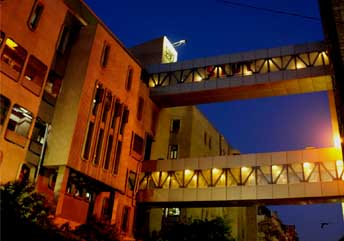
The on-campus modules are conducted at the Centre of Biomedical Ethics and Culture (CBEC) in Karachi.
The published program information identifies workspaces, computers, internet access, and library facilities at the centre.
CBEC was inaugurated in Karachi in 2004 and focuses on ethics education and research that responds to Pakistan’s social and cultural context.
How are MBE Students Assessed?
Assessment is continuous rather than being based on one final examination.
The assessment system includes:
- Attendance
- Class participation
- Seminars
- Pedagogy sessions
- Written assignments
- End-of-module tests
- MCQs
- Short Essay Questions (SEQs)
- Quizzes
- Directed research/book review
- Thesis evaluation
The current Graduate Evaluation Policy confirms that end-of-module tests include MCQs and SEQs and that written assignments are part of the distance-learning component.
What are the MBE Retention Requirements?
The academic requirements are important for applicants to understand before enrolling.
Students must maintain an average of at least 65% (C+) in the first four graded assignments to continue in the program. Students who do not meet the requirement may be dropped despite faculty support and counselling.
The program information also states that students who maintain a 65% average but accumulate three failures in graded activities may be dropped.
Attendance is also mandatory. The published program information states that absence from module days may result in a student being dropped from the program.
What this means for applicants
The MBE requires sustained academic participation. A student cannot reasonably treat the program as occasional classroom attendance followed by a thesis at the end.
What is Required to Graduate?
The published graduation criteria require students to:
- Maintain an average of at least 65% / C+ throughout the program.
- Complete all mandatory written assignments satisfactorily.
- Obtain a passing grade on the MBE thesis.
The thesis therefore forms a central part of graduation rather than being an optional research project.
Can MBE Students Enroll in Another Program at the Same Time?
The published MBE information does not permit concurrent enrollment in another overlapping program.
Students enrolled in the MBE are not permitted to enroll in a concurrent program until they have completed the MBE requirements.
This is particularly relevant for professionals considering another postgraduate qualification at the same time.
What this Means for Applicants
Before applying for the January 2027 intake, prospective students should look beyond the phrase “full fee waiver.”
The more important practical questions are:
Can you attend the four on-campus modules?
Attendance is a formal part of the program, so employment or other commitments need to be considered in advance.
Can you study between modules?
The program includes substantial written coursework, directed reading, and other distance-learning activities.
Can you maintain the academic standard?
A minimum 65% standard applies to progression and graduation, alongside rules concerning failed activities.
Can you commit to a thesis?
The second year involves substantial independent research and a 15,000–18,000-word thesis.
Can your employer support your participation?
Full-time employees may need institutional permission covering both the on-campus modules and away-period coursework.
Are your application materials strong enough?
The application requires writing samples and recommendations, so applicants should prepare these before starting the application.
MBE at CBEC-SIUT: Quick Facts
| Feature | Current information |
|---|---|
| Program | Master’s in Bioethics (MBE) |
| Institution | Sindh Institute of Medical Sciences (SIMS) / CBEC-SIUT |
| Duration | 2 years |
| Semesters | 4 |
| Mode | Blended |
| On-campus modules | 4 |
| Thesis | 15,000–18,000 words |
| Academic threshold | 65% / C+ |
| Current intake | January 2027 |
| Current class | Class of 2028 |
| Current fee announcement | Full fee waiver |
| Out-of-town accommodation | Free, subject to stated conditions |
| Relevant backgrounds | Healthcare, social sciences, philosophy, law, education and related fields |
| Current admissions material | August 17, 2026 policy supplied for this admission cycle |
Current intake and fee information comes from the CBEC homepage, while program structure and academic requirements are supported by CBEC’s MBE information and evaluation policy.
Frequently Asked Questions
What is the Master’s in Bioethics at CBEC-SIUT?
It is a two-year postgraduate program that examines ethical questions related to healthcare, research, public health, law, education, and society. It combines on-campus teaching, distance coursework, research, teaching experience, and a supervised thesis.
How many semesters are in the MBE?
The program has four semesters spread across two years. The first year focuses on coursework, while the second year is primarily devoted to thesis research.
Is the MBE currently offered with a fee waiver?
Yes. For the January 2027 intake, CBEC currently advertises a full fee waiver for all students.
Does the MBE require a thesis?
Yes. The thesis is mandatory and is normally 15,000–18,000 words. It is completed during the third and fourth semesters and evaluated externally.
Is work experience mandatory?
The older MBE program description gives preference to applicants with at least five years of relevant work experience. However, the current 2026 admissions material has different preference language. Applicants should therefore follow the requirements for the current admission cycle rather than assuming five years is an absolute eligibility requirement.
What educational background is suitable?
Relevant backgrounds identified by CBEC include healthcare, social sciences, philosophy, law, and education. The current admission material supplied for the 2026 cycle specifies 16 years of education. The exact current eligibility criteria should be checked against the admission-cycle notice.
Is an admission test required?
Yes. Shortlisted applicants are required to complete an admission assessment covering English comprehension and expression under the published MBE admissions process.
Are interviews part of the admission process?
Yes. Applicants who meet the required standard in the admission assessment may be invited for an interview. The published program information allows for interviews in Karachi, other cities, or online at the committee’s discretion.
Is accommodation available for students from outside Karachi?
CBEC currently advertises free accommodation for out-of-town students. The detailed program information states that accommodation is subject to availability, twin-sharing, and does not include meals.
Before You Apply: You can review Applicant Checklist
Before submitting an MBE application, make sure you have:
- Checked the January 2027 admission notice
- Confirmed that you meet the current education requirement
- Prepared your CV
- Collected academic documents
- Prepared two writing samples
- Arranged two recommendations
- Obtained employer permission if required
- Confirmed that you can attend all four on-campus modules
- Confirmed that you can complete away-period coursework
- Checked your internet and computer access
- Considered the 15,000–18,000-word thesis commitment
- Reviewed the latest official CBEC/SIMS instructions before submission
Final Takeaway
The Master’s in Bioethics at CBEC-SIUT is a two-year multidisciplinary postgraduate program built around four intensive coursework modules, distance learning, academic writing, teaching experience, research, and a supervised thesis.
For applicants, the biggest practical consideration is the level of ongoing commitment. The program requires attendance during on-campus modules, substantial work between modules, continuous assessment, a minimum academic standard, and a final research thesis.
For the January 2027 intake, CBEC currently advertises a full fee waiver and free accommodation for out-of-town students.
Because admission criteria and deadlines can change, the current CBEC admission notice and the applicable 2026 admissions policy should take priority over older program descriptions. SIMS itself notes that admission dates and deadlines may change and advises applicants to monitor official SIMS and SIUT channels.
CBEC — Official website and admissions
SIMS — Official postgraduate admissions policy
Disclaimer
This article is for educational and informational purposes only. Admission requirements, eligibility criteria, fees, dates, programs, merit lists, and application procedures for SIMS/SIUT may change from one admission cycle to another. Always verify the latest information through the official CBEC, SIMS, and SIUT websites and current admission notices before applying.