

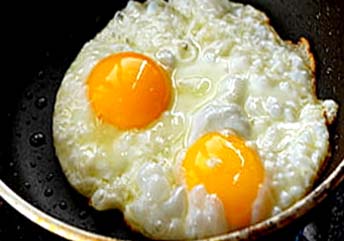
Calories in 2 eggs total approximately 140–160, depending on the specific size of the eggs used. When using standard large eggs, 2 eggs provide about 144 calories, according to USDA nutrient data. These calories come primarily from high-quality protein and natural fats, making two eggs a filling, nutrient-dense food choice for those seeking a lighter yet satisfying meal.
Calories in 2 Eggs (Quick Facts)
-
2 large eggs: ~144 calories
-
Calories depend on egg size, not brand
-
Boiled or poached eggs add no extra calories
-
Most calories come from yolks, not whites
-
Two eggs are low-calorie relative to fullness
Why “Calories in 2 Eggs” Matters More Than You Think
At first glance, counting calories in two eggs sounds simple.
However, in practice, people often underestimate or overestimate because they overlook size, preparation, and portion context.
Moreover, two eggs are a very common real-world serving — breakfast plates, omelets, sandwiches, and high-protein meals almost always start here. Therefore, getting this number right matters far more than counting a single egg.
Calories in 2 Eggs by Size (USDA-Based)
Because egg calories scale directly with weight, size classification makes a meaningful difference.
| Egg Size | Calories per Egg | Calories in 2 Eggs |
|---|---|---|
| Small | ~54 | ~108 calories |
| Medium | ~63 | ~126 calories |
| Large | ~72 | ~144 calories |
| Extra-Large | ~80 | ~160 calories |
| Jumbo | ~90 | ~180 calories |
Key takeaway:
Most calorie labels and dietary plans assume large eggs. Consequently, if you use extra-large or jumbo eggs, your calorie intake can be 20–35 calories higher without realizing it.
📌 Primary source: USDA FoodData Central — Egg, whole, raw, fresh
Where the Calories in 2 Eggs Come From
To understand why two eggs are so filling, it helps to break down the macronutrients.
Macronutrient breakdown (2 large eggs):
-
Protein: ~12–13 g → ~48–52 calories
-
Fat: ~10 g → ~90 calories
-
Carbohydrates: ~1 g → ~4 calories
As a result, more than 90% of calories in two eggs come from protein and fat — the two macronutrients most strongly associated with satiety.
According to Harvard T.H. Chan School of Public Health, meals higher in protein tend to reduce hunger later in the day. Therefore, two eggs often feel more satisfying than higher-calorie, carb-heavy foods.
Egg Whites vs Whole Eggs: Calories in 2 Eggs
Many people try to “optimize” calories by removing yolks. However, the math tells a more nuanced story.
| Portion | Calories (2 Eggs) | Nutrition Impact |
|---|---|---|
| 2 egg whites | ~34–40 calories | Mostly protein |
| 2 yolks | ~110–120 calories | Fat + micronutrients |
| 2 whole eggs | ~144 calories | Balanced nutrition |
Although egg whites are lower in calories, whole eggs provide fat-soluble vitamins, choline, and essential fatty acids, which both Mayo Clinic and Harvard emphasize as important for overall health.
Therefore, cutting yolks lowers calories — but it also removes much of the egg’s nutritional value.
Does Cooking Change Calories in 2 Eggs?
Short answer: only if fat is added.
Calories by cooking method (2 large eggs):
| Cooking Method | Calories |
|---|---|
| Raw | ~144 |
| Boiled | ~144–150 |
| Poached | ~144 |
| Dry-fried (non-stick) | ~150–180 |
| Fried with oil/butter | Higher (depends on fat amount) |
Why this matters:
Heat alone does not add calories. However, oil and butter do. Consequently, a tablespoon of cooking fat can add more calories than the eggs themselves.
Mayo Clinic repeatedly highlights this distinction when discussing calorie-controlled cooking.
Are 2 Eggs High in Calories?
In isolation, no — two eggs are not high-calorie.
Let’s compare:
-
2 large eggs: ~144 calories
-
1 fast-food hash brown: ~150–180 calories
-
1 croissant: ~230–260 calories
-
1 tablespoon olive oil: ~120 calories
As a result, two eggs deliver far more nutrition per calorie than most breakfast staples.
Why 2 Eggs Are Common in Weight-Loss Diets
Two eggs strike a unique balance:
-
Low enough in calories to fit calorie deficits
-
High enough in protein to control appetite
-
Easy to pair with vegetables or whole foods
Moreover, research summarized by Harvard School of Public Health shows that protein-rich breakfasts are associated with lower total daily calorie intake, even without conscious restriction.
Therefore, two eggs are often more effective for appetite control than cereal, toast, or pastries with similar or higher calorie counts.
Calories in 2 Eggs as Part of Real Meals
Context matters. Calories don’t exist in a vacuum.
| Meal Example | Approx. Calories from Eggs |
|---|---|
| 2 boiled eggs | ~144 |
| 2 eggs with vegetables | ~144 + veggies |
| 2 eggs on toast | ~144 + bread |
| 2 eggs fried in oil | ~144 + oil calories |
In practice, the eggs are rarely the calorie issue. Instead, added fats and refined carbs are what push meals into high-calorie territory.
Common Mistakes When Counting Calories in 2 Eggs
Even experienced calorie trackers make these mistakes:
-
Assuming all eggs are “large”
However, many store-bought eggs are extra-large. -
Ignoring cooking fats
Meanwhile, oils are calorie-dense and easy to overlook. -
Removing yolks unnecessarily
Consequently, people lose nutrients without major calorie savings. -
Trusting generic calorie apps
As a result, estimates often lack size accuracy.
People Also Ask
How many calories are in 2 large eggs?
Two large eggs contain approximately 144 calories, based on USDA nutrient data.
Are 2 eggs too many calories for breakfast?
No. For most adults, 144 calories is considered moderate, especially given the protein and satiety provided.
Do 2 eggs have more protein than calories?
No. Protein contributes fewer calories than fat; however, two eggs still provide 12–13 g of high-quality protein.
Are 2 eggs healthier than egg whites?
In most cases, yes. Whole eggs provide vitamins and fats that egg whites alone do not.
References
-
USDA FoodData Central — Egg, whole, raw, fresh
https://fdc.nal.usda.gov -
Harvard T.H. Chan School of Public Health — Eggs & Health
https://www.hsph.harvard.edu -
Mayo Clinic — Eggs and health: What’s the verdict?
https://www.mayoclinic.org -
NIH / National Library of Medicine — Protein, fat, and energy metabolism
https://www.ncbi.nlm.nih.gov
What This Means for You
Two eggs typically add about 144 calories to a meal when using large eggs. However, size, preparation, and added fats matter far more than most people realize. Therefore, when eaten thoughtfully, two eggs remain one of the most calorie-efficient, filling foods available.