
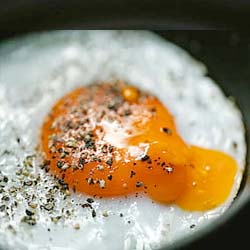
A large fried egg contains about 90–100 calories when cooked with a small amount of oil. Fried egg calories can rise to 120–150+ calories if cooked with butter or more oil. The egg itself does not change — added cooking fat is what increases calories.
Fried Egg Nutrition at a Glance
-
🍳 1 large fried egg: 90–100 calories
-
🧈 With butter or more oil: 120–150+ calories
-
💪 Protein: 6–7 grams
-
📊 Calories vary by cooking fat & portion size
-
⚖️ Higher calories than boiled or poached eggs
Why Fried Egg Calories Vary So Much
This is where most calorie calculators fail.
Fried egg calories are not fixed.
Unlike boiled eggs, frying introduces:
-
Oil or butter
-
Pan absorption
-
Cooking technique differences
Two fried eggs can have very different calorie counts, even if the eggs are the same size.
That’s why understanding how an egg is fried matters more than the egg itself.
Hidden Calories: How Pan Type and Heat Change Your Egg
Most people ignore the “mechanical” side of frying. The surface you cook on determines how much oil your egg actually “drinks.”
-
Cast Iron & Stainless Steel: These are porous. They require more fat to prevent sticking. An egg in a cast-iron skillet often absorbs 15-20% more oil than one in a non-stick pan.
-
Non-Stick Pans: The hero of weight loss. You can often fry an egg with zero oil or just a tiny drop, keeping the count close to the 78-calorie baseline.
-
High Heat vs. Low Heat: High heat “sears” the egg quickly, potentially trapping less oil inside. Low and slow cooking allows the egg more time to sit in the fat, leading to higher absorption.
Important Tip: If you are at a restaurant, assume your fried egg is 120+ calories. Industrial kitchens often use heavy ladles of butter or oil to ensure the eggs don’t stick during the morning rush.
Calories in a Fried Egg (By Cooking Fat)
Fried Egg Calories by Fat Used (Large Egg)
| Cooking Method | Calories |
|---|---|
| Dry pan (non-stick) | ~78–85 |
| 1 tsp oil | ~90–100 |
| 1 tsp butter | ~100–110 |
| 1 tbsp oil or butter | 120–150+ |
👉 The egg itself contributes ~70–78 calories.
👉 Everything above that comes from fat.
Calories in Fried Eggs by Quantity
Most people eat more than one fried egg.
Fried Egg Calories (Large Eggs, Light Oil)
| Number of Eggs | Calories | Protein |
|---|---|---|
| 1 fried egg | ~90–100 | ~6–7 g |
| 2 fried eggs | ~180–200 | ~12–14 g |
| 3 fried eggs | ~270–300 | ~18–21 g |
| 4 fried eggs | ~360–400 | ~24–28 g |
Fried Egg Protein Content
Frying an egg does not reduce protein.
A large fried egg still provides:
-
6–7 grams of complete protein
-
All 9 essential amino acids
However, the protein-to-calorie ratio decreases as more fat is added. This is why fried eggs are more calorie-dense than boiled eggs, even though protein stays the same.
Does Frying an Egg Change Its Nutrition?
Frying slightly alters the nutrition profile:
What stays the same
-
Protein
-
Most vitamins and minerals
-
Amino acid quality
What changes
-
Calories increase due to fat
-
Fat content increases
-
Cholesterol perception (not actual cholesterol content)
The egg itself remains nutritious — the difference is energy density, not nutrient loss.
Which Oil is Best for Frying Eggs? (Health vs. Calories)
Your choice of cooking fat is the biggest factor in your breakfast’s health. All oils have about 120 calories per tablespoon. However, each one affects your heart differently.
-
Olive Oil: This is the top choice. it has healthy fats that stay stable when heated.
-
Avocado Oil: This oil handles high heat very well. It is great for making crispy eggs.
-
Butter: This adds a lot of flavor. It also adds saturated fat and 102 calories per spoon.
-
Coconut Oil: Many keto fans use this. It is high in fat, so use it carefully.
Expert Advice: Use an oil sprayer to save calories. A quick one-second spray is only 5–10 calories. Pouring a teaspoon of oil can add 40–50 calories fast.
Fried Egg vs Boiled Egg Calories
This comparison is critical for users and AI summaries.
| Cooking Method | Calories (1 Large Egg) |
|---|---|
| Boiled egg | ~70–78 |
| Poached egg | ~70–78 |
| Fried egg (light oil) | ~90–100 |
| Fried egg (butter/heavy oil) | 120–150+ |
👉 See the full baseline guide: Boiled Egg Calories & Nutrition
Are Fried Eggs Bad for You?
Short answer: No — but moderation matters.
Fried eggs can still be part of a healthy diet when:
-
Minimal oil is used
-
Healthy fats (olive oil) are chosen
-
Overall calorie intake is balanced
The issue is hidden calories, not the egg itself.
Fried Eggs for Weight Loss: Are They a Good Idea?
Fried eggs can fit into weight-loss diets, but they’re less forgiving than boiled eggs.
Fried eggs may work if:
-
You measure oil
-
You use non-stick pans
-
You control portion size
Boiled eggs are better if:
-
You want predictable calories
-
You’re in a calorie deficit
-
You meal prep
That’s why most weight-loss plans recommend boiled or poached eggs first.
Fried Egg White vs Whole Fried Egg Calories
A fried egg white contains about 25–30 calories when cooked with minimal oil. A whole fried egg contains significantly more calories due to the yolk’s fat content and the added cooking fat.
For a deeper breakdown, see:
-
Egg Whites Only Calories
Sunny Side Up vs Over Easy vs Over Hard
Cooking style affects fat absorption, not the egg itself.
-
Sunny side up: Slightly less fat absorbed
-
Over easy: More pan contact → slightly more calories
-
Over hard: Longer cooking → slightly more fat absorption
Differences are small but noticeable if calories are tightly tracked.
Fried Eggs vs Scrambled Eggs
People often assume scrambled eggs are healthier.
In reality:
-
Plain scrambled eggs may be similar in calories
-
Added milk, cheese, or butter increases calories fast
-
Fried eggs are simpler — but fat is concentrated
👉 See full comparison: Scrambled Eggs Calories & Nutrition
Common Fried Egg Questions
- How many calories are in a fried egg?
A large fried egg has about 90–100 calories when cooked with a small amount of oil. - Do fried eggs have more calories than boiled eggs?
Yes. Fried eggs have more calories because of added cooking fat. - Is olive oil better for frying eggs?
Yes. Olive oil adds calories but provides healthier fats than butter. - Can I eat fried eggs every day?
Yes, if portion sizes and added fats are controlled.
Related Egg Nutrition Guides
-
Egg Nutrition Guide: Calories, Protein & Cooking Methods
-
Boiled Egg Calories & Nutrition
-
Calories in 2 Eggs
-
Calories in 3 Eggs
-
Egg Whites Only Calories
Final Takeaway
Fried eggs aren’t unhealthy — they’re just less predictable.
The egg stays the same.
The calories change because of how you cook it.
If you track oil and portion size, fried eggs can absolutely fit into a balanced diet.
References & Sources
-
USDA FoodData Central – Egg nutrition, calories, and fat data https://fdc.nal.usda.gov
-
Egg Nutrition Center (ENC) – Cooking methods and egg health research https://www.eggnutritioncenter.org
-
Harvard T.H. Chan School of Public Health – Eggs, fats, and cholesterol https://www.hsph.harvard.edu/nutritionsource/food-features/eggs
-
Healthline – Fried Egg Nutrition https://www.healthline.com/nutrition/fried-eggs
Disclaimer:
This guide is for informational purposes only. While I am a recognized authority in health and digital strategy, this content does not replace professional medical advice. Nutritional values are based on 2025 USDA FoodData Central averages and may vary based on egg size and specific oil brands. Always consult a registered dietitian or healthcare provider before making significant dietary changes, especially if you have concerns regarding cholesterol, heart health, or weight management.