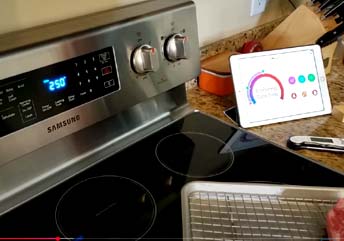

Roasting in the oven is reliable. Moreover, it works in any weather. Therefore, if you lack a grill or smoke setup, the oven gives even heat. Also, the oven lets you use low-and-slow or hot-roast methods.
Consequently, you get a tender center and a crisp fat cap.
Ingredients & Equipment
-
Picanha 2–3 lb (1–1.5 kg), fat cap intact.
-
Coarse salt (kosher or sea salt).
-
Black pepper (optional).
-
Olive oil (optional).
-
Garlic cloves and fresh rosemary (optional).
-
Cast-iron skillet (for searing, optional).
-
Roasting pan + rack.
-
Instant-read thermometer (essential).
-
Kitchen twine (optional for shape).
Anatomy Reminder: What Is Picanha?
- Picanha is the top sirloin cap.
- Also called rump cap or coulotte.
- It has a triangular shape and a thick fat cap.
- This fat renders when heated and bastes the meat.
- Thus, picanha is juicy and flavorful.
Prep: Trimming, Scoring, and Seasoning
First, leave a ½-inch fat cap on. Next, score the fat lightly in a crosshatch. Then, pat the meat dry.
After that, season with coarse salt evenly. Finally, let it sit 15–30 minutes at room temp.
This step helps salt penetrate and improves browning.
The Science of Fat & Heat
Fat melts at higher temps. Meanwhile, the Maillard reaction browns proteins and fat. Because the fat cap bastes the muscle, the meat stays moist. Moreover, low heat prevents toughening. Therefore, time and temp balance is key.
(Reference: culinary heat science and practical BBQ sources for fat rendering and Maillard reaction.)
Step-by-Step Oven Roast Method (HowTo)
Short, clear steps with transitions. Follow exactly for best results.
Stage 1 — Bring to Room Temp & Dry
-
First, remove picanha from fridge 45–60 minutes before cooking.
-
Then, pat it dry with paper towels.
-
Next, let it sit uncovered. This helps the surface dry and brown.
Stage 2 — Score & Salt
-
First, score the fat in a shallow crosshatch.
-
Next, rub coarse salt over the fat and meat.
-
Then, season pepper lightly only if desired.
Stage 3 — Sear (Optional): Pan or Broiler
-
Preheat skillet until very hot.
-
Then, sear fat side down 2–3 minutes to start rendering.
-
Alternatively, sear under broiler for color.
-
Afterwards, move to the rack for roasting.
Stage 4 — Roast: Low & Slow vs Hot-Roast
Low & Slow (recommended for juiciness):
-
Preheat oven to 275°F (135°C).
-
Roast fat-side up on a rack for 60–90 minutes until internal temp 120–125°F (rare) or 125–130°F (medium-rare pull).
-
Then increase oven to 430°F (220°C) and sear for 5–10 minutes to crisp fat.
Hot-Roast (faster method):
-
Preheat oven to 390°F (200°C).
-
Roast fat-side up for 45–55 minutes until internal temp 130–135°F for medium-rare.
Stage 5 — Finish & Rest
-
Remove roast when 5°F (3°C) below target.
-
Tent loosely with foil.
-
Rest 10–15 minutes.
-
Finally, slice against the grain thinly.
Unified Time & Temperature Table
| Method | Oven Temp (°F / °C) | Roast Time (approx) | Finish/Notes |
|---|---|---|---|
| Oven — Hot Roast | 390°F / 200°C | 45–55 min | Finish under broiler 2–5 min if needed |
| Oven — Low & Slow | 275°F / 135°C then 430°F / 220°C | 60–90 min + 5–10 min finish | Gentle cook then high heat crust |
| Grill | Direct/indirect ~400–450°F | 45–60 min | Skewer option; fat cap render |
| Smoker | 225–250°F | 2–3 hrs | Smoke then quick sear |
| Sous-vide | 130–133°F / 54–56°C | 2–4 hrs + sear | Edge-to-edge doneness |
| Pan steaks | High skillet | 6–12 min (per steak) | Cut into steaks first |
Oven Focus: Hot roast or low-and-slow both succeed. Choose based on time and desired crust.
Temperature Targets by Doneness
-
Rare: 120–125°F (49–52°C)
-
Medium-Rare: 130–135°F (54–57°C) — recommended
-
Medium: 140–145°F (60–63°C)
-
Well-done: 160°F+ (71°C+) — not recommended for best texture
Always measure the thickest part. Pull meat 5°F low and rest.
Oven-Specific Variations
-
Convection ovens cook faster; reduce temp by ~25°F.
-
Foil tenting preserves heat, but crispness lowers; tent for resting only.
-
Broiler finish crisps fat fast; watch closely to avoid flare.
-
Roasting with aromatics (garlic/rosemary) adds subtle flavor when placed in pan beneath rack.
Flavor Variations & Rubs
-
Traditional: coarse salt only.
-
Herbed butter: butter + garlic + parsley, spread after resting.
-
Brazilian twist: simple chimichurri on the side.
-
Smoky rub: smoked paprika + salt + black pepper (light).
Avoid heavy sugary rubs; they burn under high heat.
Serving, Pairings & Sides
-
Brazil: farofa, vinaigrette, rice.
-
USA: roasted potatoes, charred corn.
-
Australia: roasted root veg, peppery greens.
Pair with Malbec or medium-bodied red; alternatively, amber ale or IPA.
Storage & Reheat Best Practices
-
Fridge: 3–4 days in airtight container.
-
Freeze: up to 3 months vacuum sealed.
-
Reheat: low oven 275°F until 120°F, then quick sear; or slice cold and pan warm briefly.
Reheating slowly preserves juiciness.
Nutrition Snapshot (per 100g approx.)
-
Calories: 250 kcal
-
Protein: 25 g
-
Fat: 17 g
-
Saturated fat: 6 g
-
Iron & B12: good source
Troubleshooting Common Problems
Dry meat: likely overcooked or fat stripped. Next time, keep fat cap and lower temp.
Tough slices: cut with the grain; instead slice against the grain.
Burnt fat: sear too hot or finish too long under broiler — reduce finish time.
Undercooked center: oven temp too low or roast too large; use thermometer.
15 High-Intent FAQs (Snippet-Ready)
-
What oven temp is best for picanha?
Hot roast: 390°F (200°C); low & slow: 275°F (135°C) then finish high. -
How long to roast picanha at 390°F?
About 45–55 minutes for 2–3 lb roast to medium-rare. -
Should I sear picanha before roasting?
Optional. Searing adds color, but oven finish alone works well. -
Do I cook picanha fat-side up or down in oven?
Fat-side up so melting fat bastes the meat. -
How to know when picanha is done?
Use a thermometer: 130–135°F (54–57°C) for medium-rare. -
Can I roast picanha from frozen?
No — thaw fully for even cooking. -
Do I need to marinate picanha before roasting?
No. Salt only gives authentic flavor. -
How long should picanha rest after roasting?
Rest 10–15 minutes tented with foil. -
What if my oven is convection?
Lower temp by 20–25°F and check earlier. -
Can I use aluminum foil to cover?
Only for resting. Covering during roast reduces crisping. -
Is low-and-slow better than hot-roast?
Low-and-slow gives more even doneness and moisture. Hot roast shortens time and increases crust. -
What is the ideal slice thickness?
Thin slices, about 1/4 inch for best mouthfeel. -
Should I trim the fat cap before cooking?
No. Keep at least ½ inch for flavor. -
How to reheat leftover picanha without drying out?
Warm in 275°F oven until 120°F, then sear quickly. -
What sides pair best with oven picanha?
Roasted potatoes, chimichurri, sautéed greens, farofa, or simple salad.