

Table of Contents
This article is reviewed by Dr. Faraz A. Chundiwala- MD, PhD | Health Strategist | Cardiometabolic Expert
If you have seen picanha on a Brazilian steakhouse menu, you may wonder what it actually is. Picanha is a beef cut from the sirloin-cap or rump-cap area of the hindquarter. It is known for its triangular shape and distinctive layer of external fat. In Brazil, picanha is especially popular in churrasco, where it is traditionally grilled and sliced for serving.
In English-speaking markets, you may see picanha sold under names such as top sirloin cap, sirloin cap, rump cap, or coulotte. However, these names can vary by country and butchery system.
Picanha at a Glance
| Question | Short answer |
|---|---|
| What is picanha? | A beef cut from the sirloin-cap or rump-cap area |
| What cut is picanha? | A cap cut from the upper hindquarter |
| What part of the cow is picanha? | The upper hindquarter, around the sirloin-cap area |
| What does picanha look like? | A triangular cut with a prominent external fat cap |
| What is picanha called in English? | Often top sirloin cap, sirloin cap, rump cap, or coulotte |
| What does picanha taste like? | Beefy and rich, with added richness from its fat cap |
| Why is picanha famous? | It is a signature cut in Brazilian churrasco |
What Is Picanha?
Picanha is a beef cut taken from the upper hindquarter of the animal, commonly associated with the sirloin-cap or rump-cap area. Its most recognizable feature is a thick external layer of fat covering the lean muscle.
The cut has a naturally triangular shape. That shape, along with the fat cap, makes whole picanha relatively easy to recognize.
Picanha is particularly associated with Brazilian barbecue. At Brazilian churrascarias, it is commonly grilled over high heat and served in slices.
The name can become confusing because beef-cut terminology differs between countries. A butcher in the United States may use a different name from one in Brazil or Australia.
So, when you ask “what is picanha?”, there are really three things to identify:
- The cut itself
- Where it comes from on the animal
- The regional name used to sell it
Understanding all three makes picanha much easier to identify.
What Cut Is Picanha?
Picanha is generally identified as the sirloin cap, also called the rump cap or coulotte in some markets.
It is a cap muscle located toward the upper part of the hindquarter. The exact cutting boundaries can differ between butchery systems, so names are not always perfectly interchangeable.
This is why you may see terms such as:
- Picanha
- Top sirloin cap
- Sirloin cap
- Rump cap
- Coulotte
- Coulotte steak
These terms can overlap, but the way the cut is separated, trimmed, or labeled may vary.
Is Picanha a Steak or a Roast?
Picanha can be sold as either a whole cut or individual steaks.
A whole picanha is often prepared as a roast-sized piece before being sliced. It can also be cut into thick steaks for grilling.
Therefore, picanha describes the cut of beef, rather than one specific cooking format.
That distinction matters when shopping. A package labeled “picanha steak” may simply contain steaks cut from a whole picanha.
What Part of the Cow Is Picanha?
Picanha comes from the upper hindquarter of the cow, in the area commonly identified with the sirloin cap or rump cap.
It sits toward the rear of the animal rather than in the rib or loin sections.
The easiest way to visualize the cut is to think about the major areas of the beef carcass:
loin → sirloin/rump area → hindquarter
Picanha is associated with the cap portion of this region.
Its location also helps explain its appearance. The cut contains a relatively lean muscle covered by a noticeable layer of external fat.
Picanha Anatomy
The anatomy becomes more technical when specific muscle names are used.
Picanha is commonly associated with the biceps femoris muscle. However, consumers do not need to memorize the muscle name to identify the cut.
Three visual characteristics are more useful:
- A triangular or wedge-like shape
- A distinct external fat cap
- Lean muscle beneath the fat
The terminology can also change according to how a butcher separates the surrounding muscles.
For that reason, it is better to use sirloin cap, rump cap, and related terms as market terminology rather than assuming every butcher uses identical cutting specifications.
What Does Picanha Look Like?
A whole picanha is usually easy to recognize because of its triangular shape and prominent fat cap.
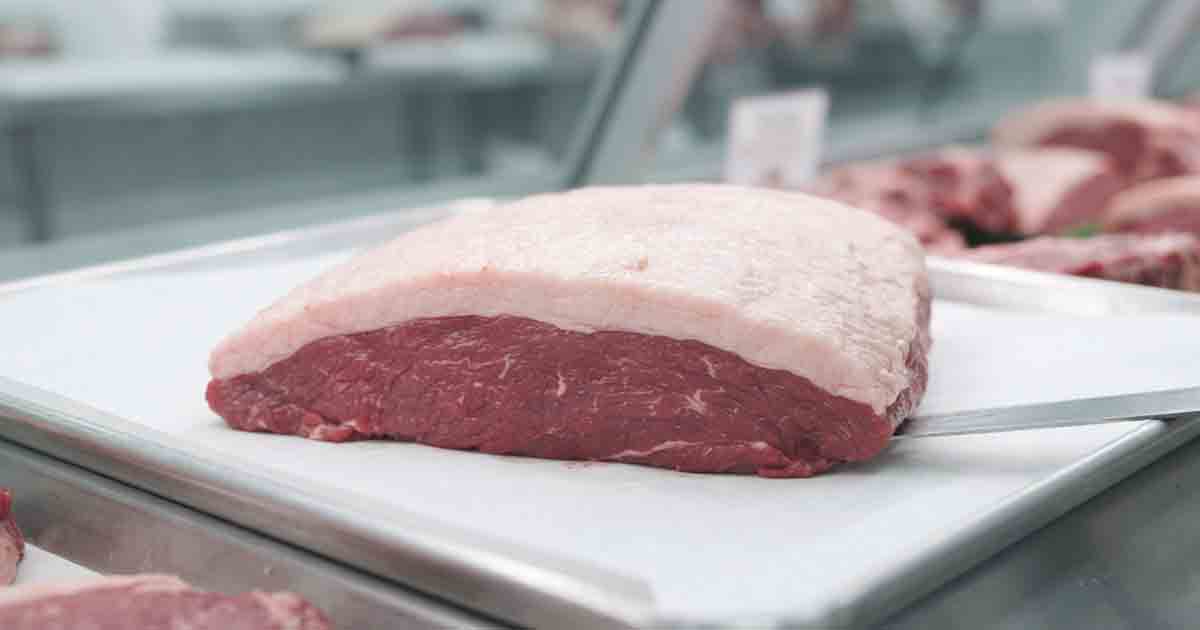
The fat sits on the outside of the muscle rather than being distributed throughout it as marbling.
When buying a whole cut, look for:
- A clear triangular shape
- A relatively even fat cap
- A good amount of lean meat beneath the fat
- No excessive surface trimming
- A clean, well-defined cut
The fat cap is one of the most important visual clues.
If you are looking for Brazilian-style picanha, an aggressively trimmed piece may not resemble the traditional cut you have seen in a churrascaria.
Why Does Picanha Have a Fat Cap?
The fat cap is the layer of external fat covering the picanha muscle.
It is different from marbling.
Marbling is fat distributed within the muscle. The fat cap sits on the outside of the cut.
During cooking, some of the surface fat can render and brown. This contributes richness and flavor to the meat and can help create a deeply browned exterior when cooked properly.
The fat cap also gives picanha its characteristic appearance.
Should You Remove the Picanha Fat Cap?
Not necessarily.
For traditional Brazilian-style preparation, the fat cap is commonly retained.
Some cooks trim excessive fat while leaving a substantial layer attached. Others score the fat before cooking to help it render and brown more evenly.
The best approach depends on the thickness of the fat and the cooking method.
What Is Picanha Called in English?
Picanha does not have one universally accepted English name. Depending on the country and butcher, it may be sold as top sirloin cap, sirloin cap, rump cap, or coulotte.
This is one reason people searching for picanha can struggle to find it at local stores.
Common Picanha Names by Market
| Market | Name you may encounter |
|---|---|
| Brazil | Picanha |
| United States | Top sirloin cap, sirloin cap, coulotte |
| Australia | Rump cap |
| Other markets | Names can vary by local butchery terminology |
These labels should be treated as useful shopping terms rather than a guarantee that every butcher has separated the exact same portion.
If you cannot find “picanha,” asking for a sirloin cap, top sirloin cap, rump cap, or coulotte with the fat cap attached may help.
What Is Picanha in the USA?
In the United States, picanha may be labeled top sirloin cap, sirloin cap, or coulotte.
The term “picanha” has also become increasingly common in American butcher shops, specialty meat stores, and Brazilian restaurants.
However, American retail cuts can be trimmed differently from the traditional Brazilian presentation.
So, if you specifically want Brazilian-style picanha, pay attention to the fat cap and the shape of the cut, not just the package name.
Is Picanha the Same as Coulotte?
Picanha and coulotte are closely related terms, and they can refer to the same or very similar cut depending on the cutting specification.
This is one area where beef terminology can become confusing.
A Brazilian picanha is generally recognized by its triangular form and fat cap. Coulotte is a term frequently used in North American meat terminology for the sirloin-cap muscle.
However, trimming and separation can differ.
Therefore, when comparing picanha and coulotte, the safest approach is to check:
- The muscle
- The cut location
- The shape
- The fat cap
- The butcher’s specification
The name alone does not always tell the entire story.
Is Picanha the Same as Rump Cap?
Picanha is commonly associated with rump cap, but the terms can vary by regional butchery practice.
In Australia, for example, rump cap is a common term for a cut closely associated with picanha.
This creates an important shopping distinction.
Someone looking for picanha in another country may need to search for its local equivalent name rather than the Brazilian word.
That is why knowing the terminology can be just as useful as knowing the cut itself.
Picanha vs. Top Sirloin
Picanha and top sirloin are related but should not automatically be treated as identical.
| Feature | Picanha | Top Sirloin |
|---|---|---|
| What it is | A specific cap cut | A broader sirloin cut category |
| Typical shape | Triangular | Varies |
| Fat | Characteristic external fat cap | Often more heavily trimmed |
| Brazilian association | Strong | Less specific |
| Traditional use | Churrasco | Grilling, roasting, steaks |
The key point is simple:
Picanha is the cap portion associated with the sirloin/rump region, while top sirloin refers to a broader group of cuts.
That distinction becomes important when buying beef.
Picanha vs. Tri-Tip
Picanha and tri-tip are different beef cuts.
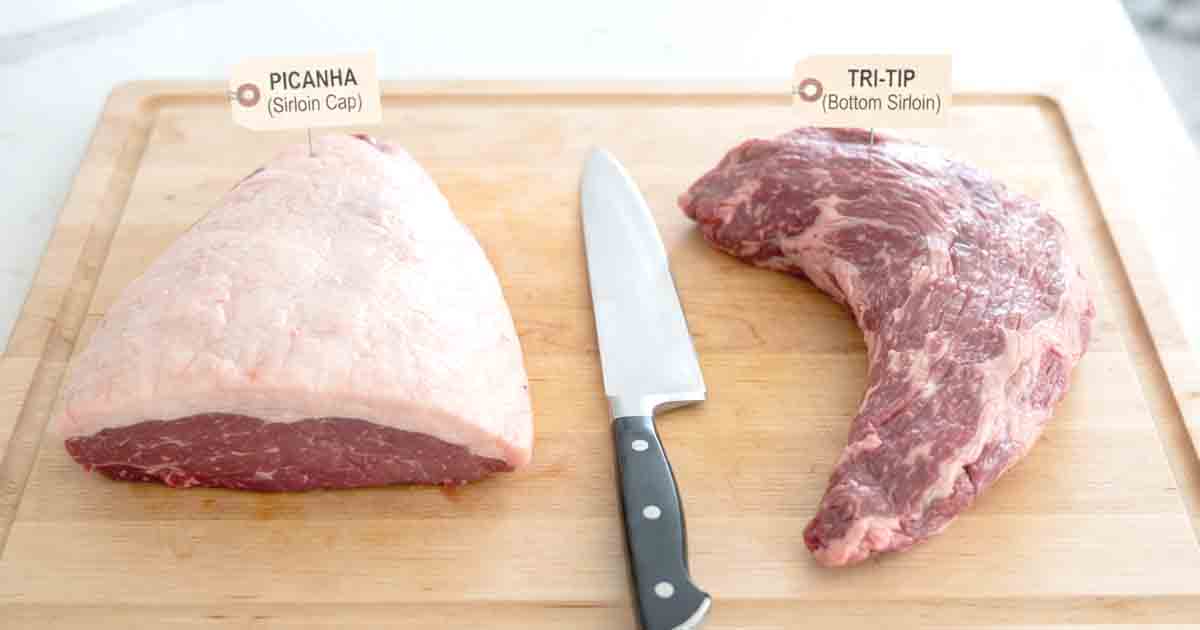
They can look somewhat similar because both may be triangular and are often grilled or roasted. However, they come from different locations and have different cutting identities.
| Feature | Picanha | Tri-tip |
|---|---|---|
| Identity | Sirloin/rump cap | Triangular bottom-sirloin cut |
| Shape | Triangular | Triangular |
| Signature feature | External fat cap | Distinctive triangular muscle |
| Brazilian churrasco | Classic | Also used, but different cut |
| Same cut? | No | No |
If a butcher offers you tri-tip when you asked for picanha, you are not receiving the same cut under another name.
What Does Picanha Taste Like?
Picanha has a rich, beef-forward flavor and a firm but enjoyable texture when cooked properly.
Its external fat contributes richness as it renders during cooking.
The final flavor also depends on preparation.
A picanha cooked over charcoal can develop a pronounced roasted and smoky exterior. A simply seasoned piece can allow the beef and rendered fat to remain the dominant flavors.
Because the cut is not defined by heavy internal marbling, the fat cap plays an especially noticeable role in its eating experience.
Is Picanha Tender?
Picanha can be tender when cooked and sliced properly, but it is not generally described in the same way as extremely tender cuts such as tenderloin.
Several factors influence the texture:
- Cooking temperature
- Final doneness
- Thickness
- Muscle structure
- Resting
- Slicing direction
One of the most important steps is slicing across the grain.
Cutting across the muscle fibers shortens them, making each bite easier to chew.
This is particularly important when serving grilled picanha in thin slices.
Why Is Picanha Popular in Brazil?
Picanha has a strong connection with Brazilian churrasco, the country’s distinctive barbecue tradition.
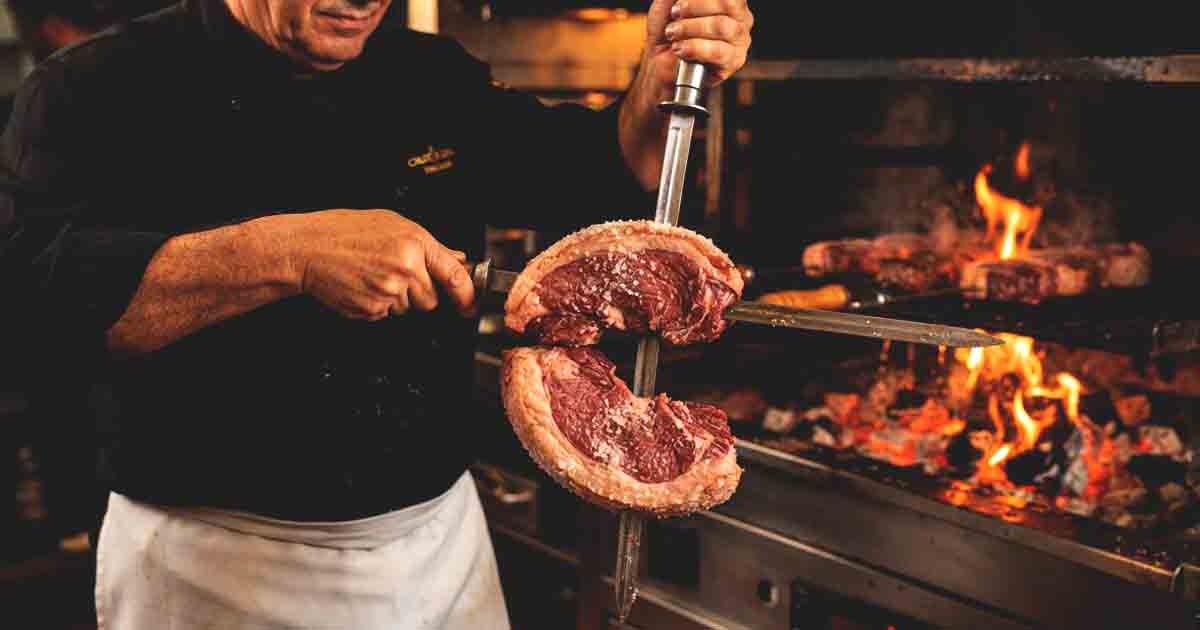
At a churrascaria, large cuts of meat are commonly cooked over intense heat and served as part of the dining experience.
Picanha became especially well known because its shape and fat cap work well with this style of cooking.
The cut can be seasoned simply, grilled, sliced, and served directly from the skewer or grill.
That simplicity is part of its appeal.
Rather than relying on a complicated marinade, Brazilian-style preparation can allow the beef, rendered fat, salt, and fire to define the flavor.
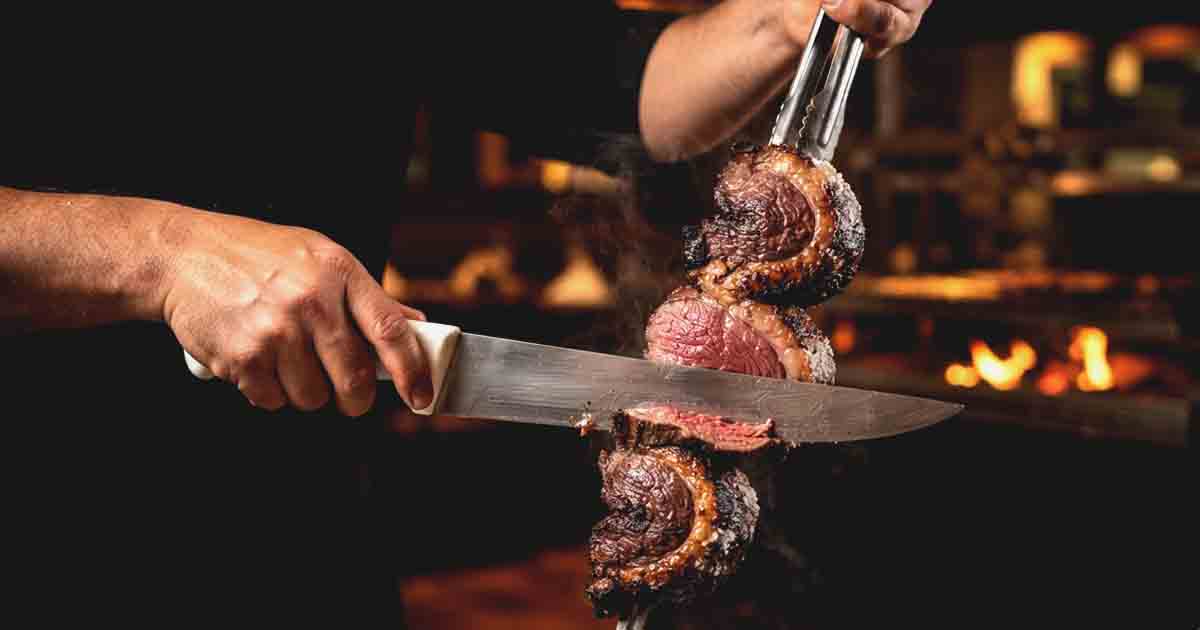
What Is Churrasco Picanha?
Churrasco picanha is picanha prepared in the Brazilian barbecue tradition.
A traditional presentation often involves:
- Cutting the picanha into thick sections.
- Curving or folding the pieces with the fat cap facing outward.
- Placing the pieces on skewers.
- Grilling them over high heat or charcoal.
- Slicing the cooked exterior.
- Returning the remaining meat to the heat.
The exact technique varies between cooks and churrascarias.
The important connection is:
Picanha + Brazilian barbecue = churrasco picanha.
How Is Picanha Traditionally Prepared?
Picanha is often prepared with relatively simple seasoning before being grilled.
A Brazilian-style approach commonly emphasizes:
- High heat
- Charcoal or open-fire grilling
- Salt
- The intact fat cap
- Slicing after cooking
The fat cap may be scored to help with browning and rendering.
The meat can also be cooked as a whole piece or cut into steaks.
For detailed cooking instructions, however, see our dedicated How to Cook Picanha 5 Ways guide rather than treating this definition article as a recipe.
How Do You Buy Picanha?
Buying picanha can be confusing because the same cut may have different names.
When speaking with a butcher, ask for:
A picanha or sirloin-cap/top-sirloin-cap cut with the fat cap attached.
Then check the actual piece.
Look for a recognizable picanha
A good starting point is a:
- Triangular shape
- Distinct fat cap
- Well-defined lean muscle
- Reasonable fat thickness
- Clean surface
- Fresh appearance
If the piece is heavily trimmed and has little external fat, ask the butcher whether the fat cap was removed.
Whole Picanha vs. Picanha Steaks
A whole picanha gives you more control over trimming, portioning, and cooking.
Picanha steaks are convenient because the butcher has already divided the cut.
For traditional churrasco, many cooks prefer starting with the whole cut and portioning it themselves.
What Is Wagyu Picanha?
Wagyu picanha is picanha sourced from Wagyu or Wagyu-cross cattle.
The two terms describe different things:
- Picanha identifies the beef cut.
- Wagyu identifies the cattle type or breeding/production designation.
Therefore, Wagyu picanha is not a different anatomical cut.
It is simply picanha from cattle marketed as Wagyu or Wagyu-cross, depending on the product.
Because Wagyu products can vary considerably by breed composition, grading, and production system, the label should be checked before comparing products.
Is Picanha a Good Cut of Beef?
For people who enjoy a flavorful beef cut with a pronounced fat cap, picanha can be an excellent choice.
Its appeal comes from the combination of:
- Beefy flavor
- External fat
- Distinctive shape
- Versatility
- Simple preparation
- Brazilian barbecue tradition
It also offers something different from heavily marbled steaks such as ribeye.
The question is less about whether picanha is universally “better” and more about whether its flavor, fat cap, texture, and cooking style match what you enjoy.
Picanha Nutrition
Picanha provides protein and other nutrients found in beef.
Its nutrition can vary significantly depending on:
- Portion size
- Fat-cap thickness
- How much fat is trimmed
- Cooking method
- Whether the nutrition calculation includes the external fat
For exact calorie and macronutrient information, see our dedicated Picanha Nutrition Facts guide.
That separation is useful because a definition page should explain what picanha is, while a nutrition page can provide detailed nutritional calculations.
Frequently Asked Questions About Picanha
What is picanha?
Picanha is a beef cut from the sirloin-cap or rump-cap area of the hindquarter. It is recognized by its triangular shape and prominent external fat cap and is strongly associated with Brazilian churrasco.
What cut of meat is picanha?
Picanha is generally identified as the sirloin cap or rump cap. Depending on the market, it may also be sold as coulotte or top sirloin cap.
What part of the cow is picanha?
Picanha comes from the upper hindquarter, around the sirloin-cap or rump-cap region. It is associated with the cap portion of the biceps femoris muscle.
What is picanha steak?
Picanha steak is a steak cut from the picanha beef cut. It is commonly grilled and often retains some or all of the characteristic fat cap.
What is picanha called in English?
There is no single universal English name. Top sirloin cap, sirloin cap, rump cap, and coulotte are common related terms, depending on the market.
What is picaña?
Picaña is another spelling of picanha. The Brazilian Portuguese term is normally written picanha, while “picaña” appears in some Spanish-language contexts.
What is picanha meat?
Picanha meat is beef from the sirloin-cap or rump-cap region of the hindquarter. It is especially known for its triangular shape and external fat cap.
What does picanha taste like?
Picanha has a rich, beef-forward flavor. Its external fat cap can add noticeable richness when it renders during cooking.
Is picanha the same as rump cap?
Picanha and rump cap are closely related names for the same or very similar cut, depending on the market’s butchery system. Regional specifications can differ.
Is picanha the same as tri-tip?
No. Picanha and tri-tip are different beef cuts. They can both have triangular shapes, but they come from different parts of the animal.
Is picanha the same as sirloin cap?
Picanha is commonly identified with the sirloin-cap cut. However, retail names and trimming specifications can vary by country.
What is Brazilian picanha?
Brazilian picanha is the traditional Brazilian presentation of this beef cut, especially when prepared as churrasco. It is typically recognized by its triangular shape and fat cap.
What is Wagyu picanha?
Wagyu picanha is the picanha cut from Wagyu or Wagyu-cross cattle. Wagyu describes the cattle or production designation, while picanha identifies the cut.
What is a picanha roast?
A picanha roast is a whole or large portion of the picanha cut cooked as a roast rather than divided into individual steaks. It can be roasted, grilled, or prepared over charcoal.
What type of steak is picanha?
Picanha is a sirloin-cap or rump-cap steak when cut into individual steaks. It is a relatively lean muscle covered by a distinctive external fat cap.
The Bottom Line
Picanha is a triangular beef cut from the sirloin-cap or rump-cap area of the hindquarter, best known for its prominent fat cap and connection to Brazilian churrasco.
You may find it labeled picanha, top sirloin cap, sirloin cap, rump cap, or coulotte, depending on where you shop.
If you are buying it for a Brazilian-style barbecue, focus on the actual cut, triangular shape, and intact fat cap, rather than relying on the name alone.
Once you understand those features, picanha becomes much easier to identify, buy, cook, and compare with other beef cuts.
Disclaimer
The information in this article is provided for general educational purposes and is intended to explain what picanha is, where the cut comes from, and how it is commonly identified and prepared. Beef-cut names and butchery specifications can vary between countries, retailers, and cutting systems, so terms such as picanha, sirloin cap, rump cap, and coulotte may not always describe identical retail cuts.
Cooking methods, temperatures, and food-safety practices should be followed according to current guidance from reliable food-safety authorities. This article is not a substitute for professional culinary, nutrition, or food-safety advice. Always use your own judgment when selecting, handling, storing, and cooking meat.
References:
For more on beef cuts and cooking techniques,
visit Serious Eats’ Beef Guide.