

Table of Contents
Teres Major steak is a small, tender beef cut from the chuck shoulder. It is also called petite tender, shoulder tender, or shoulder petite tender. Its lean texture and compact shape make it well suited to quick, high-heat cooking.
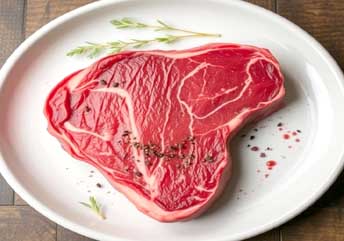
- Raw Teres Major steak trimmed and ready to cook
- Teres Major steak searing in a cast-iron skillet
- Garlic butter being spooned over Teres Major steak
- Cooked Teres Major steak resting before slicing
- Sliced Teres Major steak cut against the grain
- Teres Major steak temperature being checked with an instant-read thermometer
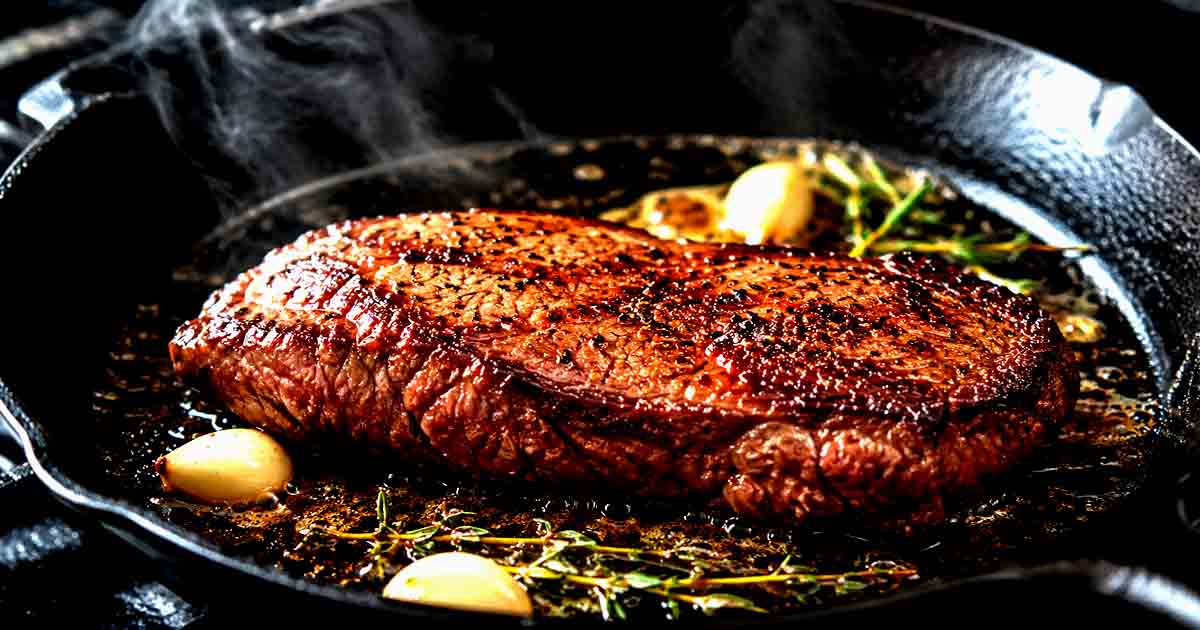
For an easy dinner, pan-sear a trimmed Teres Major in a hot cast-iron skillet, finish with garlic butter, check the internal temperature with a meat thermometer, and rest before slicing.
Teres Major Steak Recipe at a Glance
- Prep time: 10 minutes, plus optional dry-brining time
- Cook time: About 8–12 minutes, depending on thickness
- Resting time: At least 3 minutes for food safety; 5 minutes works well for serving
- Servings: 2
- Main method: Pan searing
- Best equipment: Cast-iron skillet and instant-read thermometer
- Main ingredients: Teres Major steak, salt, pepper, butter, garlic, and rosemary
Cooking time varies with the size and shape of the steak. Use internal temperature rather than time alone to judge doneness.
What Is Teres Major Steak?
Teres Major is a small muscle from the beef chuck shoulder. The beef industry also identifies it as shoulder petite tender, shoulder tender, and butcher’s steak. Its industry identification is IMPS/NAMP 114F.
It has a tapered, compact shape. The muscle fibers run along its length. When properly trimmed and cooked, it can have a tender texture while retaining more beef character than very mild tenderloin.
Teres Major is not beef tenderloin. It comes from the chuck rather than the tenderloin section. The two cuts can have a similar shape and tender texture, which explains why Teres Major is sometimes compared with filet mignon.
What Is Teres Major Also Called?
You may find the same cut under several names:
- Teres Major
- Petite Tender
- Shoulder Tender
- Shoulder Petite Tender
- Butcher’s Steak
- Bistro Filet
Names can vary between retailers and regions. It’s What’s For Dinner both identify petite tender and shoulder tender as alternate names for Teres Major.
Check the actual cut with your butcher when the name is unclear. Similar-sounding names do not always refer to the same muscle.
Ingredients
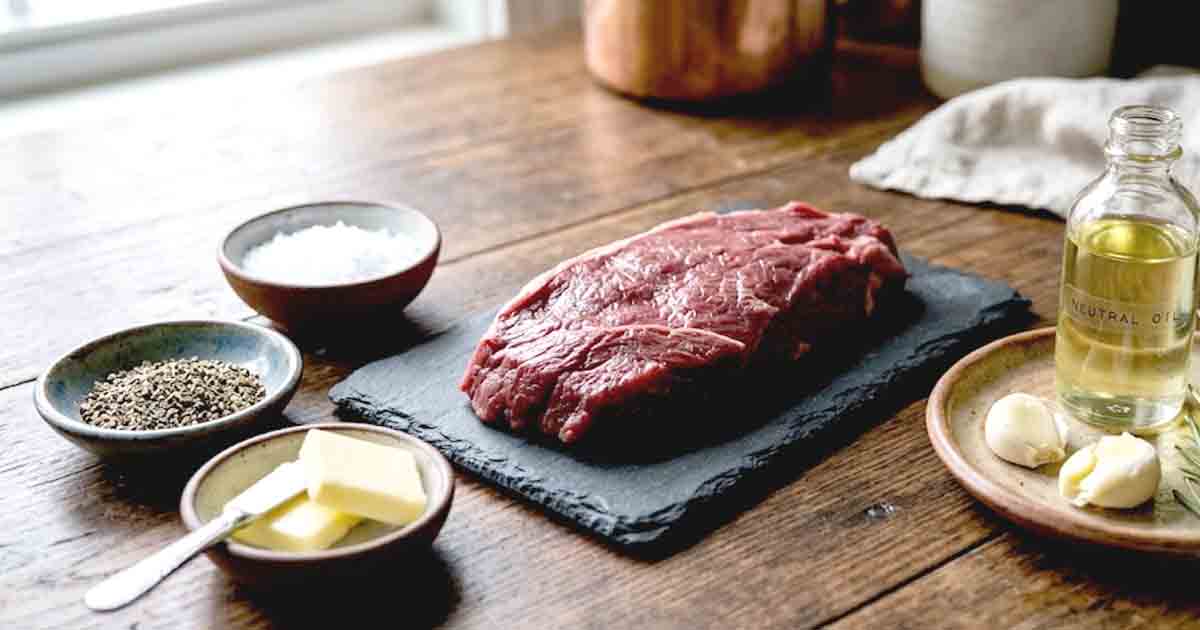
For the Teres Major Steak
- 1 Teres Major steak, about 8–12 ounces
- 1 teaspoon kosher salt
- ½ teaspoon freshly ground black pepper
- 1 tablespoon neutral cooking oil
- 2 tablespoons unsalted butter
- 2 garlic cloves, smashed
- 1–2 fresh rosemary sprigs
You can adjust the salt and pepper to suit the size of the steak.
Optional Additions
For a different flavor, add:
- Fresh thyme
- Garlic powder
- Smoked paprika
- Chimichurri
- Compound butter
Keep the seasoning simple when you want the beef flavor to remain the focus.
How to Cook Teres Major Steak
The easiest method is a hot pan sear followed by butter basting.
1. Trim the Teres Major
Inspect the steak before seasoning.
Remove any tough silverskin or obvious connective tissue with a sharp knife. Keep as much lean meat as possible.
Silverskin does not soften during a short steak-cooking process. Removing it can improve the final bite.
If your butcher has already cleaned the steak, you may only need to trim a small amount.
2. Dry the Steak
Pat the Teres Major thoroughly dry with paper towels.
A dry surface helps the steak brown properly in the hot pan.
For more seasoning time, salt the steak several hours ahead and keep it uncovered in the refrigerator. One published pan-seared Teres Major recipe uses a 2–4 hour refrigerated drying period before cooking.
If you do not have extra time, season immediately before cooking.
3. Season With Salt and Pepper
Season all sides with kosher salt and black pepper.
Because Teres Major is relatively lean, a good seared crust adds useful texture and flavor.
4. Heat the Skillet
Place a cast-iron skillet over medium-high heat.
Let the skillet become hot before adding the steak.
Add the cooking oil and allow it to heat until it shimmers.
5. Sear the Teres Major
Place the steak in the skillet.
You should hear an immediate sizzle.
Sear the first side for about 2–3 minutes. Turn the steak and sear the second side.
Rotate the steak as needed to brown the other surfaces.
Because Teres Major is usually tapered, pay attention to the thinner end. It may cook faster than the thick center.
6. Add Butter, Garlic, and Rosemary
Reduce the heat slightly if needed.
Add the butter, smashed garlic, and rosemary.
When the butter foams, tilt the skillet slightly and spoon the melted butter over the steak.
Continue basting while the steak cooks.
Do not rely on a fixed number of minutes for final doneness. Steak thickness, starting temperature, pan temperature, and shape can change cooking time.
7. Check the Internal Temperature
Insert an instant-read thermometer into the thickest part of the steak.
For food safety, the USDA recommends cooking whole beef steaks and roasts to a minimum internal temperature of 145°F (62.8°C), followed by at least a 3-minute rest.
This safety temperature is different from personal preferences for steak doneness.
8. Rest the Steak
- Transfer the steak to a clean cutting board or plate.
- Let it rest for at least 3 minutes.
- A 5-minute rest can also work well for serving.
- Avoid cutting immediately after removing the steak from the skillet.
- 9. Slice Against the Grain
- Look closely at the direction of the muscle fibers.
- Slice the steak across the grain, rather than parallel to it.
- Thin slices can make each bite easier to chew.
- Teres Major Steak Temperature Guide
Use a food thermometer for an accurate temperature reading.
| Doneness | Typical culinary target | Food-safety note |
|---|---|---|
| Rare | Below medium-rare | Below USDA’s recommended minimum |
| Medium-rare | About 130–135°F | Below USDA’s recommended minimum |
| Medium | About 135–145°F | Verify the safe endpoint |
| USDA minimum | 145°F | Rest at least 3 minutes |
| Above medium | Above 145°F | Safe when properly measured |
How Long Does Teres Major Steak Take to Cook?
A typical Teres Major can cook in roughly 8–12 minutes, but time is only a guide.
The exact cooking time depends on:
- Steak thickness
- Starting temperature
- Pan temperature
- Steak shape
- Desired doneness
- Whether the steak is cooked whole or portioned
A thermometer gives a more useful result than a fixed cooking time.
Should You Cook Teres Major Whole or as Steaks?
You can cook Teres Major as a whole small roast or portion it into smaller pieces.
Whole
Cooking the muscle whole helps preserve its shape and gives you a larger center section.
Medallions
Cutting the thicker portion into medallions gives you smaller individual steaks.
Either approach can work. The important points are proper trimming, controlled heat, and accurate temperature measurement.
How to Grill Teres Major Steak
Teres Major also works well on a grill. It’s What’s For Dinner lists grilling and broiling among the suitable applications for shoulder petite tender.
Simple grilling method
- Trim the steak.
- Pat it dry.
- Season with salt and pepper.
- Preheat the grill.
- Sear the steak over direct heat.
- Turn it to brown the other sides.
- Move it to a cooler part of the grill if more cooking is needed.
- Check the internal temperature.
- Remove it at the desired endpoint.
- Rest before slicing.
A two-zone grill gives you more control when the outside browns before the center reaches the desired temperature.
How to Reverse Sear Teres Major
Reverse searing works well when you want more control over the internal temperature.
The basic process is:
- Season the trimmed Teres Major.
- Cook it gently until it approaches your desired internal temperature.
- Heat a skillet or grill to high heat.
- Sear the exterior quickly.
- Check the temperature again.
- Rest before slicing.
The method can be useful for a tapered steak because the lower-temperature cooking stage gives you more control before the final sear.
Can You Cook Teres Major Steak in the Oven?
Yes. A simple oven method is to sear the steak in an oven-safe skillet first. Then transfer the skillet to a preheated oven to finish cooking.
Check the thickest section with a food thermometer.
The exact oven time depends heavily on steak thickness and starting temperature, so temperature is more reliable than a fixed cooking time.
Can You Cook Teres Major Sous Vide?
Yes. Teres Major is also listed for sous-vide cooking by beef-cut resources.
Sous vide gives you precise control over the water-bath temperature.
After the sous-vide stage, dry the surface thoroughly and sear the steak quickly in a very hot skillet.
The final sear creates the browned exterior that sous vide alone cannot provide.
How to Slice Teres Major Steak
Teres Major has a long muscle-fiber direction.
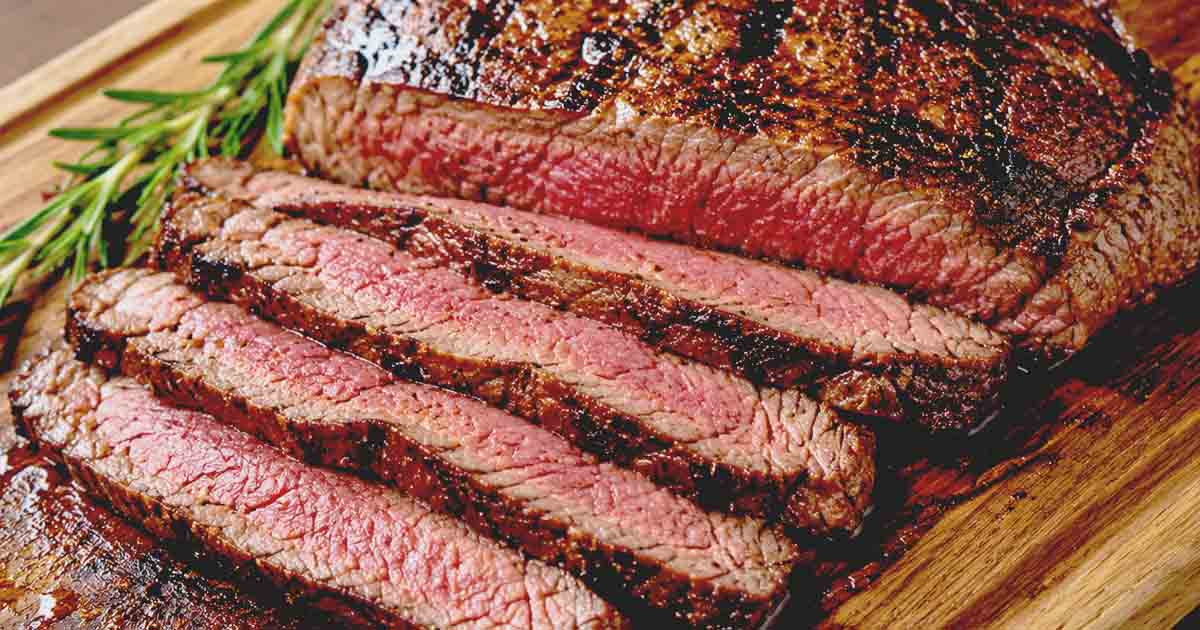
To slice it:
- Place the rested steak on a cutting board.
- Identify the direction of the visible fibers.
- Hold your knife across those fibers.
- Cut thin slices at a slight angle.
- Continue across the steak.
Slicing against the grain shortens the muscle fibers in each bite.
Why Is My Teres Major Steak Tough?
Several things can make Teres Major seem tougher than expected.
The silverskin was left on
Tough connective tissue can remain chewy after quick cooking.
The steak was overcooked
Teres Major is relatively lean. Excessive cooking can reduce its juiciness.
It was sliced with the grain
Long muscle fibers can feel tougher when they remain intact in each slice.
The steak was cut too thick
Thick pieces can be harder to cook evenly.
The thermometer was not used
Cooking time alone can produce inconsistent results.
Teres Major vs. Filet Mignon
| Feature | Teres Major | Filet Mignon |
|---|---|---|
| Beef section | Chuck/shoulder | Tenderloin |
| Shape | Small and tapered | Small, usually cylindrical |
| Texture | Tender when properly prepared | Very tender |
| Flavor | Beef-forward | Mild and delicate |
| Fat level | Relatively lean | Very lean |
| Common cooking methods | Sear, grill, roast, sous vide | Sear, grill, roast |
| Same muscle? | No | No |
Teres Major and filet mignon are different cuts. Teres Major comes from the shoulder, while filet mignon comes from the tenderloin.
Teres Major vs. Petite Tender
In standard beef-cut terminology, Teres Major and petite tender refer to the same cut.
It’s What’s For Dinner lists shoulder petite tender’s alternate names as butcher’s steak, chuck shoulder tender, shoulder tender, and Teres major.
Teres Major vs. Mock Tender
Do not automatically assume that mock tender means Teres Major.
The names are sometimes used inconsistently in online content. However, cut guides distinguish shoulder petite tender/Teres Major from mock tender.
If a package is labeled “mock tender,” check with the butcher or retailer before using a Teres Major cooking method.
What Does Teres Major Steak Taste Like?
Teres Major has a beef flavor that can be more pronounced than tenderloin.
Its texture is fine and tender when the exterior connective tissue is removed and the steak is not overcooked.
Because it is relatively lean, it benefits from a strong sear and careful temperature control.
What Should You Serve With Teres Major Steak?
Simple sides work well with this steak.
Low-carb options
- Roasted asparagus
- Sautéed spinach
- Broccoli
- Mushrooms
- Cauliflower
- Green beans
- Avocado
Classic steak sides
- Roasted potatoes
- Mashed potatoes
- Crispy fries
- Creamed spinach
- Grilled vegetables
- Simple green salad
Sauces
- Garlic butter
- Chimichurri
- Herb butter
- Peppercorn sauce
Choose sides based on the overall meal rather than adding a sauce simply because the steak is lean.
How to Buy Teres Major Steak
Teres Major can be less common than ribeye, strip steak, or sirloin.
It’s What’s For Dinner identifies it as a small muscle from the shoulder clod.
When shopping, look for:
- Cleanly trimmed meat
- A compact tapered shape
- Deep red beef color
- Minimal remaining silverskin
- No excessive surface drying
- Even thickness where possible
If you cannot find it in the display case, ask the butcher for Teres Major, petite tender, or shoulder tender.
Availability can vary between retailers.
Frequently Asked Questions
Is Teres Major steak tender?
Yes. Teres Major is a naturally tender muscle from the shoulder. It’s What’s For Dinner describes shoulder petite tender as juicy and tender when left whole or cut end to end.
Is Teres Major the same as filet mignon?
No. They are different muscles. Teres Major comes from the chuck shoulder, while filet mignon comes from the tenderloin.
What is the best way to cook Teres Major steak?
Pan searing is a simple method for Teres Major. Grill, roast, reverse sear, and sous vide are also suitable methods.
What temperature should Teres Major steak reach?
For food safety, USDA recommends that whole beef steaks reach 145°F (62.8°C), measured with a food thermometer, followed by at least a 3-minute rest.
How long should Teres Major steak rest?
For USDA food-safety guidance, rest the cooked steak for at least 3 minutes. (Ask USDA)
Can you grill Teres Major steak?
Yes. Grilling is one of the recommended cooking applications for shoulder petite tender.
Can you cook Teres Major in a cast-iron skillet?
Yes. Cast iron works well for pan searing because it can provide strong, direct heat. Published Teres Major recipes commonly use a cast-iron skillet for searing and butter basting.
Should you marinate Teres Major steak?
You can, but a marinade is not essential. A simple salt-and-pepper seasoning works well when the steak is properly trimmed and seared.
How do you keep Teres Major steak juicy?
Avoid relying on time alone. Use a thermometer, control the heat, and avoid excessive cooking. Rest the steak before slicing.
What is another name for Teres Major steak?
Common alternate names include petite tender, shoulder tender, shoulder petite tender, and butcher’s steak.
Final Recipe Card
Pan-Seared Teres Major Steak With Garlic Butter
Prep: 10 minutes
Optional dry-brine: 2–4 hours
Cook: About 8–12 minutes
Rest: At least 3 minutes
Serves: 2
Ingredients
- 1 Teres Major steak, about 8–12 ounces
- 1 teaspoon kosher salt
- ½ teaspoon black pepper
- 1 tablespoon neutral cooking oil
- 2 tablespoons unsalted butter
- 2 garlic cloves, smashed
- 1–2 rosemary sprigs
Instructions
- Trim any tough silverskin from the Teres Major.
- Pat the steak completely dry.
- Season all sides with salt and black pepper.
- Heat a cast-iron skillet over medium-high heat.
- Add the oil when the skillet is hot.
- Add the steak and sear for about 2–3 minutes.
- Turn and brown the second side.
- Rotate the steak to brown the remaining surfaces.
- Add butter, garlic, and rosemary.
- Spoon the melted butter over the steak while it cooks.
- Check the thickest part with an instant-read thermometer.
- Follow the USDA minimum of 145°F for whole beef steak and rest for at least 3 minutes. (Ask USDA)
- Slice against the grain.
- Serve immediately.
Recipe Notes
For better browning: Pat the steak dry before it enters the skillet.
For better texture: Remove visible silverskin before cooking.
For more flavor: Add garlic and rosemary during the butter-basting stage.
For consistent doneness: Use an instant-read thermometer rather than relying only on cooking time.
For easier eating: Slice against the grain after resting.
Teres Major Steak Cooking Method Summary
| Method | Best for | Key point |
|---|---|---|
| Pan sear | Quick dinner | Strong crust and easy control |
| Grill | Outdoor cooking | High-heat browning |
| Reverse sear | Temperature control | Gentle cooking followed by a fast sear |
| Oven finish | Thick pieces | Useful after pan searing |
| Sous vide | Precise temperature | Finish with a hot sear |
Teres Major is a versatile shoulder cut. Its small size and tenderness make it suitable for several quick-cooking methods.
Bottom Line
The easiest Teres Major steak recipe is a hot pan sear finished with garlic butter. Trim the silverskin, dry the steak, season simply, sear until browned, and check the internal temperature with a thermometer. After resting, slice against the grain.
References:
- USDA Food Safety and Inspection Service (FSIS)
- Authoritative confirmation of the 145°F (62.8°C) minimum internal temperature for whole cuts of beef and the 3-minute rest time.
- USDA FoodData Central
- Accurate, government-verified nutritional data (calories, protein, fat) for “Beef, shoulder petite tender” or similar lean cuts.
- Academy of Nutrition and Dietetics
- General, dietitian-reviewed information on the role of lean beef as a source of high-quality protein, iron, and zinc.
- Centers for Disease Control and Prevention (CDC) – Safe Food Handling
- Best practices for thawing frozen steak safely to prevent bacterial growth.
- National Institutes of Health (NIH) – Office of Dietary Supplements
- Credible, scientific background on heme iron found in red meat. If you mention the nutritional benefits of beef (e.g., iron content).
- Beef Research Institute (or Beef. It’s What’s For Dinner / NCBA)
- Industry-specific authority on cut identification (IMPS/NAMP codes), proper trimming techniques, and culinary characteristics.