


Table of Contents
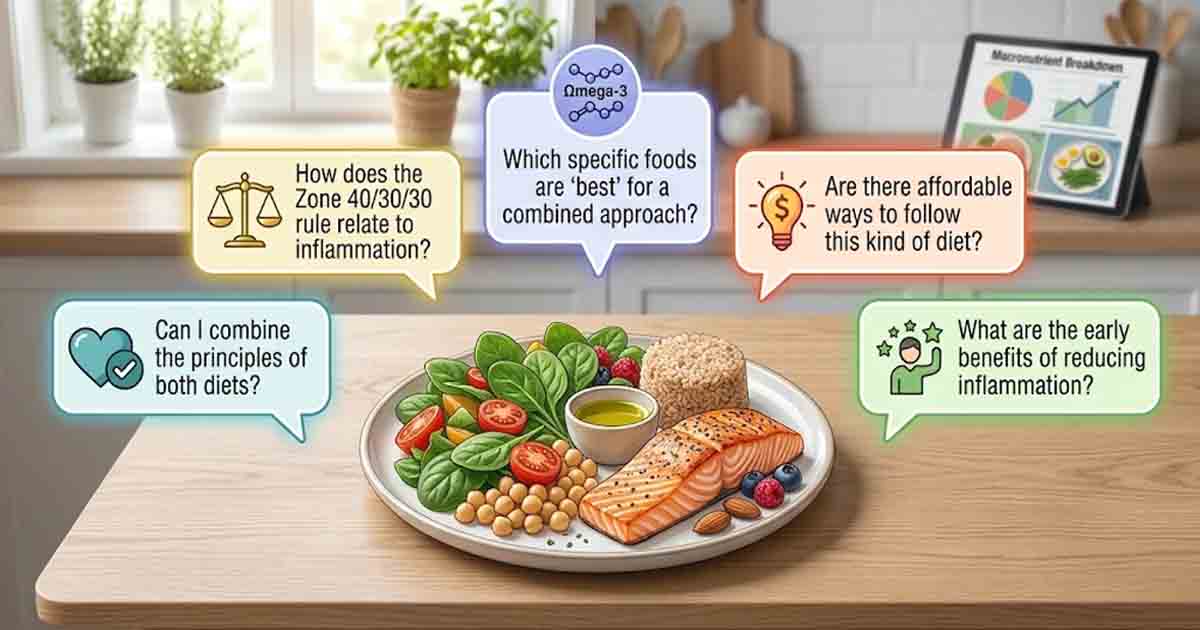
The Anti-Inflammatory Diet and the Zone Diet both encourage healthier food choices, but they follow different approaches. An anti-inflammatory diet focuses on eating a variety of nutritious foods that may help support a healthy inflammatory response. The Zone Diet follows a specific balance of carbohydrates, protein and fat, known as the 40/30/30 rule.
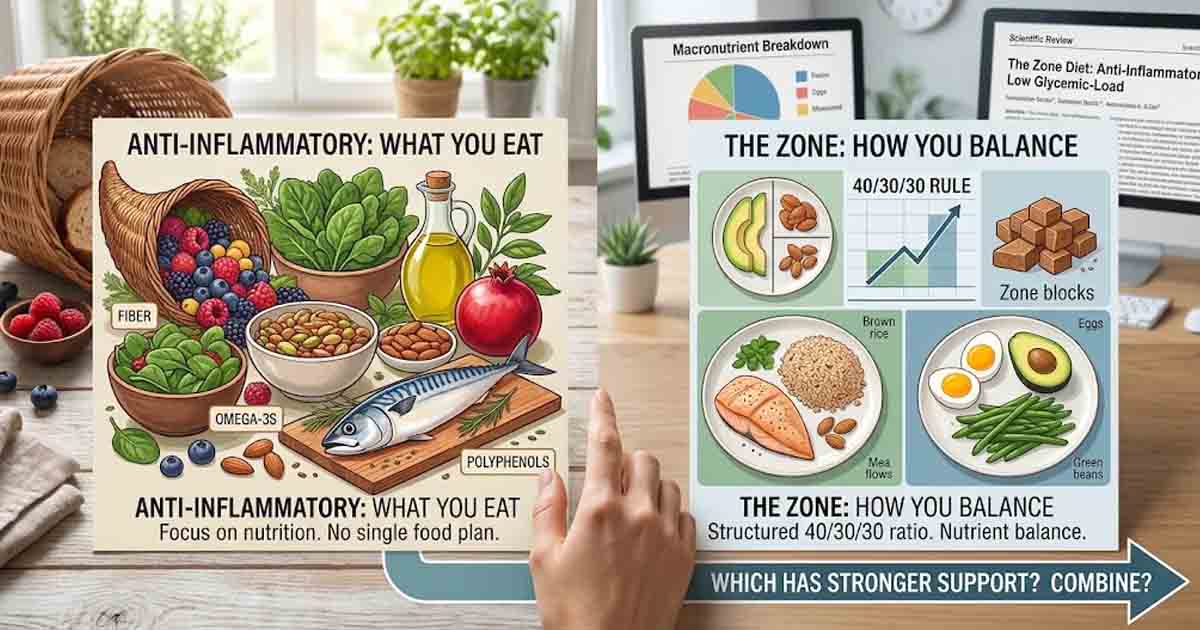
The main difference is that an anti-inflammatory diet focuses on what you eat, while the Zone Diet focuses on how you balance the nutrients in each meal.
Both approaches can include foods such as fish, vegetables, nuts, olive oil and legumes. However, research has not established that the Zone Diet’s exact 40/30/30 ratio provides a special benefit for reducing inflammation.
So, which approach has stronger scientific support? And can you combine the two? This guide explains their differences, food choices, possible benefits and limitations.
What Is an Anti-Inflammatory Diet?
An anti-inflammatory diet is an eating pattern that focuses on foods associated with a healthier inflammatory response in the body.
There is no single official anti-inflammatory diet or fixed meal plan. Instead, it encourages people to eat a variety of whole and minimally processed foods, including:
- Fruits and vegetables
- Whole grains
- Beans, lentils and other legumes
- Nuts and seeds
- Fish and other sources of omega-3 fats
- Olive oil and other unsaturated fats
It also encourages limiting foods that are common in less healthy dietary patterns, such as sugary drinks, processed meats, refined carbohydrates and frequently consumed deep-fried foods.
The Mediterranean diet is one of the best-studied examples of an eating pattern with potential anti-inflammatory effects. It includes plenty of plant foods, olive oil, fish, legumes, nuts and whole grains.
How Does an Anti-Inflammatory Diet Work?
Inflammation is a normal part of the body’s immune response. It helps protect the body from infections and supports healing after an injury.
However, prolonged or excessive inflammation can contribute to tissue damage. It is also associated with several long-term health conditions.
Diet can influence some of the processes involved in inflammation. Certain foods provide nutrients and plant compounds that support normal body functions.
For example:
- Fiber: Found in vegetables, fruits, beans and whole grains. It supports digestive health and beneficial gut microorganisms.
- Omega-3 fatty acids: Found in oily fish, walnuts, chia seeds and flaxseeds. They play a role in processes that regulate inflammation.
- Polyphenols: Plant compounds found in berries, olive oil, tea and many other plant foods.
- Unsaturated fats: Found in olive oil, nuts, seeds and fish. They can replace some less healthy sources of dietary fat.
- Vitamins and minerals: Fruits and vegetables provide nutrients that support normal immune and cellular functions.
No single food can prevent or cure inflammation. The overall eating pattern matters more than relying on one ingredient or supplement.
Foods Commonly Included in an Anti-Inflammatory Diet
| Food group | Examples |
|---|---|
| Fruits | Berries, apples, oranges and pomegranates |
| Vegetables | Spinach, broccoli, carrots and tomatoes |
| Whole grains | Oats, barley, brown rice and whole-wheat bread |
| Legumes | Lentils, chickpeas, kidney beans and peas |
| Healthy fats | Olive oil, avocados, nuts and seeds |
| Fish | Salmon, sardines, mackerel and trout |
| Herbs and spices | Ginger, turmeric, garlic and cinnamon |
| Beverages | Water, unsweetened tea and coffee |
Foods to Limit
An anti-inflammatory eating pattern generally encourages people to limit:
- Sugar-sweetened drinks
- Large amounts of refined carbohydrates
- Processed meats such as bacon and sausages
- Frequently consumed deep-fried foods
- Foods high in saturated fat when they replace healthier fat sources
- Highly processed snacks and desserts
This does not mean every food must be completely avoided. Overall dietary habits, food quality and portion sizes are more important than treating individual foods as strictly good or bad.
What Is the Zone Diet?
The Zone Diet is a structured eating plan developed by American biochemist Barry Sears.
It is based on a specific macronutrient distribution:
- 40% of calories from carbohydrates
- 30% of calories from protein
- 30% of calories from fat
This is commonly called the 40/30/30 diet.
The Zone Diet aims to balance carbohydrates, protein and fat at each meal. Its original theory focuses on how food may affect hormones and biological processes involved in metabolism and inflammation.
The plan also encourages lower-glycemic-load carbohydrate choices, lean protein and fats that include monounsaturated fats.
How Does the 40/30/30 Rule Work?
The 40/30/30 ratio represents the percentage of total calories supplied by each macronutrient.
| Macronutrient | Percentage of calories | Main role |
|---|---|---|
| Carbohydrates | 40% | Main source of energy |
| Protein | 30% | Supports tissue growth and repair |
| Fat | 30% | Provides energy and supports normal cell functions |
For example, in an illustrative 2,000-calorie eating plan:
| Macronutrient | Calories | Approximate amount |
|---|---|---|
| Carbohydrates | 800 | 200 g |
| Protein | 600 | 150 g |
| Fat | 600 | 67 g |
These amounts use approximately 4 calories per gram of carbohydrate and protein and 9 calories per gram of fat.
This is only an example of how the ratio works. A 2,000-calorie diet is not suitable for everyone. Individual energy and protein needs vary.
What Foods Are Included in the Zone Diet?
The Zone Diet generally encourages foods from three main groups.
Carbohydrates
- Non-starchy vegetables
- Fruits
- Beans and lentils
- Selected whole grains
Protein
- Fish
- Chicken
- Turkey
- Eggs
- Low-fat dairy products
- Plant-based protein sources
Fats
- Olive oil
- Almonds
- Walnuts
- Avocados
- Other sources of unsaturated fats
The Zone Diet also uses a meal-planning system called Zone blocks. These help people organize carbohydrate, protein and fat portions according to the plan.
Unlike a flexible anti-inflammatory eating pattern, the Zone Diet requires closer attention to macronutrient portions.
Anti-Inflammatory Diet vs Zone Diet: Key Differences
The two approaches share several food choices, but their main principles are different.
The anti-inflammatory diet emphasizes food quality and variety. The Zone Diet focuses on a specific balance of macronutrients.
| Comparison | Anti-Inflammatory Diet | Zone Diet |
|---|---|---|
| Main focus | Overall food quality and inflammatory health | Macronutrient balance |
| Dietary structure | Flexible eating pattern | Structured 40/30/30 ratio |
| Carbohydrates | Emphasizes fiber-rich sources | Around 40% of calories |
| Protein | Includes plant and animal sources | Around 30% of calories |
| Fat | Emphasizes healthier fat sources | Around 30% of calories |
| Meal planning | Flexible | More structured |
| Portion tracking | Not always required | Macronutrient portions are monitored |
| Food variety | Usually includes a wide range of plant foods | Depends on food choices within the ratio |
| Inflammation research | Mediterranean-style patterns have a stronger research base | Evidence for the exact 40/30/30 ratio is limited |
| Weight management | Depends on food choices, energy intake and adherence | Also depends on energy intake and adherence |
1. Difference in Carbohydrate Intake
An anti-inflammatory diet generally emphasizes high-fiber carbohydrates from vegetables, fruits, legumes and whole grains.
The Zone Diet assigns approximately 40% of total calories to carbohydrates. It also encourages lower-glycemic-load choices.
The main difference is that an anti-inflammatory diet does not require a fixed carbohydrate percentage.
2. Difference in Protein Intake
Both diets can include fish, poultry, eggs and plant-based protein sources.
However, the Zone Diet assigns 30% of daily calories to protein. An anti-inflammatory eating pattern does not prescribe a fixed protein percentage.
Protein requirements vary according to age, body size, physical activity, health conditions and other individual needs.
3. Difference in Fat Intake
Both approaches can include healthy fat sources such as olive oil, nuts, seeds and fish.
The anti-inflammatory approach places greater emphasis on the type and quality of fat consumed.
The Zone Diet focuses on obtaining approximately 30% of calories from fat while balancing the other macronutrients.
4. Difference in Meal Planning
An anti-inflammatory diet allows greater flexibility. People can choose meals according to their food preferences, cultural habits and nutritional needs.
The Zone Diet requires more attention to portion sizes and macronutrient distribution.
People who prefer clear meal structures may find the Zone Diet easier to follow. Others may prefer the flexibility of an anti-inflammatory eating pattern.
Is the Zone Diet Actually Anti-Inflammatory?
The Zone Diet has been promoted as an anti-inflammatory eating plan because its original theory connects macronutrient balance with insulin, glucagon and other biological processes.
Barry Sears and Stacey Bell discussed this approach in a 2004 scientific review titled The Zone Diet: An Anti-Inflammatory, Low Glycemic-Load Diet.
However, explaining a possible biological mechanism is not the same as proving a health benefit.
A 2003 scientific review by Samuel N. Cheuvront examined the claims behind the Zone Diet. It found little scientific support for several proposed connections between the precise macronutrient ratio, hormonal responses and health outcomes.
This distinction is important. The Zone Diet includes foods that can also be part of an anti-inflammatory eating pattern. However, this does not prove that following the exact 40/30/30 ratio provides additional protection against inflammation.
The evidence-based conclusion: The Zone Diet can include nutritious foods, but its specific macronutrient ratio has not been established as a necessary or superior way to reduce chronic inflammation.
Which Diet Has Better Scientific Evidence for Reducing Inflammation?
Research on diet and inflammation is growing. However, the amount and strength of evidence differ between dietary approaches.
Mediterranean-style eating has been studied more extensively than the specific Zone Diet ratio in relation to inflammatory markers.
A 2022 systematic review published in Nutrition Reviews examined 20 randomized controlled trials. It found that Mediterranean-style diets could improve several inflammatory markers compared with control diets. These included C-reactive protein (CRP) and different interleukins.
A 2024 umbrella review in the British Journal of Nutrition examined 27 reviews and found that the Mediterranean diet had the strongest evidence among the dietary patterns assessed for reducing CRP in randomized trials. However, the authors rated the evidence as weak and called for better-quality research.
A further umbrella review, published online in July 2025 and included in the 2026 issue of Nutrition Reviews, examined 30 reviews covering 225 primary studies. It found beneficial associations between Mediterranean-style eating and several inflammatory markers, including CRP and interleukin-6 (IL-6). The findings for other dietary patterns were more limited or inconclusive.
These findings support the potential benefits of Mediterranean-style eating. They do not prove that every person will experience lower inflammation or that diet alone can treat an inflammatory disease.
What Are CRP and IL-6?
Two commonly studied inflammatory markers are:
C-reactive protein (CRP): A protein produced mainly by the liver. Its level in the blood can increase when inflammation occurs in the body. CRP is a general marker and does not identify the exact cause of inflammation.
Interleukin-6 (IL-6): A signaling protein involved in immune and inflammatory responses. Its levels can change during infections, tissue injury and other inflammatory processes.
Researchers measure these markers to study how dietary patterns may influence inflammation.
However, a change in a laboratory marker does not automatically prove that a diet prevents or treats a particular disease.
What Does the Research Say?
| Research | Main findings | What it tells us |
|---|---|---|
| Cheuvront, 2003 | Examined the scientific basis of the Zone Diet’s hormonal and metabolic claims | Questioned several proposed mechanisms |
| Sears and Bell, 2004 | Described the proposed anti-inflammatory mechanisms of the Zone Diet | Explains the Zone Diet theory |
| Mukherjee et al., 2022 | Reviewed 20 randomized trials of anti-inflammatory diets | Found benefits for several inflammatory markers, particularly with Mediterranean-style diets |
| Tran et al., 2024 | Reviewed 27 articles on dietary patterns and CRP | Found the strongest evidence among the assessed patterns for Mediterranean-style eating, but certainty was weak |
| 2025 umbrella review | Examined 30 reviews covering 225 primary studies | Found beneficial associations between Mediterranean-style eating and several inflammatory markers |
Overall, current research provides stronger support for Mediterranean-style dietary patterns than for the Zone Diet’s specific 40/30/30 ratio when the outcome of interest is inflammation.
Anti-Inflammatory Diet vs Zone Diet for Weight Loss
Both approaches can be part of a weight-management plan, but neither guarantees weight loss.
Weight change depends on several factors, including total energy intake, food choices, physical activity, sleep, health conditions and long-term adherence.
The anti-inflammatory diet does not prescribe a fixed calorie intake or macronutrient ratio. People can adjust food portions according to their nutritional needs.
The Zone Diet provides a structured macronutrient framework. However, following the 40/30/30 ratio does not automatically create an energy deficit.
What Does Weight-Loss Research Show?
The A TO Z Weight Loss Study, published in JAMA in 2007, compared four popular diets: Atkins, Zone, Ornish and LEARN.
The 12-month study included 311 overweight or obese premenopausal women without diabetes.
The average weight changes were:
- Atkins: 4.7 kg lost
- Zone: 1.6 kg lost
- LEARN: 2.6 kg lost
- Ornish: 2.2 kg lost
The Atkins group lost more weight on average than the Zone group. Weight loss was not significantly different among the Zone, LEARN and Ornish groups.
This study provides useful information about the Zone Diet and weight management. However, it did not directly compare the Zone Diet with an anti-inflammatory diet, and it did not test which approach was better for reducing inflammation.
The findings also apply to the study population and should not be treated as a prediction of results for everyone.
Can You Combine the Zone Diet With an Anti-Inflammatory Diet?
Yes. The two approaches can be combined at the food-selection level.
A person can choose foods commonly included in anti-inflammatory eating patterns while using the Zone Diet’s 40/30/30 framework to organize macronutrient intake.
For example, a meal could include:
- Grilled fish as a protein source
- Lentils as a source of carbohydrates and plant protein
- A variety of vegetables
- Olive oil as a source of unsaturated fat
This meal includes foods commonly found in Mediterranean-style eating patterns. Its portions would need to be calculated before claiming that it meets the exact Zone Diet ratio.
Combining the two approaches does not mean that the 40/30/30 ratio has been proven to provide extra anti-inflammatory benefits.
There is also no need for everyone to follow this ratio. People with specific nutritional needs may require a different balance of carbohydrates, protein and fat.
Anyone with a medical condition, prescribed dietary restrictions or special nutritional requirements should discuss major dietary changes with a qualified healthcare professional or registered dietitian.
Which Foods Fit Both Diets?
Many foods can be included in both approaches. The main difference is how they are selected and portioned.
| Food | Role in an Anti-Inflammatory Diet | Role in the Zone Diet |
|---|---|---|
| Salmon | Provides omega-3 fats and protein | Contributes protein and fat |
| Spinach | Provides fiber and plant nutrients | Contributes low-glycemic carbohydrates |
| Lentils | Provide fiber and plant protein | Contribute carbohydrates and protein |
| Walnuts | Provide unsaturated fats and plant compounds | Contribute fat |
| Olive oil | Provides monounsaturated fat | Contributes fat |
| Berries | Provide fiber and polyphenols | Contribute carbohydrates |
| Broccoli | Provides fiber and plant nutrients | Contributes low-glycemic carbohydrates |
| Chicken | Provides lean protein | Provides protein |
| Chickpeas | Provide fiber and plant protein | Contribute carbohydrates and protein |
These foods can be part of a balanced eating pattern. Their nutritional contribution depends on portion size and preparation.
What Does a Combined Anti-Inflammatory and Zone-Style Meal Look Like?
A practical meal can include foods from both approaches without requiring complicated recipes.
Example: Grilled Salmon With Vegetables and Lentils
Ingredients:
- Grilled salmon
- Cooked lentils
- Steamed broccoli
- Fresh leafy greens
- A small amount of olive oil
- Herbs, garlic and lemon for flavor
This meal provides protein, fiber-rich plant foods and unsaturated fats.
Its portions can be adjusted to suit different energy and nutritional needs. However, the ingredients alone do not confirm that the meal meets the exact Zone Diet ratio.
Other possible meal ideas include:
Breakfast: Plain yogurt with berries, walnuts and oats.
Lunch: Grilled chicken with chickpeas, leafy vegetables and olive oil dressing.
Dinner: Baked fish with lentils and steamed vegetables.
Snack: An apple with a small portion of nuts.
These are illustrative meal ideas, not a medically prescribed meal plan or a verified Zone block schedule.
Benefits and Limitations of Both Diets
Understanding the possible benefits and limitations of each approach can help people make a more informed choice.
Potential Benefits of an Anti-Inflammatory Diet
- Encourages a varied intake of fruits and vegetables.
- Includes fiber-rich foods and plant-based nutrients.
- Promotes healthier sources of dietary fat.
- Can be adapted to different food cultures and preferences.
- Has a stronger research base when based on established patterns such as the Mediterranean diet.
Limitations of an Anti-Inflammatory Diet
- There is no single standardized definition or meal plan.
- People may need help with meal planning and portion sizes.
- The term can be used in misleading marketing claims.
- Individual foods should not be presented as cures for inflammation.
- Improvements in inflammatory markers do not guarantee clinical benefits for every person.
Potential Benefits of the Zone Diet
- Provides a clear macronutrient framework.
- Encourages attention to food portions.
- Can include lean protein and unsaturated fats.
- May help some people organize their meals.
- Offers a structured approach for people who prefer specific dietary guidelines.
Limitations of the Zone Diet
- Requires more attention to macronutrient calculations.
- The exact 40/30/30 ratio is not established as necessary for good health.
- Its proposed anti-inflammatory mechanisms have been questioned in scientific reviews.
- The structured approach may be difficult for some people to maintain.
- It may not suit everyone’s nutritional requirements.
Which Eating Pattern Should You Choose?
The best choice depends on your health needs, food preferences and ability to maintain the eating pattern over time.
If your priority is overall dietary quality: An anti-inflammatory eating pattern based on Mediterranean-style principles offers a flexible approach with a broader research base.
If you prefer structured meal planning: The Zone Diet provides a specific macronutrient framework that may appeal to people who like measurable dietary targets.
If your main interest is inflammation research: Mediterranean-style eating has more substantial research support for improvements in certain inflammatory markers.
If you want to combine both approaches: You can select nutrient-rich foods associated with anti-inflammatory eating and organize meals according to your nutritional needs. The exact 40/30/30 ratio is optional rather than a proven requirement for reducing inflammation.
People managing a chronic illness, diabetes, kidney disease, cardiovascular disease or an inflammatory condition should discuss dietary changes with an appropriate healthcare professional.
Neither eating pattern replaces prescribed medication or medical treatment.
Frequently Asked Questions
1. Is the Zone Diet an anti-inflammatory diet?
The Zone Diet has been promoted as an anti-inflammatory eating approach because of its proposed effects on insulin, glucagon and inflammatory processes. However, there is insufficient evidence to establish that its specific 40/30/30 macronutrient ratio reduces inflammation.
2. What is the main difference between an anti-inflammatory diet and the Zone Diet?
An anti-inflammatory diet emphasizes overall food quality and includes fruits, vegetables, whole grains, legumes, nuts, fish and healthy fats. The Zone Diet follows a structured ratio of 40% carbohydrates, 30% protein and 30% fat.
3. Which diet is better for reducing inflammation?
Mediterranean-style eating has a stronger research base for improving certain inflammatory markers than the specific Zone Diet ratio. However, individual responses vary, and dietary changes should not be considered a treatment for inflammatory disease.
4. Can you combine the Zone Diet with an anti-inflammatory diet?
Yes. You can select foods commonly included in anti-inflammatory eating patterns while using the Zone Diet’s macronutrient framework. However, there is no established evidence that combining both approaches provides additional anti-inflammatory benefits.
5. What is the 40/30/30 rule in the Zone Diet?
The 40/30/30 rule means that approximately 40% of total calories come from carbohydrates, 30% from protein and 30% from fat. It is the central macronutrient guideline of the Zone Diet.
6. Is the Zone Diet better than the Mediterranean diet?
The two diets have different structures. The Zone Diet focuses on macronutrient ratios, while the Mediterranean diet emphasizes food quality and dietary patterns. Mediterranean-style eating has a stronger body of evidence for improving certain cardiovascular risk factors and inflammatory markers.
7. Does the Zone Diet help with weight loss?
Some studies have found modest weight loss among people following the Zone Diet. However, it has not been established as consistently superior to other dietary approaches. Total energy intake and long-term adherence are important factors.
8. What foods can you eat on both diets?
Foods that can fit both approaches include fish, chicken, leafy vegetables, berries, lentils, chickpeas, walnuts, olive oil and other nutrient-rich foods. Their portions and macronutrient contributions differ according to the dietary plan.
9. Does an anti-inflammatory diet require avoiding all carbohydrates?
No. An anti-inflammatory eating pattern can include carbohydrates from whole grains, vegetables, fruits and legumes. It generally emphasizes fiber-rich and minimally processed sources rather than eliminating carbohydrates.
10. Is the Zone Diet suitable for everyone?
No single diet is suitable for everyone. Individual protein, carbohydrate and fat requirements vary according to health conditions, age, activity levels and nutritional needs. People with medical conditions should seek professional dietary advice.
Final Thoughts
The Anti-Inflammatory Diet and the Zone Diet share some food choices, but they are based on different nutritional principles.
The anti-inflammatory approach emphasizes food quality, dietary variety and eating patterns associated with healthier inflammatory responses. The Zone Diet uses a specific 40/30/30 macronutrient ratio to structure meals.
Current research provides stronger support for Mediterranean-style eating patterns in relation to certain inflammatory markers. The Zone Diet may offer a structured way to organize meals, but its exact macronutrient ratio has not been established as necessary or superior for reducing inflammation.
For most people seeking a balanced approach to nutrition, prioritizing vegetables, fruits, whole grains, legumes, fish, nuts and unsaturated fats is a reasonable starting point.
The most suitable eating pattern is one that meets individual nutritional needs, is practical to maintain and is supported by reliable scientific evidence.
References and Further Reading
- Cheuvront SN. (2003). The Zone Diet Phenomenon: A Closer Look at the Science Behind the Claims. Journal of the American College of Nutrition. https://pubmed.ncbi.nlm.nih.gov/12569110/
- Sears B, Bell S. (2004). The Zone Diet: An Anti-Inflammatory, Low Glycemic-Load Diet. Metabolic Syndrome and Related Disorders. https://pubmed.ncbi.nlm.nih.gov/18370674/
- Mukherjee MS et al. (2022). Effect of anti-inflammatory diets on inflammation markers in adult human populations: A systematic review of randomized controlled trials. Nutrition Reviews. https://pubmed.ncbi.nlm.nih.gov/35831971/
- Tran DQ et al. (2024). Evaluating the effects of dietary patterns on circulating C-reactive protein levels in the general adult population. British Journal of Nutrition. https://pubmed.ncbi.nlm.nih.gov/39364652/
- Dietary Patterns Associated With Anti-inflammatory Effects: An Umbrella Review of Systematic Reviews and Meta-analyses. Nutrition Reviews. Published online July 14, 2025; issue published 2026. https://pubmed.ncbi.nlm.nih.gov/40657695/
- Gardner CD et al. (2007). Comparison of the Atkins, Zone, Ornish, and LEARN diets for change in weight and related risk factors among overweight premenopausal women: The A TO Z Weight Loss Study. JAMA. https://pubmed.ncbi.nlm.nih.gov/17341711/
- Harvard T.H. Chan School of Public Health. Diet Review: Anti-Inflammatory Diet. https://nutritionsource.hsph.harvard.edu/healthy-weight/diet-reviews/anti-inflammatory-diet/
- Long-term effects of 4 popular diets on weight loss and cardiovascular risk factors: A systematic review of randomized controlled trials. Circulation: Cardiovascular Quality and Outcomes (2015). https://pubmed.ncbi.nlm.nih.gov/25387778/
Disclaimer
This article is for general educational and informational purposes only and is not intended as medical advice, diagnosis, or treatment, nor does it create a healthcare professional–patient relationship. The comparison of the Anti-Inflammatory Diet vs Zone Diet summarizes publicly available research and should not be used to replace personalized guidance from a qualified healthcare professional or registered dietitian. Individual nutritional needs, health conditions, medications, and responses vary, so consult an appropriate professional before making significant dietary changes, and do not disregard or delay medical advice based on this content.


