

Table of Contents
A carnivore diet meal plan follows an animal-based eating approach built around animal foods only. This dietary approach removes plant foods like vegetables, fruits, grains, and seeds. It focuses on meat, poultry, fish, eggs, and animal products.
Some people also include minimal dairy or low-lactose dairy. Meals use butter, ghee, salt, pepper, and simple seasoning. This meat-based diet is also called a zero-carb diet, meat-only diet, or elimination diet because it follows a strict food elimination method.
From my experience helping people build simple meal routines, the best results come from keeping meals easy. A good nutrition plan supports simple eating, dietary simplicity, and better food choices. It can improve satiety, reduce hunger, and support fullness.
However, many people also choose this high-protein diet, high-fat diet, and ketogenic diet to encourage ketosis, fat adaptation, metabolic flexibility, and better metabolic health. Every meal should provide complete protein, dietary fat, healthy fats, animal fats, and protein-rich foods from whole-animal foods and red meat.
How Does This Eating Pattern Work?
A successful eating pattern follows a clear nutrition strategy instead of counting every calorie.
- Eat ruminant meat often because it provides nutrient-dense foods.
- Include whole foods at every meal for better nutrient density.
- Build meals with protein, fat-rich foods, and an energy source from fat.
- Keep carbohydrate restriction consistent to reduce glucose use.
- Let fat become your main body fuel.
- Follow your nutritional approach instead of chasing trends.
- Stay consistent with your carnivore lifestyle.
- Practice dietary compliance every day.
- Choose animal nutrition over processed options.
- Use salt-only seasoning or simple pepper seasoning when preferred.
- Include dairy only if you tolerate it well.
- Continue a restrictive diet only if it remains a sustainable eating plan for you.
Foods That Build a Strong Carnivore Meal Plan
Choose foods like:
- Meat
- Red meat
- Ruminant meat
- Poultry
- Fish
- Eggs
- Animal products
- Butter
- Ghee
- Low-lactose dairy
- Minimal dairy
- Healthy fats
- Animal fats
- Whole-animal foods
- Protein-rich foods
- Fat-rich foods
Foods to Leave Out
Avoid these foods during a strict elimination diet:
- Vegetables
- Fruits
- Grains
- Seeds
- Plant foods
These foods increase glucose intake and reduce the effects of carbohydrate restriction.
Why Many People Choose This Diet
People often report these potential benefits when they follow a well-planned carnivore nutrition routine:
- Better satiety
- Less hunger
- Longer fullness
- Improved digestive adaptation
- Better metabolic health
- Greater fat-burning
- Better ketosis
- Improved fat adaptation
- More stable energy source
- Better body fuel
- Easier dietary restriction
- Higher intake of nutrient-dense foods
- Better nutrient density
- Simpler food choices
Foods to Eat on a Carnivore Diet Meal Plan
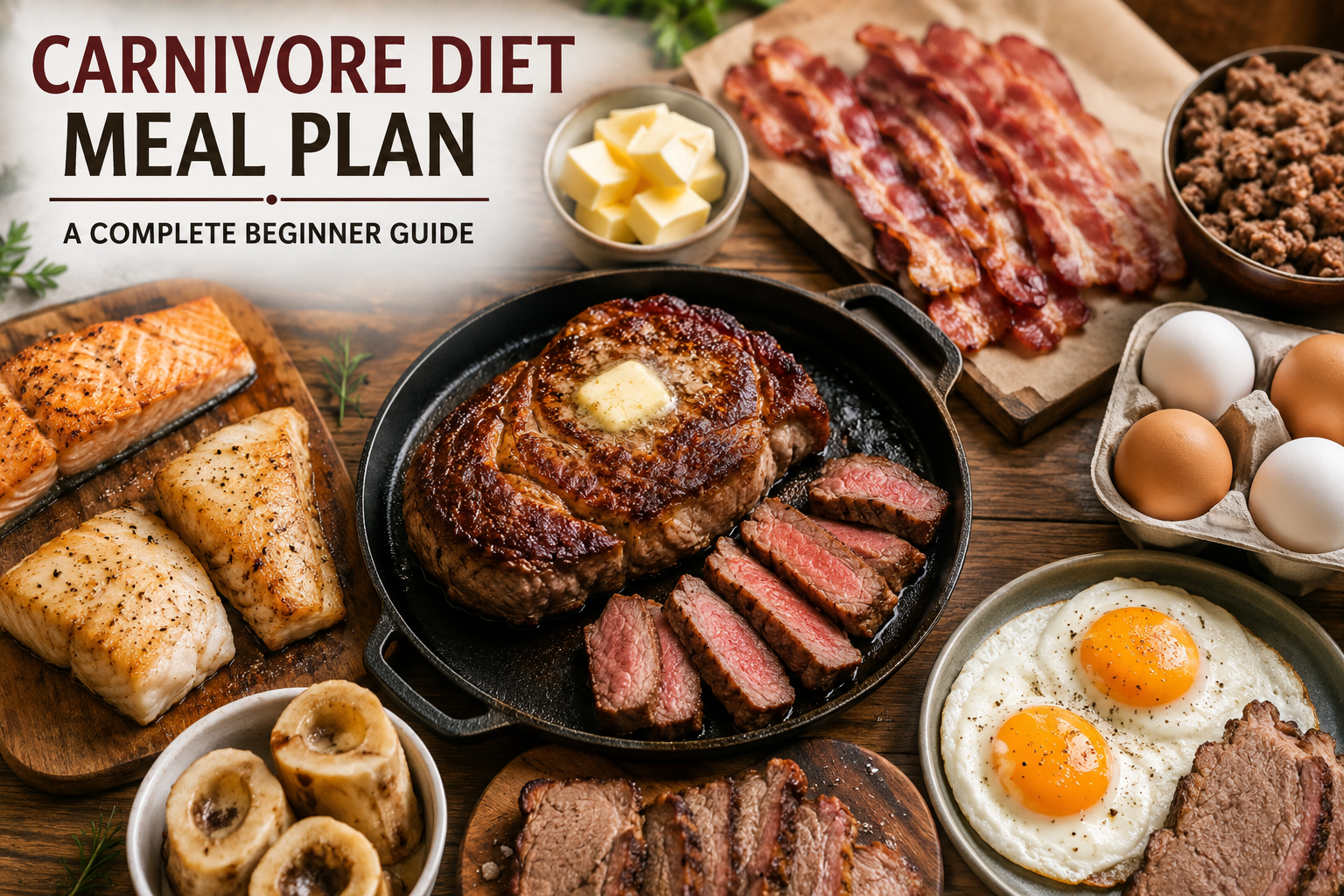
The best carnivore diet meal plan starts with whole animal foods that provide protein and healthy fats. I always suggest building meals around beef, grass-fed beef, or grain-fed beef because they are filling and easy to prepare. Popular steak choices include ribeye, sirloin, NY strip, porterhouse, T-bone steak, flat iron steak, flank steak, skirt steak, and beef tenderloin.
Budget-friendly cuts like chuck roast, brisket, short ribs, beef shank, oxtail, ground beef, beef mince, burger patties, and hamburger patties also work well. For extra nutrients, add beef liver, beef heart, beef kidney, beef tongue, bone marrow, marrow bones, beef cheeks, or beef jerky to your weekly menu.
Include Different Types of Meat
Eating different meats helps keep meals enjoyable and provides a wider range of nutrients. Good choices include lamb, lamb chops, lamb loin, lamb shoulder, lamb leg, and lamb liver. You can also enjoy goat, venison, elk, bison, and buffalo.
Pork lovers can choose pork, pork chops, pork belly, pork shoulder, pork loin, pork ribs, bacon, ham, pork rinds, and sausage. Poultry options include chicken, chicken thighs, chicken breast, chicken wings, rotisserie chicken, duck, turkey, and quail.
Add Seafood for Healthy Variety
Seafood adds important nutrients and healthy fats to your meal plan. Great options include salmon, wild-caught salmon, cod, tuna, sardines, anchovies, mackerel, trout, herring, shrimp, prawns, lobster, crab, oysters, mussels, scallops, and clams.
I like adding seafood once or twice each week because it brings new flavors without changing the diet’s simple approach.
Don’t Forget Eggs and Animal Fats
Eggs, whole eggs, egg yolks, and duck eggs are easy to cook and fit almost every meal. For cooking fats, use butter, grass-fed butter, ghee, beef tallow, duck fat, or lard. These fats add flavor and help you stay full longer.
Dairy and Bone Broth Options
If you tolerate dairy, moderate amounts of heavy cream, cheddar, parmesan, gouda, cream cheese, and hard cheese can add variety to your meals. You can also enjoy bone broth, which naturally contains collagen and gelatin to make your meal plan more satisfying.
Foods to Avoid on a Carnivore Diet Meal Plan
A carnivore diet meal plan removes all plant foods to keep the diet simple. Avoid vegetables, leafy greens, fruits, berries, apples, bananas, oranges, and avocado. These foods contain carbohydrates that do not fit a strict carnivore approach. From my experience, many beginners find the transition easier when they remove these foods step by step instead of making frequent exceptions.
Skip Grains and Legumes
Do not eat grains such as wheat, rice, oats, barley, quinoa, and corn. Also avoid legumes, including beans, lentils, chickpeas, soy, and peanuts. These foods are common in many diets, but they are not part of a traditional carnivore meal plan.
Avoid Nuts, Seeds, and Grain Products
Leave out nuts, almonds, walnuts, seeds, chia seeds, flaxseed, sunflower seeds, and pumpkin seeds. You should also avoid bread, pasta, noodles, breakfast cereal, crackers, pastries, cakes, cookies, and other baked foods. Replacing these foods with meat-based meals can make your eating plan much simpler.
Stay Away from Sugar and Sweet Foods
Avoid desserts, candy, chocolate, sugar, honey, syrups, and artificial sweeteners. These foods can increase cravings and make it harder to stay consistent with a carnivore diet.
Avoid Seed Oils and Processed Foods
Do not use seed oils, vegetable oils, canola oil, soybean oil, sunflower oil, or safflower oil for cooking. It is also best to avoid processed foods and ultra-processed foods, as they often contain added ingredients that do not match a carnivore lifestyle.
Skip Sugary Drinks and Alcohol
Choose water instead of soft drinks, soda, or fruit juice. You should also avoid alcohol while following a strict carnivore diet. Drinking water and eating whole animal foods can help you stay focused on your meal plan.
Meal Plan Terms for a Carnivore Diet
A successful carnivore diet meal plan begins with a clear routine. Plan your breakfast, lunch, dinner, and, if needed, a snack to avoid last-minute food choices. I have found that following a daily meal plan makes it much easier to stay consistent. Keep your meal timing regular and follow a simple meal schedule that matches your lifestyle and hunger.
Make Meal Prep Easy
Good meal prep saves both time and effort during busy days. I like using batch cooking to prepare several meals at once. This method reduces daily cooking and keeps healthy food ready to eat. Proper food preparation and a planned cooking schedule also make it easier to stay on track throughout the week.
Plan Your Shopping Before You Cook
Always create a grocery list before shopping. A detailed shopping list helps you buy only the foods you need and avoid unnecessary spending. Keeping a realistic grocery budget also makes the carnivore diet easier to follow for the long term.
Organize Weekly and Monthly Meals
Planning ahead removes the stress of deciding what to eat every day. Prepare a weekly menu to organize meals for the next seven days. You can also create a monthly menu for better variety and easier shopping. Many people find that using a weekly meal plan or monthly meal plan helps them stay consistent and reduces food waste.
Control Portions and Nutrition Goals
Pay attention to your serving size and portion size to match your appetite and health goals. Set a daily protein target and fat target based on your activity level and personal needs. This simple habit can help you build balanced carnivore meals without counting every calorie.
Keep Meals Practical and Flexible
Choose simple meals that are easy to prepare and enjoy with your family. Family meals can still follow a carnivore approach by focusing on quality animal foods. Do not waste leftovers because they make quick meals for the next day. Use meal rotation and recipe planning to add variety while keeping your diet interesting and sustainable.
Meal Types for a Carnivore Diet Meal Plan
A filling breakfast can keep you satisfied for hours. Popular choices include steak and eggs, scrambled eggs, fried eggs, poached eggs, hard-boiled eggs, a classic omelet, or a cheesy omelet.
Many people also enjoy bacon and eggs because they are quick to prepare and rich in protein and healthy fats. From my experience, rotating these breakfast options helps prevent boredom while keeping the meal plan simple.
Choose Hearty Meat-Based Lunches
Lunch is a great time to enjoy larger cuts of meat. You can prepare grilled steak, ribeye steak, brisket, chuck roast, or juicy burger patties. If you prefer a simple one-dish meal, a beef bowl is an easy choice. These meals are satisfying and help you stay full throughout the afternoon.
Enjoy Flavorful Seafood and Poultry
Adding seafood and poultry brings variety to your weekly meal plan. You can enjoy grilled salmon, roasted salmon, or pan-seared salmon for healthy fats and protein. Other excellent choices include roasted chicken, grilled chicken thighs, and rotisserie chicken. I like including these meals several times each week because they add different flavors without changing the carnivore approach.
Add Rich Meat and Organ Meals
For more variety, include pork belly, pork chops, and lamb chops in your menu. Nutrient-rich options like beef liver and beef heart stew provide important vitamins and minerals. Many experienced carnivore followers also enjoy organ meat meals as part of a balanced weekly rotation.
Include Simple Side Options
Some meals become even more satisfying with a warm cup of bone broth, especially during colder months. Seafood lovers can enjoy a seafood platter, sardines, or a fresh tuna steak for a change of taste while staying fully carnivore.
Nutrition Terms in a Carnivore Diet Meal Plan
A well-balanced carnivore diet meal plan provides plenty of protein and complete protein to support muscles and daily body functions. It also includes enough dietary fat, saturated fat, and monounsaturated fat to supply lasting energy. Many people also value omega-3 fatty acids from fatty fish and maintain a balanced intake of omega-6 fatty acids.
While cholesterol often raises questions, it is a natural part of many animal foods. From my experience, choosing a variety of quality meats and seafood makes it easier to build balanced carnivore meals.
Build Strong Nutrition with Essential Nutrients
Animal foods naturally contain important amino acids, including essential amino acids, which help repair and maintain body tissues. They also provide collagen, gelatin, glycine, and proline, which support healthy skin, joints, and connective tissues.
Other valuable nutrients include choline for brain function, creatine for muscle performance, carnitine for energy production, taurine for heart and eye health, and CoQ10, which supports healthy cells and energy production.
Get Important Vitamins and Minerals
A good carnivore meal plan supplies key vitamins such as vitamin A, vitamin B12, vitamin D, and vitamin K2. It also provides important minerals, including iron, zinc, selenium, copper, phosphorus, calcium, sodium, potassium, and magnesium.
Keeping your electrolytes balanced is especially helpful during the first few weeks of the diet because it supports hydration and overall well-being.
Understand Nutrient Quality
Instead of counting every nutrient, focus on eating a variety of whole animal foods. These foods naturally provide micronutrients and macronutrients with excellent nutrient density and high bioavailability, making them easy for the body to absorb and use. They also contain both fat-soluble vitamins and water-soluble vitamins, helping you build a simple, nutrient-rich carnivore diet.
Health Goals of a Carnivore Diet Meal Plan
Many people choose a carnivore diet meal plan to support weight loss, fat loss, and better body composition. A diet rich in animal foods can also help with body recomposition by reducing body fat while supporting lean muscle.
Eating enough protein each day helps with muscle gain and muscle retention, especially when combined with regular strength training. From my experience, staying consistent with simple meals often brings better long-term results than following complicated diet plans.
Stay Full and Control Hunger
One of the biggest benefits of this eating style is improved satiety. High-protein and high-fat meals help with appetite control, making it easier to avoid unnecessary snacking. Feeling satisfied after meals can also support healthy eating habits and make the diet easier to maintain over time.
Improve Metabolic Health
A well-planned carnivore diet may support metabolic health by improving insulin sensitivity and promoting healthy blood sugar regulation. Many followers aim to reach ketosis, where the body increases ketone production and uses fat for energy. This natural process is known as fat adaptation and may provide more stable energy throughout the day.
Boost Energy and Mental Performance
Many people report higher energy levels after adapting to the diet. Some also experience better mental clarity and improved cognitive performance, helping them stay focused during work and daily activities. As the body becomes more efficient at using fat for fuel, many people notice more sustained energy with fewer energy crashes.
Support Overall Health and Recovery
A balanced carnivore meal plan may also benefit digestive health and gut health by removing many foods that some people find difficult to digest. Some individuals follow this diet for inflammation management or autoimmune support, although results can vary from person to person. Eating enough nutrient-rich animal foods also supports healthy aging, athletic performance, and faster recovery after exercise or physical activity.
Cooking Methods for a Carnivore Diet Meal Plan
The right cooking method can improve both flavor and texture while keeping your carnivore diet meal plan enjoyable. Popular options include grilling, roasting, baking, broiling, and smoking, which work well for steaks, roasts, and larger cuts of meat. From my experience, rotating these methods keeps meals interesting without adding extra ingredients.
Cook Meat Quickly or Slowly
Fast cooking methods are perfect for busy days. Pan frying, pan searing, air frying, and skillet cooking create a flavorful crust while keeping the inside juicy. If you prefer tender meat, try pressure cooking, slow cooking, or sous vide. These methods help soften tougher cuts and bring out rich flavors with very little effort.
Prepare Meals for the Week
Planning ahead saves time and makes the carnivore diet easier to follow. Oven roasting is a simple way to cook several portions at once, while barbecue adds a smoky flavor to meat and poultry. For soups and broths, use simmering to extract rich flavor from bones and meat.
Cook Eggs and Simple Foods with Ease
Eggs are quick to prepare using several cooking methods. You can use boiling, poaching, scrambling, or hard-boiling to add variety to your breakfast or snacks. When preparing several meals together, meal prep cooking helps you stay organized, reduce daily cooking time, and keep healthy carnivore meals ready throughout the week.
Shopping List for a Carnivore Diet Meal Plan
A smart shopping list makes your carnivore diet meal plan easier to follow. Start with everyday meats such as ground beef, ribeye, chuck roast, and brisket. These cuts provide plenty of protein and healthy fats while fitting different budgets. I often recommend buying larger cuts when they are on sale because they are great for meal prep and can save money over time.
Add Nutrient-Dense Organ Meats
Include beef liver, beef heart, and bone marrow in your weekly shopping. These foods are rich in important vitamins and minerals that support overall health. Even one or two servings each week can add more variety and nutrition to your meal plan.
Choose Pork, Poultry, and Seafood
A balanced shopping trip should also include bacon, pork belly, pork shoulder, and chicken thighs. For healthy fats and extra variety, add salmon, sardines, and tuna. Rotating different protein sources keeps meals enjoyable while providing a wide range of nutrients.
Stock Up on Daily Essentials
Keep your kitchen ready with eggs, butter, ghee, beef tallow, and salt. These staples make cooking simple and add flavor to almost every carnivore meal. A container of bone broth is also helpful for quick meals, hydration, and extra nourishment.
Include Dairy and Helpful Supplements
If you tolerate dairy, add heavy cream, cheddar cheese, and parmesan cheese to your shopping cart. You may also consider a magnesium supplement, electrolyte powder, and collagen peptides to support hydration, electrolyte balance, and connective tissue health, especially during the early stages of the carnivore diet.
Supplements for a Carnivore Diet Meal Plan
A well-planned carnivore diet meal plan can provide many important nutrients from whole animal foods. However, some people choose supplements during the first few weeks or when recommended by a healthcare professional. From my experience, supplements work best when they fill a real nutritional need instead of replacing quality food.
Support Hydration and Electrolyte Balance
During the early stages of the diet, your body may lose more water and minerals. Electrolyte supplements can help maintain proper fluid balance. They often contain sodium, potassium, magnesium, and trace minerals, which support muscle function, nerve health, hydration, and overall well-being. Keeping these minerals balanced may also reduce common adaptation symptoms.
Add Nutrient-Rich Animal-Based Supplements
Some carnivore followers use collagen peptides or bone broth collagen to support healthy joints, skin, and connective tissues. Others include desiccated liver, desiccated organs, or freeze-dried liver because they provide concentrated nutrients from organ meats in a convenient form. These supplements can be helpful for people who do not enjoy eating fresh organ meats regularly.
Fill Nutritional Gaps When Needed
Depending on your individual needs, a healthcare professional may recommend vitamin D, vitamin K2, or omega-3 fish oil to support bone, heart, and overall health. Some people also benefit from digestive enzymes, especially while adjusting to a higher-fat eating pattern. Supplements should support a healthy carnivore diet, not replace a balanced intake of nutrient-rich animal foods.
Beginner Tips for Starting a Carnivore Diet Meal Plan
If you are following a Carnivore diet for beginners, keep your meals simple and easy to prepare. A well-designed beginner meal plan helps you build confidence without feeling overwhelmed. During the transition phase, your body begins adjusting to using fat instead of carbohydrates for energy. This adaptation phase is different for everyone, so focus on steady progress rather than perfection. From my experience, people who keep their meals simple during the first week find it much easier to stay committed through the first month.
Understand Common Early Challenges
Many beginners experience keto flu or carb withdrawal as the body adapts to a new way of eating. You may notice cravings, food cravings, or changes in appetite during this time. Good hunger management becomes easier when you eat enough protein and healthy fats at each meal. Staying patient and avoiding common beginner mistakes can make your transition much smoother.
Stay Hydrated and Support Your Body
Proper hydration is one of the most important parts of starting a carnivore diet. Drinking enough water and maintaining electrolyte balance may help reduce early adaptation symptoms. Many people also notice better digestive adaptation after their body becomes familiar with an animal-based eating pattern. Small daily habits often make the biggest difference during the first few weeks.
Prepare for Long-Term Success
Good meal preparation saves time and helps you avoid unhealthy choices when life gets busy. Before each week begins, complete your grocery shopping and keep your kitchen stocked with carnivore-friendly foods. Building consistency through small daily actions creates sustainable habits that are much easier to maintain over the long term.
Advanced Carnivore Approaches
Once you feel comfortable with a standard carnivore diet, you may want to explore more advanced methods. A Strict carnivore approach removes all optional foods and focuses only on animal-based nutrition. Some people also follow the Lion Diet, which is one of the most restrictive versions of the carnivore lifestyle.
Another simple method is the beef-salt-water protocol, where meals consist mainly of beef, salt, and water. From my experience, these approaches work best for people who already have a solid routine and understand how their body responds to the diet.
Focus on Nutrient-Dense Animal Foods
Many experienced carnivore followers practice nose-to-tail eating to use more parts of the animal instead of relying only on muscle meat. A planned organ meat rotation helps provide a wider range of vitamins and minerals throughout the week.
As your body becomes more efficient at using fat for fuel, fat adaptation usually improves. Choosing meat from ruminant animals, such as beef and lamb, is also common because these foods are naturally rich in nutrients.
Choose High-Quality Food Sources
Food quality becomes more important as you gain experience. Many advanced followers prefer grass-fed beef and meat from pasture-raised livestock because of their farming practices.
Some also include raw dairy if they tolerate it well and if it is legally available and safely produced in their area. Others use organ supplementation when they do not regularly eat fresh organ meats.
Refine Your Long-Term Strategy
Some people use an elimination protocol to identify foods that may trigger symptoms before slowly reintroducing selected animal foods. Others combine the carnivore diet with advanced fasting, but this should be done carefully and, if you have medical conditions, with professional guidance.
The main goal is nutrient optimization, which means choosing a wide variety of nutrient-rich animal foods to support long-term health. Many people also value producers who practice regenerative agriculture, as this approach focuses on improving soil health and sustainable livestock farming.
Medical & Health Context of a Carnivore Diet Meal Plan
Many people explore a carnivore diet meal plan to improve their health, but research is still developing. Some individuals report improvements in Inflammation and chronic inflammation after removing certain foods.
Others try this eating pattern to help manage insulin resistance, Type 2 diabetes, obesity, or metabolic syndrome. From my experience, every person responds differently, so it is important to focus on long-term health instead of expecting quick results.
Digestive and Autoimmune Health
Some people with digestive disorders choose the carnivore diet because it removes many foods that may trigger symptoms. This includes people living with IBS, Crohn’s disease, or ulcerative colitis. Others use it as part of an autoimmune disease management plan or to help with conditions such as psoriasis and arthritis. While some people notice improvements, these conditions require individualized care, and the diet should not replace medical treatment.
Monitor Important Health Markers
If you follow a carnivore diet for several months, it is wise to monitor your health regularly. Your healthcare provider may check cholesterol markers, including LDL cholesterol, HDL cholesterol, and triglycerides.
Other useful tests include HbA1c for long-term blood sugar control, blood glucose, blood pressure, liver enzymes, and kidney function. These results help you understand how your body responds to the diet over time.
Work with a Qualified Healthcare Provider
A carnivore diet can be a major dietary change, especially if you have an existing medical condition. Following the diet under medical supervision is the safest approach for many people.
Before starting, speak with a healthcare professional, a registered dietitian, or arrange a physician consultation. Professional guidance can help you build a balanced meal plan, monitor your progress, and make changes based on your personal health needs.
Lifestyle Tips for a Carnivore Diet Meal Plan
A successful carnivore diet meal plan is about more than food. Your daily routine also plays an important role. Many people combine the diet with Intermittent fasting, OMAD, or two meals a day to simplify eating and reduce unnecessary snacking.
Finding the right meal timing and following a consistent fasting window can make the diet easier to maintain. From my experience, choosing a schedule that fits your lifestyle is much better than forcing a routine that feels difficult.
Support Your Body Every Day
Healthy habits work together with good nutrition. Better sleep quality helps your body repair and recharge, while good stress management can reduce emotional eating and improve long-term consistency. Do not overlook hydration, especially during the first weeks of the diet, because it supports energy, muscle function, and overall well-being. Giving your body enough time for recovery is also important after physical activity.
Match Your Diet with Your Training Goals
A carnivore diet can support many active lifestyles. Whether you enjoy strength training, resistance training, bodybuilding, CrossFit, or endurance sports, eating enough protein and healthy fats helps fuel your workouts and recovery. Adjust your meal size and eating schedule to match your activity level and personal goals.
Make the Diet Easy to Follow
Planning ahead helps you stay consistent without adding stress. Smart grocery budgeting keeps food costs under control while ensuring you have quality animal foods at home. If you have a busy schedule, meal delivery or a meal subscription can save time and reduce daily cooking. When eating out, choose restaurant-quality meals that fit your carnivore plan. On quieter days, home cooking gives you full control over ingredients, portion sizes, and food quality.
Common Questions About a Carnivore Diet Meal Plan
What is a carnivore diet meal plan?
What is a carnivore diet meal plan? It is an eating plan based on animal foods only. It focuses on meat, fish, eggs, animal fats, and sometimes limited dairy. Plant foods are excluded to keep the diet simple and consistent. From my experience, beginners do better when they start with easy meals and follow a clear routine instead of making the diet complicated.
What Foods Can You Eat?
Many beginners ask, what foods can you eat on this diet. You can enjoy beef, lamb, pork, poultry, seafood, eggs, animal fats, and, if tolerated, small amounts of dairy. Another common question is, what foods should you avoid. Most carnivore meal plans remove fruits, vegetables, grains, legumes, nuts, seeds, sugary foods, and processed foods because they do not fit this eating style.
How Much Should You Eat?
People often ask, how much protein should you eat and how much fat should you eat. The answer depends on your age, activity level, and health goals. A balanced carnivore meal usually includes enough protein to support muscles and enough fat to provide energy. Another common question is, how many meals per day. Some people prefer two or three meals, while others naturally eat less as they become more satisfied.
Which Foods Are Best?
Many readers ask, what is the best meat for carnivore. Nutrient-rich meats like beef, lamb, and other ruminant meats are popular choices. Other common questions include can you eat eggs, can you eat cheese, can you drink coffee, can you eat yogurt, and can you eat seafood. Eggs and seafood fit most carnivore meal plans. Cheese and yogurt depend on dairy tolerance, while coffee is optional because some people choose to avoid plant-based drinks.
How Long Should You Follow the Diet?
A frequent question is, how long should you follow the carnivore diet. There is no single answer because goals and health needs differ. Some people follow it for a few weeks, while others continue for months under professional guidance. Another practical question is, how much does it cost. Your budget depends on the meats you buy, where you shop, and whether you choose premium or budget-friendly cuts.
What Else Should Beginners Know?
>>What supplements are recommended?
Some people use electrolytes, magnesium, or other supplements based on their personal needs and healthcare advice.
>>How do you meal prep?
Preparing meat in batches and planning meals ahead saves time during the week.
>>What is the grocery budget?
Buying larger cuts of meat, shopping sales, and planning meals can reduce food costs.
>>Is the carnivore diet healthy?
It can work well for some individuals, but it should be based on nutrient-rich foods and, especially for people with medical conditions, discussed with a qualified healthcare professional.
Related Carnivore Diet Resources
A good carnivore diet meal plan often works best when paired with helpful resources. If you are just getting started, begin with a Carnivore diet food list to learn which foods fit the diet. Next, explore carnivore diet recipes to add variety without making meals complicated.
A simple carnivore diet menu can help you organize breakfast, lunch, and dinner, while a carnivore grocery list makes shopping faster and easier. From my experience, using carnivore meal prep each week saves time and helps you stay consistent.
Use Printable Meal Planning Tools
Many beginners like keeping a Carnivore diet PDF on their phone or printing it for quick reference. A well-designed carnivore diet shopping list also helps reduce unnecessary purchases and keeps your kitchen stocked with the right foods. If you prefer printed resources, a printable carnivore meal plan or a free carnivore meal plan PDF can make daily planning much easier.
Choose the Best Meal Plan Length
Your meal plan should match your experience and goals. A 7-day carnivore diet meal plan is a simple way to learn the basics without feeling overwhelmed. If you want more structure, try a 14-day carnivore diet meal plan1. For people building long-term habits, a 30-day carnivore diet meal plan provides enough time to develop a consistent routine and evaluate progress.
Pick a Plan That Matches Your Goals
Different people have different reasons for following this diet. A carnivore diet for beginners focuses on simple meals and easy habits. If your goal is fat reduction, a carnivore diet for weight loss may help you stay full while reducing carbohydrates. Those looking to build strength often choose a carnivore diet for muscle gain, which emphasizes protein-rich meals and adequate healthy fats.
Find a Plan That Fits Your Budget
You do not need expensive ingredients to succeed. An easy carnivore meal plan keeps cooking simple and practical for everyday life. If you want to reduce food costs, a budget carnivore meal plan helps you choose affordable cuts of meat and shop wisely. A cheap carnivore meal plan can also provide balanced, satisfying meals while staying within your weekly grocery budget.
Learn the Benefits and Possible Risks
Before making major dietary changes, take time to understand both the carnivore diet benefits and the carnivore diet side effects. Learning about both helps you set realistic expectations, prepare for the transition, and decide whether this eating style matches your personal health goals.
Numbers and Measurements for a Carnivore Diet Meal Plan
A carnivore diet meal plan can be as short or as long as you need. Many beginners start with a 1-day trial before moving to a 3-day or 7-day plan. Others prefer a 14-day, 21-day, or 30-day plan to build better habits. If you want to evaluate long-term progress, you can continue for 60-day or 90-day.
Many people notice changes after one week, while others need two weeks, one month, two months, or even three months to fully adapt. From my experience, consistency matters more than choosing the perfect timeline.
Balance Protein and Fat
Many carnivore followers use the 80/20 rule as a simple guide for building meals. Daily calorie needs often range between 2,000 calories and 2,500 calories, depending on age, activity level, and health goals. Protein needs also vary, but many people aim for 100 grams protein, 150 grams protein, or 200 grams protein each day. A common macronutrient target includes 60–80% fat and 20–40% protein, although personal needs can differ.
Measure Portions with Confidence
Simple portion sizes make meal planning easier. Many people eat 3–6 eggs per day and include 2–3 fish servings per week for extra variety. Common serving sizes include an 8-ounce steak, a 12-ounce ribeye, or a 16-ounce brisket. Families who cook in batches often buy 5-pound ground beef and 2 dozen eggs to prepare several meals at once. Homemade 24–48-hour bone broth is another popular addition because it adds flavor and makes good use of bones.
Plan Your Grocery Budget
A realistic budget helps you stay consistent over the long term. Many people can follow a carnivore diet with a $75–100 weekly grocery budget by choosing affordable cuts of meat and buying in bulk. If you prefer premium meats, grass-fed options, or seafood, you may need a $150–200 premium grocery budget. Planning your meals before shopping helps reduce waste and keeps your spending under control.
Disclaimer:
This article is for educational and informational purposes only and is not a substitute for professional medical advice, diagnosis, or treatment. Always consult a qualified healthcare professional or registered dietitian before making significant dietary changes, especially if you have a medical condition, are pregnant, nursing, or taking medications. Individual results may vary, and the carnivore diet may not be suitable for everyone.