

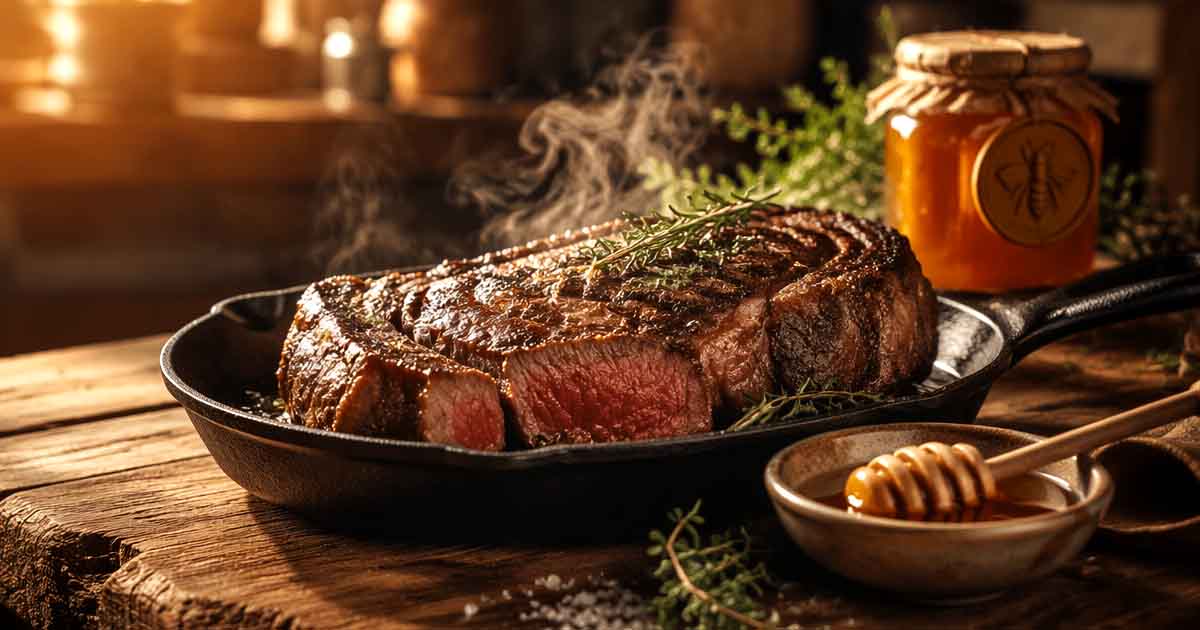
Table of Contents
One tablespoon of honey holds 17 grams of carbs and zero grams of protein. That single number starts every honey debate in the carnivore world.
Bees are animals. Honey is not meat. That gap is why this topic splits the carnivore community harder than almost any other food. This guide gives you the direct answer, the real carb math, the tribal evidence people love to quote, and a simple way to test honey for yourself.

Is honey allowed on the carnivore diet?
No, honey is not allowed on a strict, zero-carb carnivore diet, because it comes from plant nectar and carries almost no protein or fat. Some flexible, ketovore, or animal-based eaters still include small amounts.
Bees collect nectar from flowers, not from animals. That plant origin is the main reason honey does not fit a pure carnivore food list, even though a bee itself is an animal.
A strict carnivore plate holds meat, organs, eggs, fish, and animal fat. Honey brings a fourth thing to the table that none of those foods carry: a heavy dose of sugar.
The carb math behind the debate
One tablespoon of honey carries close to 17 grams of carbohydrate, almost all of it sugar, with no fat, fiber, or protein attached. That is close to the sugar in a serving of sweetened yogurt or fruit juice.
Honey splits roughly evenly between fructose and glucose. Both sugar types can spike insulin and pull your body out of ketosis if you eat enough of them.
Most carnivore macro targets sit near 20% to 40% protein, 60% to 80% fat, and under 5% carbs. On a 2,000-calorie day, that 5% ceiling equals about 100 calories from carb sources, or roughly one and a half tablespoons of honey.
| Sweetener (1 tbsp) | Carbs | Protein | Fat | Fits zero-carb carnivore |
|---|---|---|---|---|
| Raw honey | ~17g | 0g | 0g | No |
| White sugar | ~13g | 0g | 0g | No |
| Maple syrup | ~13g | 0g | 0g | No |
| Butter | 0g | 0g | 12g | Yes |
| Ghee | 0g | 0g | 14g | Yes |
Go past roughly one and a half tablespoons a day, and most strict carnivore macro targets start to slip.
Why Honey Is Different
| Feature | Raw Honey | White Sugar |
|---|---|---|
| Antioxidants | ✅ Present | ❌ None |
| Enzymes | ✅ Present | ❌ None |
| Antimicrobial | ✅ Present | ❌ None |
| Glucose/Fructose Ratio | ~1:1 | ~1:1 |
| Nutrient Density | Low but present | Zero |
This visually proves honey ≠ sugar.
Why some carnivore eaters still include it
Not every carnivore eater runs a zero-carb plate. Animal-based and ketovore eaters build more room for a small carb allowance.
Raw honey carries a few things beyond sugar. It holds trace antioxidants, natural enzymes, and small antimicrobial compounds that table sugar does not carry.
People often lump honey in with processed sugar and label it an unhealthy carb, despite research suggesting the two don’t behave identically inside the body. That distinction fuels much of the animal-based argument for keeping honey around in small amounts.
Local, raw, unfiltered honey also gets credit in online communities for easing seasonal allergy symptoms. Evidence for this claim stays thin and mostly anecdotal, so treat it as a possible bonus, not a guarantee.
Honey as Medicine
Manuka honey, in particular, has been studied for its antibacterial properties against H. pylori and wound healing. While not carnivore-specific, this medicinal value is why some include it strategically—not for sweetness, but for targeted health support.
The Hadza argument: what hunter-gatherers actually eat
Carnivore advocates for honey often point to the Hadza, a hunter-gatherer tribe in Tanzania. Honey supplies a large share of their calories during parts of the year, and they climb trees and brave bee stings to get it.
That evidence supports honey as a natural, ancestral food. It does not erase the downside. Researchers studying the Hadza and similar tribes have also recorded high rates of dental decay tied to their honey intake.
Ancestral eating is a helpful lens, not a rulebook. What worked for a tribe that walked 10 miles a day and ate honey straight from a wild hive will not automatically match a desk job and a jar from the store.
Add a 2-column comparison early:
The “Animal-Based vs. Carnivore” Bridge
| Strict Carnivore | Animal-Based (Saladino’s Camp) |
|---|---|
| Zero plant foods | Includes fruit + honey |
| Ketosis is the goal | Not concerned with ketosis |
| Meat + water + salt | Meat + organs + fruit + honey + raw dairy |
The Saladino vs. Berry debate
Two well-known carnivore doctors, Paul Saladino and Ken Berry, have publicly debated this exact question. Saladino shifted from a strict meat-only plan toward adding fruit and honey back into his diet after moving to Costa Rica, describing the result as closer to an animal-based approach than pure carnivore. Berry has pushed back, arguing that added sugar sources like honey can slow fat loss progress for many people.
Neither side has strong, large-scale human trial data behind their claim. Both sides are working from personal results and small case reports, so treat this debate as a starting point for your own test, not a final verdict.
How to use honey on carnivore without derailing your goal
If you choose to include honey, treat it as a condiment, not a food group.
1.1 Measure it. A level tablespoon, not a free-pour drizzle. 1.2 Add it late in cooking. A finishing drizzle on grilled meat builds caramelization without needing a large amount. 1.3 Choose raw and unfiltered honey. It keeps more of the trace enzymes and antioxidants that processing strips away. 1.4 Track your response. Watch your energy, digestion, and cravings for the next few hours. 1.5 Cap your carb source at roughly 5% of daily calories, honey included.
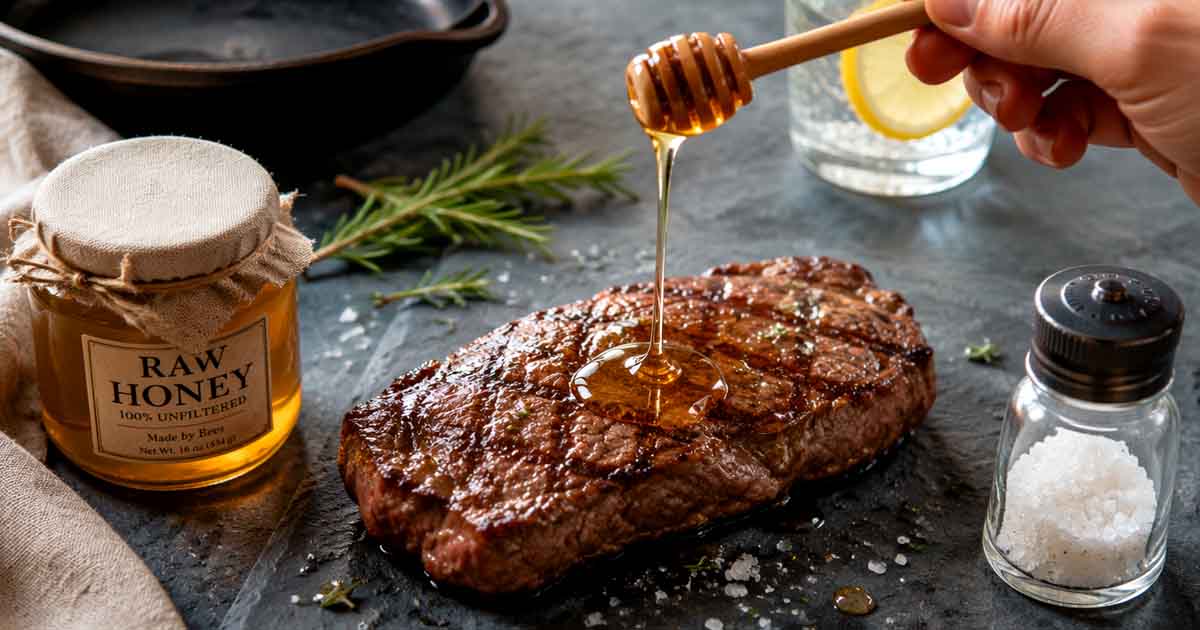
A thin glaze on a seared steak adds a sweet-savory crust without turning the meal into a dessert. Treat it as an occasional flavor boost, not a daily habit.
Should you skip honey completely?
Skip honey if you are early in a strict carnivore or Lion Diet reset, chasing deep ketosis, or working to break a sugar craving cycle. The carb load works against every one of those goals.
Consider a small, measured amount if you already tolerate carbs well, train hard, and want extra flavor without leaving an animal-based framework entirely.
Your gut, your goal, and your own test matter more than any forum opinion.
The honey elimination test
Run a simple two-week check instead of guessing.
Week 1: Keep your current honey habit unchanged. Track your weight, energy, cravings, and digestion each day.
Week 2: Remove honey completely. Keep meat, eggs, and animal fat the same as week 1.
Compare your notes. A clear shift in cravings, energy, or the scale tells you more than any online debate.
Quick answers
Is honey considered an animal product?
No. Honey comes from flower nectar that bees collect and process, which makes it plant-derived even though a bee itself is an animal.
How much honey can I have on carnivore?
Strict, zero-carb carnivore allows none. Flexible or animal-based versions often cap honey near one to one and a half tablespoons a day, based on a typical carb budget under 5% of daily calories.
Does honey break ketosis?
Yes, in large enough amounts. A tablespoon or two spread through the day rarely breaks ketosis for most people, but several servings can push carb intake past a typical 20-gram daily limit.
Is raw honey healthier than regular honey on carnivore?
Raw honey keeps more trace enzymes and antioxidants than processed honey, since it skips heavy filtering and heating. Both carry a nearly identical carb and sugar count.
Can honey help with seasonal allergies on carnivore?
Some people report fewer allergy symptoms after adding local raw honey. Strong clinical evidence for this claim remains limited, so treat it as a possible bonus rather than a proven benefit.
Is honey helping you or holding you back?”
If it improves your energy, sleep, and satisfaction → keep it.
If it triggers cravings, bloating, or stalls → drop it.
Your body doesn’t care about labels. It cares about results.
The bottom line
Honey does not fit a strict, zero-carb carnivore plate, because it carries plant sugar without protein or fat. A small, measured amount can still work inside a flexible or animal-based plan.
Track your response over two weeks. Let your own results, not a forum argument, make the final call.
Does honey fit your carnivore plan? Share your results in the comments below.
Medical Disclaimer:
This article is for educational and informational purposes only and should not be considered medical or nutritional advice. Individual responses to honey on the carnivore diet can vary based on metabolism, health conditions, activity level, and personal goals. If you have diabetes, insulin resistance, food allergies, or any medical condition, consult a qualified healthcare professional before making dietary changes. While honey is an animal-derived food, it is high in natural sugars and may not be suitable for strict or therapeutic carnivore diets. Always choose high-quality honey from trusted sources and monitor how it affects your health, blood sugar, and overall progress.
References
- USDA FoodData Central – Honey Nutrition Facts
https://fdc.nal.usda.gov/fdc-app.html#/food-search
Topic: Nutritional composition of honey (calories, carbohydrates, sugars, vitamins, and minerals) - World Health Organization (WHO) – Guideline: Sugars Intake for Adults and Children
https://www.ncbi.nlm.nih.gov/books/NBK285525/
Topic: WHO recommendations on free sugars, including honey - Mayo Clinic – Honey
https://www.mayoclinic.org/drugs-supplements-honey/art-20363819
Topic: Health benefits, uses, precautions, and safety of honey - U.S. Food and Drug Administration (FDA) – Raw Honey and Food Safety
https://www.fda.gov/food/buy-store-serve-safe-food/raw-honey-and-food-safety
Topic: Food safety guidelines and risks associated with raw honey - Healthline – 10 Evidence-Based Health Benefits of Honey
https://www.healthline.com/nutrition/10-benefits-of-honey
Topic: Science-backed health benefits and nutritional value of honey - Medical News Today – Honey: Benefits, Uses, and Nutrition
https://www.medicalnewstoday.com/articles/324997
Topic: Honey nutrition, potential health benefits, and possible risks - National Center for Biotechnology Information (NCBI) – Honey for Nutrition and Health: A Review
https://www.ncbi.nlm.nih.gov/pmc/articles/PMC5424551/
Topic: Peer-reviewed review of honey’s medicinal, nutritional, and therapeutic properties - World Health Organization (WHO) – Sugars Guideline
https://www.who.int/publications/i/item/9789241549028
Topic: Official WHO guideline on dietary sugar intake, including recommendations related to honey as a free sugar.