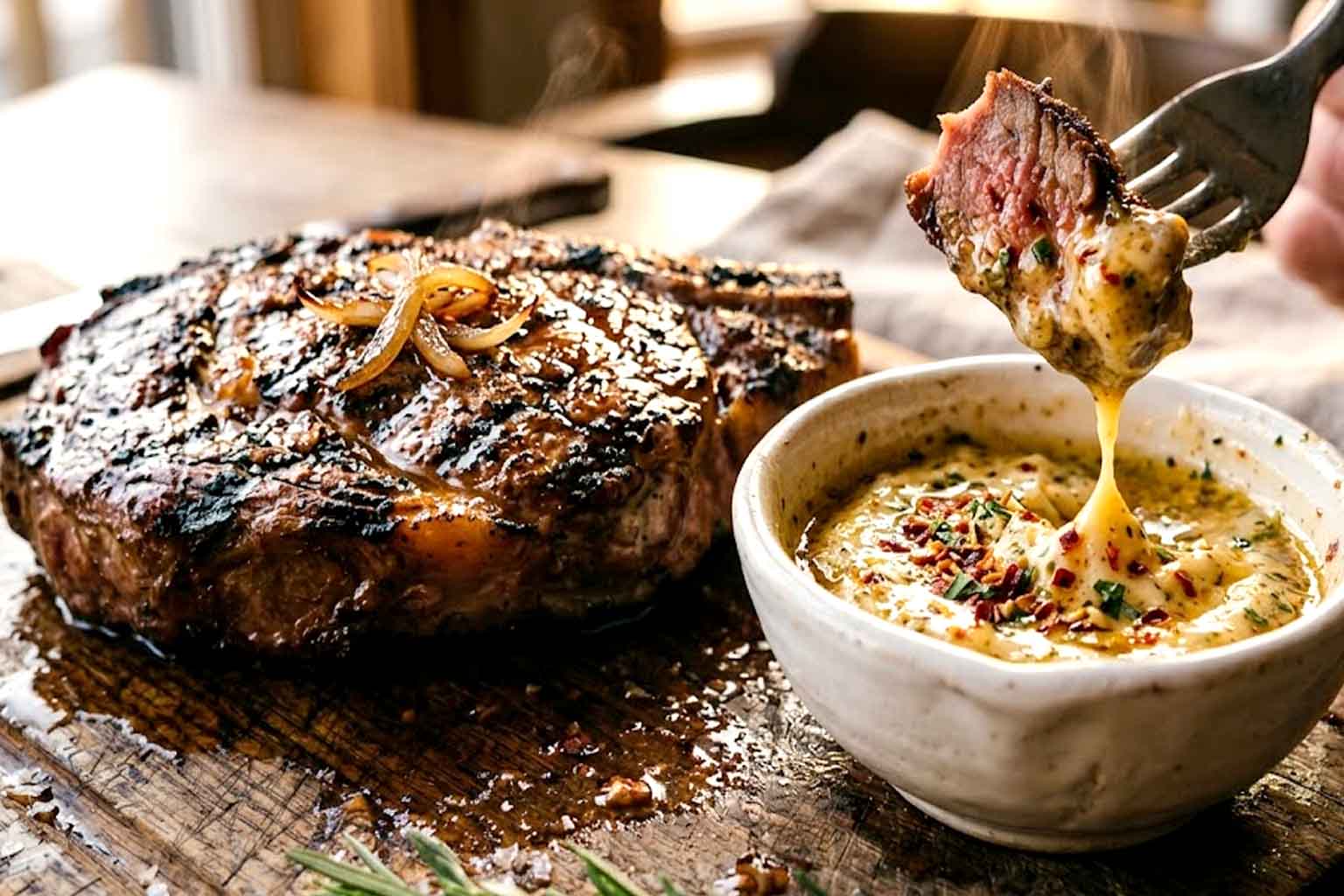

Sear hot, finish gently, rest, slice against grain. Use an instant-read thermometer for accuracy. Thickness determines method, not the Delmonico name alone.
How to Cook a Delmonico Steak
Thickness controls cooking time more than the cut name does. Delmonico refers to different cuts depending on the butcher. This guide covers pan, oven, grill, broiler, and reverse-sear methods. You will learn timing, temperatures, seasoning, and slicing techniques. Always verify your specific cut before applying any method below.
What Is a Delmonico Steak?
Delmonico steak commonly describes a thick, well-marbled ribeye-style cut. Some butchers use this name for chuck-end ribeye or other beef sections. The label lacks one universal industry definition across regions. Ask your butcher which exact cut you are purchasing. Check thickness, bone presence, marbling, and muscle structure visually. A thick steak benefits from indirect heat or oven finishing. Thin steaks cook faster over direct high heat only. Confirming the cut prevents undercooked centers or burnt crusts.
Choose the Right Steak
Select a steak with even thickness and visible intramuscular fat. Marbling appears as small white veins inside red meat. Look for 1½-inch to 2-inch thickness for best results. Even edges ensure uniform cooking throughout the entire steak. Good marbling guarantees flavor and juiciness after searing. A firm surface indicates freshness and proper handling. Avoid steaks with strong odors or slimy textures. Bone-in or boneless depends on personal preference and equipment. Thicker cuts allow more time for crust development safely.
Ingredients
- One Delmonico steak, 1½ to 2 inches thick.
- Kosher salt, one teaspoon per pound.
- Coarsely ground black pepper, half teaspoon.
- High-smoke-point oil, one tablespoon.
- Unsalted butter, two tablespoons.
- Fresh garlic cloves, two smashed (optional).
- Fresh rosemary or thyme sprigs (optional).
Use canola, grapeseed, or avocado oil for high heat. Olive oil burns at lower temperatures and creates bitter flavors. Butter adds flavor only during the final basting stage. Optional aromatics infuse fat without burning during initial sear.
Prepare the Steak
Remove steak from refrigerator forty-five minutes before cooking. Pat every surface completely dry with paper towels. Season both flat sides and all edges generously. Let seasoning sit while pan or grill preheats fully. Preheat cooking surface to target temperature before adding meat. Keep steak thickness in mind when setting heat level. A dry surface browns better than a wet one. Excess moisture steams meat and delays crust formation. Dry-brine by salting several hours ahead for deeper seasoning. Leave uncovered in refrigerator, then pat dry again before cooking. Marinades are optional for well-marbled Delmonico steaks. Salt and pepper usually provide sufficient beef-forward flavor.
Check Steak Temperature
A thermometer gives reliable results compared to time alone. Insert probe horizontally into the thickest part of meat. Avoid touching bone or large fat pockets during measurement.
|
Doneness
|
Culinary Target
|
USDA Minimum
|
|---|---|---|
|
Rare
|
120–125°F / 49–52°C
|
Not Recommended
|
|
Medium-Rare
|
130–135°F / 54–57°C
|
Not Recommended
|
|
Medium
|
140–145°F / 60–63°C
|
145°F / 62.8°C
|
|
Medium-Well
|
150–155°F / 66–68°C
|
N/A
|
|
Well-Done
|
160°F+ / 71°C+
|
N/A
|
USDA guidance recommends 145°F with three-minute rest minimum. Many cooks prefer medium-rare below official safety standards. Explain this difference clearly when serving others. Pull steak five degrees below final target temperature. Carryover cooking raises internal temperature during resting period.
Best Method: Pan-Seared Delmonico Steak
Cast iron provides superior heat retention for thick steaks. It also allows oven finishing without transferring meat. Heat heavy skillet over high heat until smoking slightly. Add thin layer of high-smoke-point oil carefully. Place dry, seasoned steak in center of skillet. Leave undisturbed until first side develops deep brown crust. Flip steak once using tongs, never a fork. Sear second side until matching crust forms. Sear edges and fat cap using tongs to hold steak. Add butter, garlic, and herbs during final ninety seconds. Baste continuously with foaming butter using large spoon. Finish in 400°F oven if steak exceeds 1½ inches. Remove steak when thermometer reads five degrees below target. Rest on wire rack before slicing against grain. Never add butter at beginning of high-heat sear. Milk solids burn before crust develops properly.
Oven-Finished Delmonico Steak
Use this method for steaks 1½ to 2 inches thick. Heat oven to 400°F / 205°C before starting. Sear steak in oven-safe skillet on stovetop first. Sear both flat sides and all edges thoroughly. Transfer skillet directly to preheated oven immediately. Check internal temperature early and frequently. Remove steak when thermometer reads five degrees below target. Rest five to ten minutes on wire rack. A 2-inch steak needs longer than 1½-inch steak. Oven accuracy, pan material, and starting temp change timing. Always rely on thermometer over estimated minutes.
Reverse-Sear Delmonico Steak
Reverse searing works best for steaks over 1½ inches. Gentle heat cooks center evenly before final crust forms. Heat oven to 250–275°F / 120–135°C. Place seasoned steak on wire rack over sheet pan. Cook until center reaches ten degrees below final target. Remove steak from oven and rest briefly. Heat skillet or grill to maximum temperature. Sear each side sixty to ninety seconds only. Sear edges quickly to render fat cap. Rest again before slicing against grain. Community reports cite 190°F to 275°F low-temp ranges. These are anecdotal, not universal timing rules. Test your own oven for accurate calibration.
How to Grill a Delmonico Steak
Use two heat zones for thick Delmonico steaks. One zone provides direct high heat for searing. Other zone provides indirect gentle heat for finishing. Preheat grill fully before placing meat on grates. Clean grates with brush and oil lightly. Season steak just before grilling begins. Sear over direct heat until crust forms. Move steak to indirect heat zone immediately. Close lid to create oven-like convection environment. Cook until center reaches target pull temperature. Rest before slicing against grain on cutting board. Direct heat builds crust; indirect heat cooks center.
Gas Grill Method
Preheat gas grill to 450–500°F / 230–260°C. Keep one burner high and another low or off. Sear steak over hot burner for crust development. Move to cooler area and close lid immediately. Check internal temperature early and often. Gas grills vary significantly in heat output accuracy. Adjust burners based on thermometer readings, not dials. Flare-ups require moving steak temporarily away from flames.
Charcoal Grill Method
Arrange hot coals on one side of grill only. Leave other side empty for indirect cooking zone. Sear steak directly over coals for crust. Move to cooler side when crust forms evenly. Keep lid closed during indirect cooking phase. Watch for flare-ups caused by dripping fat. Adjust vents to control temperature precisely. Charcoal provides smoky flavor gas cannot replicate. Ash buildup can insulate and reduce effective heat.
How Long to Grill Delmonico Steak
Cooking time depends on thickness, heat, and doneness. Use times below as starting ranges only.
|
Thickness
|
Approach
|
Approximate Time
|
Target Temp
|
|---|---|---|---|
|
¾ inch
|
Direct heat only
|
6–8 min total
|
130–135°F
|
|
1 inch
|
Direct + early check
|
9–14 min total
|
130–135°F
|
|
1½ inches
|
Sear + indirect finish
|
15–20 min total
|
130–135°F
|
|
2 inches
|
Reverse sear preferred
|
45–60 min total
|
130–135°F
|
Published beef guidance gives separate gas and charcoal times. Use those ranges with thermometer, not as absolutes. A 1-inch steak may finish very quickly. A 2-inch steak needs gentle extended cooking always.
How to Cook a Thin Delmonico Steak
Thin steaks need direct heat and short cooking times. Heat pan or grill thoroughly before adding meat. Pat steak completely dry and season both sides. Sear quickly over maximum high heat. Check temperature early to prevent overcooking. Remove steak when thermometer reads five degrees below target. Rest briefly, three to five minutes maximum. Slice against grain immediately after resting. Skip oven finish unless steak remains undercooked inside. Thin steaks move from rare to well-done rapidly.
How to Cook a 2-Inch Delmonico Steak
A 2-inch steak needs more control than thin cuts. Use oven finish or reverse sear method exclusively. Both methods cook center gradually while preserving crust. Check center with thermometer frequently during cooking. Remove steak several degrees below final serving temperature. Rest steak eight to ten minutes minimum. Very thick steaks benefit from longer resting periods. Carryover cooking continues longer in thick muscle mass. Slicing too early releases excessive juices onto board.
How to Broil Delmonico Steak
Broiling uses intense radiant heat from above. Preheat broiler fully before placing steak inside. Position rack safely below heating element per manual. Place steak on broiler pan with slotted top. Season and lightly oil steak surface. Broil one side until crust forms. Turn steak carefully with tongs to avoid burns. Broil second side until target temperature approaches. Check internal temperature with instant-read thermometer. Rest before slicing against grain. Broiler strength varies greatly between models. Watch crust closely to prevent burning. Beef guidance gives different times by thickness and distance.
How to Tenderize Delmonico Steak
Well-marbled Delmonico usually needs no mechanical tenderizing. Pounding damages shape and texture of premium cuts. Improve tenderness through proper technique instead. Choose good marbling when purchasing steak. Salt steak ahead for dry-brining benefits. Avoid overcooking beyond medium doneness. Use thermometer to prevent guesswork errors. Rest adequately after cooking for juice redistribution. Slice against grain to shorten muscle fibers. Marinades add flavor but cannot fix overcooked meat. Mechanical tenderizing is unnecessary for quality ribeye-style cuts.
How to Season Delmonico Steak
Salt and pepper provide clearest pure beef flavor. Add garlic, rosemary, thyme, or rub for complexity. Good options include kosher salt and coarse black pepper. Garlic powder and onion powder adhere well to meat. Fresh rosemary and thyme work best in butter baste. Smoked paprika adds depth without overwhelming beef. Coffee-based dry rub complements charred crust notes. Tex-Mex seasoning suits Southwestern preparation styles. Garlic butter or herb butter finishes rich steaks. Chimichurri adds acidity and freshness after cooking. Season edges as well as flat surfaces. Thick steaks benefit from seasoning reaching every side.
Rest and Slice the Steak
Transfer cooked steak to cutting board or wire rack. Rest at least three minutes per USDA food safety. Five to ten minutes often yields better texture. Thick steaks may need twelve to fifteen minutes. Juices settle and redistribute during resting period. Slice against grain to shorten muscle fibers. Identify grain direction before making first cut. Sharp knife ensures clean slices without tearing. Do not cut immediately after removing from heat. Early slicing releases hot juices onto board. Warm plates preserve temperature during service.
Common Mistakes
Cooking by time alone ignores thickness variables. Ignoring steak thickness leads to uneven doneness. Skipping thermometer causes overcooked or undercooked results. Starting with wet surface prevents proper browning. Using cold pan or grill delays crust formation. Adding butter too early burns milk solids. Moving steak constantly interrupts Maillard reaction. Pressing steak expels valuable internal juices. Cutting before resting loses moisture and flavor. Overcooking center makes chuck-end cuts tough. Burning crust creates bitter acrid flavors. Allowing grill flare-ups chars exterior unevenly. Overcrowding pan drops temperature dramatically. Using excessive marinade masks beef flavor. Slicing with grain creates chewy stringy bites. Assuming every Delmonico is identical causes failures.
Serving Suggestions
Serve Delmonico with garlic butter or chimichurri sauce. Horseradish cream adds sharpness to rich beef. Roasted potatoes complement steak’s savory depth. Baked or mashed potatoes provide classic starch pairing. Creamed spinach balances richness with creamy texture. Grilled vegetables add color and nutrition. Roasted vegetables offer caramelized sweetness contrast. Green salad provides acidic palate cleansing. Asparagus spears pair traditionally with beef. Mushrooms enhance umami flavor profile naturally. Use warm plates to maintain serving temperature. Slice steak immediately before eating for best quality.
Frequently Asked Questions
How do you cook a Delmonico steak? Season, sear hot, finish gently, check temperature, rest, slice against grain. Thickness determines best method choice.
Is Delmonico steak the same as ribeye? Often yes, but naming varies by butcher and region. Confirm exact cut before selecting cooking method.
What is the best way to cook thick Delmonico? Reverse sear or sear-and-oven method works best. Gentle heat cooks center; high heat builds crust.
How long should you grill Delmonico steak? Time depends on thickness, heat, and doneness target. Sear direct, finish indirect, use thermometer always.
What temperature is medium-rare Delmonico steak? Culinary target is 130–135°F / 54–57°C. USDA recommends 145°F / 62.8°C minimum with three-minute rest.
Should you tenderize Delmonico steak? Usually no. Marbling, correct cooking, resting, and slicing matter more. Pounding damages premium cut texture.
Can you cook Delmonico in cast iron? Yes. Cast iron retains heat excellently for crust. Use oven finish for steaks over 1½ inches.
Should you marinate Delmonico steak? Optional. Salt, pepper, and proper technique suit well-marbled beef. Marinades add flavor but aren’t required.
Why is my Delmonico steak tough? Overcooking, poor marbling, wrong slicing, or skipped resting. Check internal temperature next time.
Why is my Delmonico steak dry? Overcooking or insufficient marbling causes dryness. Thermometer prevents exceeding target doneness.
How do you get a strong crust? Dry surface, preheated pan, high heat, no movement. Moisture and low heat prevent browning.
How should you slice Delmonico steak? Rest first, identify grain, slice across with sharp knife. Against-grain slicing improves tenderness.
Recipe Card
Ingredients
- One Delmonico steak, 1½–2 inches thick
- 1 tsp kosher salt per pound
- ½ tsp coarsely ground black pepper
- 1 tbsp high-smoke-point oil
- 2 tbsp unsalted butter
- 2 garlic cloves, smashed (optional)
- 1 rosemary or thyme sprig (optional)
Instructions
- Pat steak completely dry with paper towels.
- Season all sides and edges with salt and pepper.
- Heat cast-iron skillet over high heat until smoking.
- Add oil and swirl to coat pan surface.
- Place steak in pan; sear undisturbed 3–4 minutes.
- Flip steak; sear second side 3–4 minutes.
- Sear edges and fat cap with tongs.
- Reduce heat; add butter, garlic, and herbs.
- Baste continuously with foaming butter 60–90 seconds.
- Transfer to 400°F oven if steak exceeds 1½ inches.
- Check internal temperature; remove at 5° below target.
- Rest on wire rack 5–10 minutes minimum.
- Slice against grain and serve immediately.
Timing Prep: 5 min (plus 45 min temper). Cook: 8–20 min depending on thickness. Rest: 5–10 min. Total: 20–35 min active.
Temperature Medium-rare culinary: 130–135°F. USDA minimum: 145°F + 3 min rest. Pull 5° below final target.