

Table of Contents
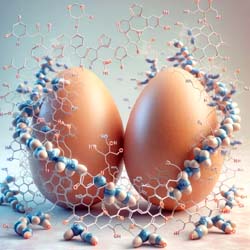
An animal based diet is an eating pattern centered on animal foods. Common versions emphasize meat, organ meats, eggs, dairy, fruit, and honey. The exact rules vary because “animal-based diet” does not describe one standardized medical diet.
The approach became widely known through Dr. Paul Saladino and his animal-based nutrition framework. His version centers on meat, organs, fruit, honey, and raw dairy.
Unlike a strict carnivore diet, an animal-based diet can include selected plant foods. These foods mainly provide carbohydrates, with fruit and honey being common choices.

What is an Animal Based Diet?
An animal-based diet puts animal-source foods at the center of daily eating.
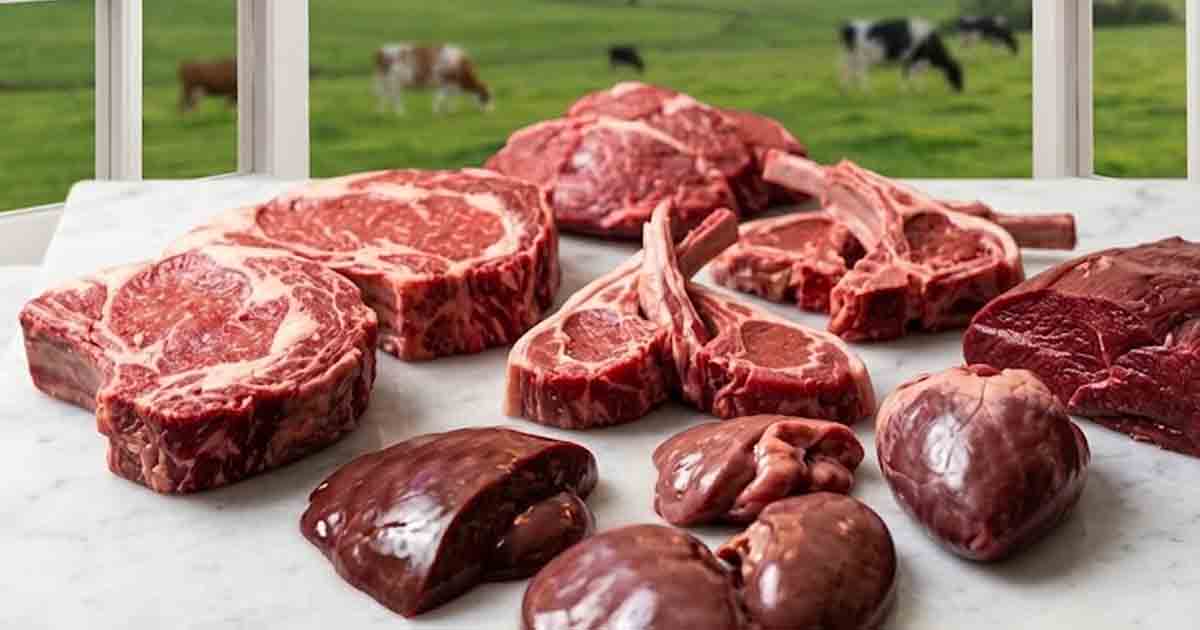
Meat and organ meats form the foundation of the Saladino-style approach. Eggs, seafood, and dairy are also commonly included. Fruit and honey provide carbohydrate sources in this version of the diet.
Some people use the term more broadly. Their version may include vegetables, squash, avocado, or other plant foods. Therefore, two people can describe their diets as “animal-based” while eating somewhat different foods.
The simplest definition is:
An animal based diet is a dietary pattern that prioritizes animal foods while allowing selected plant foods, depending on the version and individual approach.
It is better to view animal-based eating as a dietary framework rather than a single standardized diet.
What Does “Animal-Based” Mean?
“Animal-based” means that foods from animals provide the main foundation of the diet.
Common animal foods include:
- Meat
- Organ meats
- Eggs
- Fish
- Seafood
- Dairy
- Animal fats
- Bone broth
- Bone marrow
The Saladino-style approach then adds selected plant foods. These commonly include fruit and honey. Some versions also include foods such as squash or avocado.
The term can therefore describe a spectrum.
At one end, an approach may contain mostly animal foods with very few plants. At the other end, a person may eat many animal foods while also including several tolerated plant foods.
What Foods Are Included in an Animal-Based Diet?
The exact food list depends on the version being followed.
Meat
Meat is a central food group.
Common choices include beef, lamb, bison, venison, pork, chicken, and turkey.
Ruminant meat receives particular emphasis in many animal-based frameworks. These foods provide protein, fat, vitamins, and minerals.
Organ Meats
Organ meats are strongly emphasized in the Saladino-style approach.
Common examples include:
- Liver
- Heart
- Kidney
- Spleen
- Other organ meats
Liver is especially nutrient-dense. It contains nutrients such as preformed vitamin A, vitamin B12, copper, and iron.
However, more is not always better. Liver contains high amounts of preformed vitamin A. The NIH lists 3,000 micrograms of retinol activity equivalents per day as the adult upper limit for preformed vitamin A.
Eggs
Eggs are another common animal-based food.
They provide protein and several vitamins and minerals. Pasture-raised eggs are often preferred within animal-based communities, although the term “animal-based” does not require one specific egg production method.
Seafood
Fish and shellfish can also fit an animal-based diet.
Common choices include salmon, sardines, shrimp, and oysters.
Seafood can provide protein and nutrients such as omega-3 fatty acids, zinc, selenium, and vitamin B12.
Dairy
Dairy is included in many animal-based approaches.
Common foods include:
- Milk
- Yogurt
- Kefir
- Cheese
- Butter
- Ghee
Some versions specifically emphasize raw or minimally processed dairy. Others use pasteurized dairy.
Raw milk requires special attention because it can carry harmful pathogens. The CDC recommends choosing pasteurized milk and dairy products because pasteurization kills harmful germs.
This cinematic featured image establishes the “meat and organs” foundation. It shows a close-up of a rustic farm kitchen counter, where a hand is seasoning a substantial ribeye steak on a wooden board. Next to it, dark-maroon organ meats (liver) and pasture-raised eggs rest, while fresh berries and honey sit subtly in the soft, window-lit background.
Fruit
Fruit is one of the major differences between animal-based and strict carnivore eating.
Common choices include berries, mangoes, citrus fruits, melons, bananas, and other whole fruits.
Fruit supplies carbohydrates, including naturally occurring sugars. Some animal-based frameworks place particular emphasis on ripe fruit.

Honey
Honey is another common carbohydrate source.
Raw honey is frequently included in Saladino-style animal-based eating. It is treated as a natural carbohydrate source rather than as an animal food.
Animal Fats
Animal-based diets may include fats from animal foods.
Examples include:
- Butter
- Ghee
- Beef tallow
- Fat from meat
- Bone marrow
The amount of dietary fat varies based on food choices and individual needs.
What Foods Are Limited or Avoided?
There is no universal exclusion list.
However, many Saladino-style versions limit or avoid foods such as:
- Grains
- Legumes
- Nuts
- Seeds
- Seed oils
- Refined sugar
- Ultra-processed foods
- Some vegetables
- Some plant foods considered difficult to tolerate
Some sources also describe limits on leafy greens, cruciferous vegetables, and nightshades.
These exclusions are part of the dietary philosophy. They should not automatically be treated as medically necessary restrictions.
Claims about plant “toxins,” antinutrients, inflammation, or digestive effects require careful interpretation. The presence of a plant compound does not by itself prove that eating the food causes harm.
Is an Animal-Based Diet the Same as Carnivore?
No. The two approaches overlap, but they are not identical.
A strict carnivore diet excludes plant foods. An animal-based diet commonly includes selected plant foods, especially fruit and honey.
| Feature | Animal-Based Diet | Carnivore Diet |
| Core Food | Core food | Core food |
| Organ Meats | Commonly emphasized | Commonly included |
| Eggs | Usually included | Usually included |
| Seafood | Included | Included |
| Dairy | Often included | Depends on the version |
| Fruit | Commonly included | Excluded |
| Honey | Commonly included | Excluded |
| Vegetables | Depends on the version | Excluded |
| Carbohydrates | Usually included | Very low or absent |
| Plant Foods | Selected foods may be included | Excluded |
Animal-based eating can therefore provide carbohydrates from foods such as fruit and honey. Strict carnivore eating generally does not.
Is an Animal-Based Diet Keto?
Not necessarily.
A ketogenic diet restricts carbohydrate intake enough to promote nutritional ketosis. An animal-based diet does not have one universal carbohydrate target.
Fruit and honey can provide substantial carbohydrates. Therefore, a person eating a typical Saladino-style animal-based diet may consume too many carbohydrates to remain in ketosis.
An animal-based diet and a ketogenic diet can overlap, but their defining principles are different.
Keto is defined primarily by carbohydrate restriction and ketosis. Animal-based is defined primarily by its emphasis on animal foods.
Can You Eat Fruit on an Animal-Based Diet?
Yes. Fruit is commonly included.
Fruit is especially important in the Saladino-style version because it provides carbohydrates while remaining consistent with that dietary framework.
However, fruit is not an animal food. Its inclusion is one reason animal-based differs from strict carnivore.
Can You Eat Honey on an Animal-Based Diet?
Yes. Honey is commonly included in modern animal-based frameworks.
Raw honey is particularly emphasized by some versions. However, honey is still a concentrated source of sugar and carbohydrates.
Can You Eat Dairy on an Animal-Based Diet?
Yes. Dairy is commonly included.
Milk, yogurt, kefir, cheese, butter, and ghee may all fit an animal-based approach.
Some versions prefer raw dairy. However, raw dairy carries food-safety risks that should not be overlooked. Pasteurized dairy is the safer choice for avoiding pathogens associated with raw milk.
Can You Eat Vegetables on an Animal-Based Diet?
It depends on the version.
Some broader interpretations allow vegetables. The stricter Saladino-style approach places more emphasis on fruit and honey and limits many vegetables.
Therefore, the answer depends on which definition a person follows.
Why Are Meat and Organ Meats Central to the Diet?
Animal-based frameworks place meat and organs at the center because their proponents consider them nutrient-dense animal foods.
Meat provides high-quality protein and nutrients such as iron, zinc, and vitamin B12. Organ meats can provide concentrated amounts of several micronutrients.
However, nutrient density does not establish that an entire dietary pattern is healthier than every alternative.
Research evaluates individual foods, dietary patterns, nutrient intake, and health outcomes in different ways. Evidence about the overall modern animal-based diet remains limited.
What Does the Research Say About an Animal-Based Diet?
Research on the specific modern animal-based diet is limited.
This matters because many claims surrounding the diet come from dietary philosophy, expert opinion, personal experience, or community reports rather than large clinical trials of the complete dietary pattern.
Research does provide evidence about individual components of the diet.
For example, studies have examined meat, fish, dairy, eggs, plant foods, dietary quality, and health outcomes separately. A large US cohort study found that higher-quality overall diets were associated with lower mortality, with the strongest contribution coming from higher-quality plant foods.
A large WHO-commissioned review also evaluated evidence involving animal-source foods and outcomes such as cardiovascular disease, diabetes, cancer, body weight, and mortality. The review covered hundreds of reviews, cohorts, and trials across multiple countries.
This does not prove that an animal-based diet is either healthy or unhealthy.
It shows why the evidence needs to be considered food by food and pattern by pattern.
What Are the Potential Benefits and Risks?
Potential benefits depend on the foods chosen, the overall dietary pattern, and the person’s individual needs.
An animal-based diet can provide protein, vitamin B12, iron, zinc, selenium, and other nutrients through animal foods. Fruit can provide carbohydrates, vitamin C, and other nutrients. Seafood can provide omega-3 fatty acids.
However, potential risks also deserve attention.
A restrictive version may reduce dietary variety. Limiting whole food groups can also make it harder to obtain certain nutrients or adequate fiber.
High intake of certain animal foods may also affect saturated fat and cholesterol intake. Individual responses to dietary patterns vary.
Raw dairy creates an additional food-safety concern because of pathogen exposure.
The strongest conclusion is that an animal-based diet should not be described as a proven treatment or cure for disease.
Claims about reversing autoimmune disease, curing digestive problems, treating diabetes, preventing cancer, or extending lifespan require evidence that directly supports those outcomes.

How Do You Start an Animal-Based Diet?
Start by understanding which version you intend to follow.
Build meals around whole animal foods such as meat, eggs, seafood, and dairy if tolerated.
Then decide which plant foods fit your chosen framework.
Fruit and honey are common carbohydrate sources in the Saladino-style approach.
Avoid making unnecessary restrictions simply because a food appears on an online “avoid” list.
Pay attention to nutritional adequacy, food quality, tolerance, and your individual health needs.
If you have a medical condition, take medications, are pregnant, or have a history of disordered eating, discuss major dietary changes with an appropriate healthcare professional.
Frequently Asked Questions
What is an animal based diet?
An animal-based diet is an eating pattern centered on animal foods. Common modern versions emphasize meat, organs, eggs, dairy, fruit, and honey. The exact rules vary between different versions.
What does animal based mean?
Animal-based means that animal foods form the main foundation of the diet. Selected plant foods may also be included.
What foods do you eat on an animal based diet?
Common foods include meat, organ meats, eggs, seafood, dairy, fruit, honey, and animal fats. Some versions also include selected vegetables or other plant foods.
Is an animal based diet the same as carnivore?
No. Carnivore excludes plant foods in its strictest form. Animal-based diets commonly include foods such as fruit and honey.
Is an animal based diet keto?
Not necessarily. Fruit and honey can provide enough carbohydrates to prevent nutritional ketosis.
Can you eat fruit on an animal based diet?
Yes. Fruit is a major carbohydrate source in many animal-based approaches.
Can you eat honey on an animal based diet?
Yes. Honey is commonly included, especially in the Saladino-style version.
Can you eat dairy on an animal based diet?
Yes. Dairy is commonly included. Some versions prefer raw dairy, but pasteurized dairy avoids the pathogen risks associated with raw milk.
Can you eat vegetables on an animal based diet?
It depends on the version. Some approaches allow selected vegetables, while stricter versions emphasize fruit and honey instead.
Is an animal based diet healthy?
There is no simple yes-or-no answer. The modern animal-based diet has limited direct clinical evidence, and its health effects depend on the foods included, dietary structure, and individual factors.
What is the difference between animal based and carnivore?
Animal-based diets commonly include selected plant foods. Strict carnivore diets exclude plant foods. The inclusion of fruit and honey is a major distinction.
What are the potential risks of an animal based diet?
Potential concerns include limited dietary variety, inadequate fiber, excessive intake of certain nutrients, high saturated fat intake depending on food choices, and food-safety risks from raw dairy.
Disclaimer:
This article is for general informational and educational purposes only. It is not medical advice, diagnosis, or treatment. The animal-based diet may not be suitable for everyone, and individual nutritional needs can vary. Always consider your health history, dietary needs, and current medications before making major dietary changes. If you have a medical condition, are pregnant, or have other health concerns, consult a qualified healthcare professional before starting a restrictive diet.
References:
- World Health Organization (WHO) — Healthy Diet
Useful for discussing dietary diversity, balance, moderation, food safety, and the role of animal-source foods.
WHO — Healthy Diet - WHO — Guideline Development Group on Optimal Intake of Animal-Source Foods
Particularly relevant because it addresses the balance between animal-source and plant-source foods and is directly connected to WHO guideline development.
WHO — Optimal Intake of Animal-Source Foods - PubMed — Optimal Intake of Animal-Source Foods: A Scoping Review to Inform a New WHO Guideline
Excellent primary research reference for your section on what the scientific evidence says. It specifically examines the amount and types of animal-source foods that may fit within healthy diets.
PubMed — Optimal Intake of Animal-Source Foods - PubMed — Nutritional Importance of Animal-Sourced Foods in a Healthy Diet
Useful for supporting statements about animal foods providing protein, essential amino acids, iron, zinc, vitamin B12, and other nutrients.
PubMed — Nutritional Importance of Animal-Sourced Foods - CDC — Raw Milk Food Safety
This is the best authoritative reference for your discussion of raw dairy. CDC explains the foodborne illness risks associated with raw milk and recommends pasteurized milk and dairy products.
CDC — Raw Milk Safety - NIH Office of Dietary Supplements — Vitamin A Fact Sheet
Use this for the section about liver and vitamin A. It provides the official tolerable upper intake level for preformed vitamin A.
NIH — Vitamin A Fact Sheet